VLM vs. LLM: How Vision-Language Models Are Revolutionizing Real-Time Media Processing
CK 3828 Created at
15800
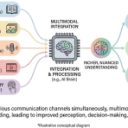
While Large Language Models (LLMs) operate strictly on textual inputs, Vision-Language Models (VLMs) extend this capability by integrating visual encoders with language models to achieve joint cross-modal understanding of both imagery and text.
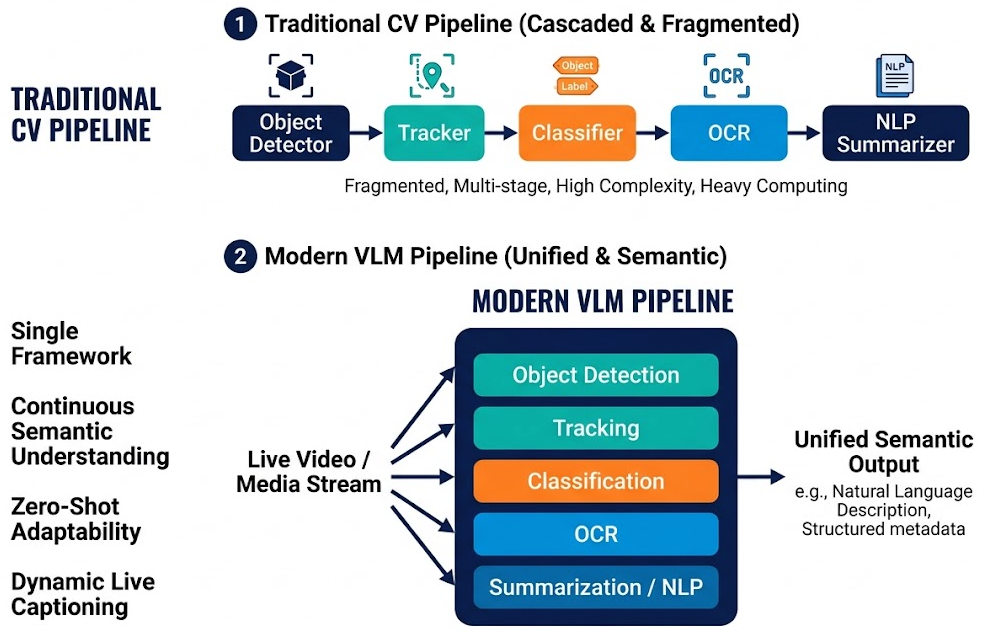
VLMs have become particularly prominent in media streaming processing because they replace fragmented, multi-stage computer vision pipelines with unified, real-time semantic video understanding, enabling continuous event tracking, automated content moderation, and dynamic live captioning directly on continuous video feeds.
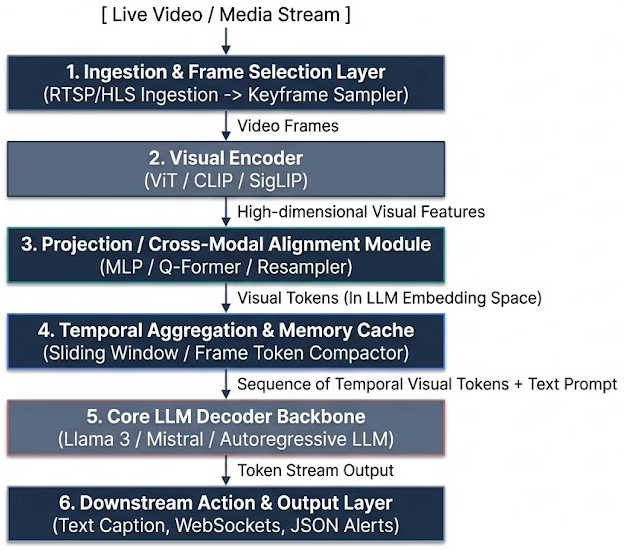
The standard architecture for a VLM-based system typically comprises a vision encoder, such as a Vision Transformer, to extract visual feature representations, an alignment or projection connector layer to map these visual embeddings into a language-compatible token space, and a foundational LLM backbone that processes the unified multimodal inputs to perform reasoning and generate contextual outputs.
Core Definitions
Large Language Model (LLM): A unimodal AI model trained exclusively on text data (e.g., GPT-4, Llama 3, Mistral). It excels at natural language understanding, generation, code synthesis, and logical reasoning within the text domain.
Vision-Language Model (VLM): A multimodal AI model designed to process and correlate both visual inputs (images, video frames) and textual inputs (prompts, context) (e.g., GPT-4o, Gemini 1.5 Pro, LLaVA). It builds a shared semantic space where visual features and text tokens interact directly.
Detailed Comparison
Feature
Large Language Model (LLM)
Vision-Language Model (VLM)
Input Modalities
Text, Code, Structured Data (JSON, XML).
Images, Video Frames, Text, Code, Spatial Coordinates.
Primary Encoders
Text Tokenizer + Transformer Embedding Layer.
Vision Encoder (e.g., ViT, CLIP) + Text Tokenizer.
Token Representation
Discrete 1D text tokens.
Continuous 2D/3D spatial-temporal patches converted to visual tokens + text tokens.
Compute / Memory Footprint
Scales primarily with context window length (N text tokens).
Significantly higher; visual encoding adds hundreds to thousands of tokens per frame/image.
Contextual Awareness
Abstract semantic, logic, and syntactic context derived from text.
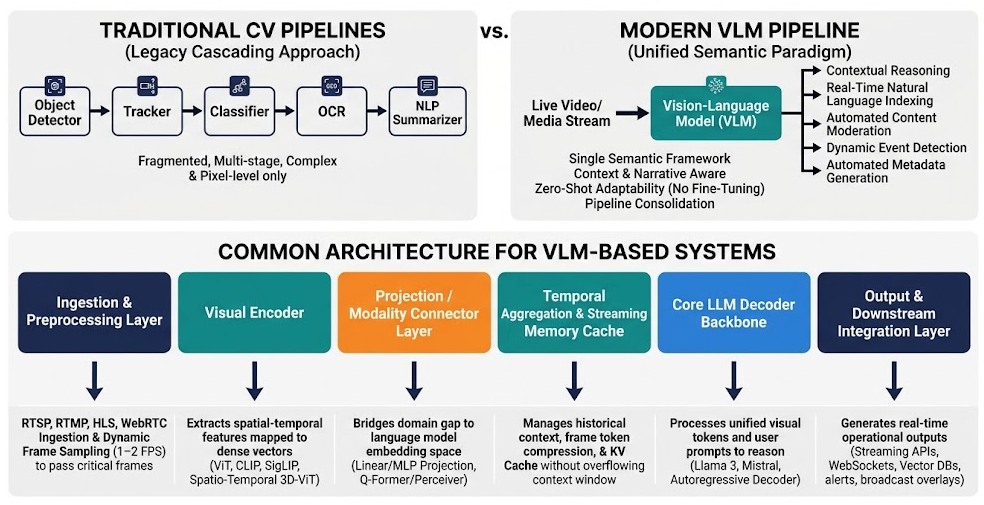
Traditional Computer Vision (CV) pipelines relied on cascading specialized models (e.g., Object Detector → Tracker → Classifier → OCR → NLP Summarizer). VLMs revolutionize media and streaming processing by unifying these tasks into a single semantic framework.
1. Semantic Understanding Beyond Pixel Detection
Contextual Reasoning: Traditional CV can detect a "person" and a "car." A VLM understands the narrative: "A valet parking a sports car outside a luxury hotel during sunset."
Zero-Shot Adaptability: Instead of retraining models for new visual targets, operators can query streams using natural language prompts without fine-tuning (e.g., "Find any frame where an employee is not wearing safety goggles").
2. Paradigm Shift in Live Streaming Analytics
Real-Time Natural Language Indexing: Video streams are indexed semantically in real time, making live footage instantly searchable via conversational queries.
Automated Content Moderation: Replaces strict rule-based filters with nuanced context awareness. A VLM can distinguish between real-world violence and a scene from a movie or a video game in a live feed.
Dynamic Event Detection: Instantly identifies domain-specific events in live sports or breaking news (e.g., "Highlight every offside decision" or "Detect when the anchor switches to a field reporter").
3. Native Multimodal Pipeline Efficiency
Consolidation of CV Pipelines: Reduces architectural complexity by replacing dozens of micro-models (detection, segmentation, action recognition, text recognition) with a single VLM architecture.
Automated Metadata Generation: Automatically generates synchronized real-time closed captions, audio descriptions for visually impaired viewers, SEO tags, and visual chapter markers during live broadcasts.
Common Architecture for VLM-Based Systems
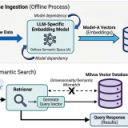
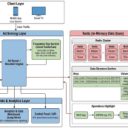
Deploying VLMs for media and streaming applications requires an end-to-end processing pipeline optimized for continuous feed processing, streaming latency, and visual token compression.
Component Breakdown
1. Ingestion & Preprocessing Layer
Function: Handles video protocol parsing (RTSP, RTMP, HLS, WebRTC).
Optimization Strategy: Raw video at 30/60 FPS generates too many visual tokens for standard LLM context windows. This layer applies Dynamic Frame Sampling (e.g., sampling based on scene transitions, optical flow, or low frame rates like 1–2 FPS) to pass only critical frames downstream.
2. Visual Encoder
Function: Extracts spatial features from visual inputs and maps pixels into continuous dense vectors.
Common Implementations:ViT (Vision Transformer), CLIP, SigLIP, or EVA-CLIP. For streaming video, spatio-temporal encoders (like 3D-ViT) may be used to process visual chunks across time directly.
3. Projection / Modality Connector Layer
Function: Bridges the domain gap between the vision encoder's output space and the language model's embedding space.
Architectural Types:
Linear/MLP Projection: Simple projection matrix mapping vision vectors directly to text token dimensions (e.g., LLaVA). Fast and low latency.
Query-based Transformers (Q-Former / Perceiver): Uses a set of learnable query tokens to extract a fixed number of visual features regardless of image resolution (e.g., BLIP-2, MiniGPT-4). Highly parameter-efficient.
4. Temporal Aggregation & Streaming Memory Cache
Function: Essential for video streaming pipelines. Manages historical context without overflowing the context window.
Mechanisms:
Frame Token Compression: Merges redundant spatial tokens across contiguous video frames.
KV Cache Management / Memory Modules: Retains long-term temporal context while discarding outdated visual tokens from processed stream chunks.
5. Core LLM Decoder Backbone
Function: Processes the unified sequence of aligned visual tokens and user text prompts to reason and generate autoregressive text or structured tokens.
Implementations: Decoder-only Transformer backbones such as Llama 3, Mistral, or fine-tuned variants optimized for long context.
6. Output & Downstream Integration Layer
Function: Converts the VLM generated tokens into real-time operational outputs.
Targets: Streaming APIs (SSE, WebSockets), real-time metadata indexing databases (Vector DBs), automated event alerts, or dynamic broadcast overlay control engines.
Concrete examples of the outputs (artifacts) generated at each stage
Part 1: Difference in Output (Traditional CV vs. Visual Encoder)
Assume the input is an image of a dog running in a park.
1. Traditional CV Model Output (e.g., YOLO)
Output Type: Discrete bounding boxes, class labels, and confidence scores (Human-readable structured data/JSON).