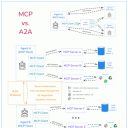
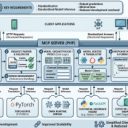
| Model Context Protocol (MCP) is a framework that enables LLMs (Large Language Models) to seamlessly interact with external tools and data sources, effectively extending their capabilities beyond their pre-trained knowledge. It defines a standardized way for models to request information or actions from these tools, receive responses, and integrate them into their reasoning process, allowing them to perform tasks like accessing real-time data, running code, or controlling external systems. In essence, MCP provides a consistent and structured communication channel, making LLMs more versatile and capable of handling complex, real-world problems. Rakesh Gohel shared on LinkedIn: MCP can be a security nightmare for building AI Agents
Here are key problems everyone using should know about....
Although MCP's easy tool integration has dominated the internet,
The current MCP version has critical security flaws, especially in implementations favoring functionality over security.
Without proper security, you're easily compromised.
So, here are the key vulnerabilities that everyone should know:
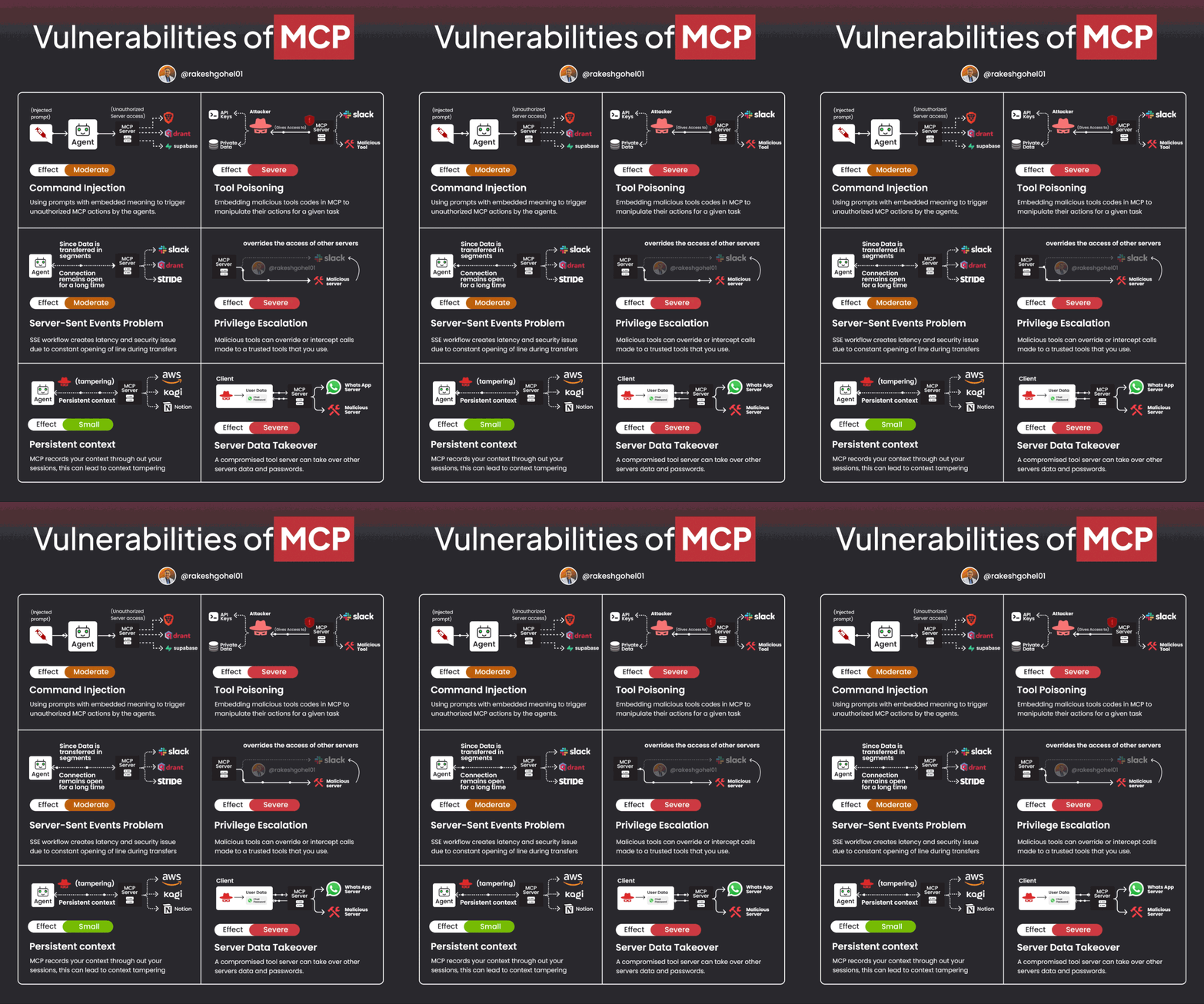
📌 Commad Injection (Effect: Moderate)
- Hackers can hide commands in innocent-looking emails or messages. When AI assistants process this content, it can trigger unauthorized actions like data theft or system command execution.
📌 Tool Poisoning Attack (Effect: Severe)
- Attackers can compromise MCP servers to provide malicious tools that execute harmful operations. The compromised tool can access your API keys and private database files and share those details remotely to an attacker.
📌 Server-Sent Events Problem (Effect: Moderate)
- MCP works with SSE architecture; this means that the connection remains open even after the data is shared between the tools and the client.
- This leads to latency issues and possible tampering of your data from the open connection.
📌 Privilege Escalation (Effect: Severe)
- This is another part of a tool poisoning attack where one malicious tool overrides the privilege of another tool.
- For example, if you're building an agent that has to utilize firecrawl constantly, then overriding that privilege can break your entire workflow.
📌 Persistent context (Effect: Small)
- MCP maintains your context through your Application's workflow; this is one of the key features of the toolkit.
- However, MCP can automatically call tools cuz it knows your context; it is so persistent that it can lead to Automatic tool execution without human verification.
📌 Server Data Takeover/spoofing (Effect: Severe)
- I went through a detailed research where the attacker was able to intercept chat details and the password of WhatsApp's MCP server using a compromised tool.
- This is particularly very lethal because of MCP SSE architecture and its ability to trust servers chosen for the application.
|