Model Context Protocol (MCP) is a framework, often used in fields like Model-Based Systems Engineering (MBSE), but increasingly relevant in AI and software development in general, that defines how models (of systems, data, processes, etc.) should be used and interpreted across different contexts and tools. Think of it as a set of rules, guidelines, and agreements that ensure everyone working with a particular model (or set of models) understands it the same way, regardless of the tools or people involved.
Here's a more detailed explanation:
Focus: Ensuring consistent interpretation and utilization of models. It's about establishing a shared understanding.
Key Elements:
Defining the Model's Purpose: What is the model intended to represent and what questions should it answer?
Specifying Modeling Conventions: What notations, standards, and best practices are used in building the model? This might involve things like UML, SysML, or specific domain-specific languages.
Defining Semantics: How are the elements of the model *meant* to be understood? This goes beyond just the syntax (the grammar of the modeling language) and addresses the *meaning* behind the symbols and relationships.
Contextual Awareness: How does the model relate to other models or systems? What are its boundaries and assumptions?
Tool Interoperability: How can the model be exchanged between different modeling tools without losing information or introducing ambiguity? (This is often a *goal* of MCP, even if it's not always fully achieved.)
Versioning and Change Management: How are changes to the model tracked and communicated?
Benefits:
Improved Communication: Reduces misunderstandings among stakeholders who are using the model.
Enhanced Reusability: Models can be used in multiple projects or with different tools more easily.
Reduced Errors: By clarifying the model's semantics, potential errors in interpretation can be avoided.
Better Integration: Facilitates the integration of different models or systems that rely on a common model.
Increased Confidence: Provides greater confidence in the accuracy and reliability of the model's results.
Example: Imagine you have a model of a car's braking system. MCP would define how terms like "braking force," "stopping distance," and "brake pressure" are defined and how they relate to each other. It would also specify how the model should be used for different purposes, such as simulating braking performance under various conditions or designing the braking system's components.
What is A2A?
A2A stands for Agent-to-Agent (Integration). It refers to the process of enabling different software applications to exchange data and functionality with each other. It's about connecting applications so they can work together seamlessly. Here's a breakdown:
Focus: Enabling applications to *communicate and interact directly* with each other. It's about the physical or logical *connection* between systems.
Key Elements:
Data Exchange Formats: Defining the formats in which data is exchanged between applications (e.g., XML, JSON, CSV).
Communication Protocols: Specifying the protocols used for communication (e.g., HTTP, REST, SOAP, message queues like Kafka or RabbitMQ).
APIs (Application Programming Interfaces): Providing well-defined interfaces that applications can use to access each other's functionality.
Middleware: Using middleware technologies (e.g., enterprise service buses (ESBs), message brokers) to facilitate communication and data transformation.
Security: Implementing security measures to protect data and prevent unauthorized access.
Error Handling: Defining how errors are handled and reported during communication.
Benefits:
Automation: Automates business processes by connecting different systems.
Data Sharing: Allows data to be shared seamlessly between applications.
Improved Efficiency: Reduces manual data entry and eliminates data silos.
Enhanced Collaboration: Enables different departments or organizations to collaborate more effectively.
Increased Flexibility: Allows organizations to adapt more quickly to changing business needs.
Example: Consider an e-commerce website. A2A might be used to connect the website to a payment gateway (like PayPal or Stripe), an inventory management system, and a shipping provider's system. When a customer places an order, the website communicates with the payment gateway to process the payment, updates the inventory management system to reflect the sale, and sends the shipping information to the shipping provider.
Key Differences - MCP vs A2A
Feature
Model Context Protocol (MCP)
Agent-to-Agent (A2A)
Main Focus
Consistent interpretation and utilization of *models*.
Enabling applications to *communicate and exchange data*.
Nature
A *framework* or set of *guidelines*.
A *process* or a *set of technologies*.
Abstraction Level
More abstract; deals with the *meaning* of models.
More concrete; deals with the *mechanics* of application communication.
Goal
Ensure everyone understands the model the same way.
More concrete; deals with the *mechanics* of application communication.
MCP is about *understanding* the language of models. It's like creating a glossary and grammar rules for how models are used.
A2A is about *building bridges* between applications so they can talk to each other. It's about connecting different software systems so they can exchange information and work together.
Can they be related?
If you're using models to design and implement an A2A integration, you might use MCP to ensure that the models of the different applications involved are consistent and understood by all the developers. In this case, MCP helps to define how the applications (the "A2A" part) will use and interpret shared models of data and processes.
Conversely, A2A techniques (like using APIs or message queues) could be used to facilitate the exchange of model data between different modeling tools in an environment where MCP is being used. This ensures the model can be shared amongst all parties.
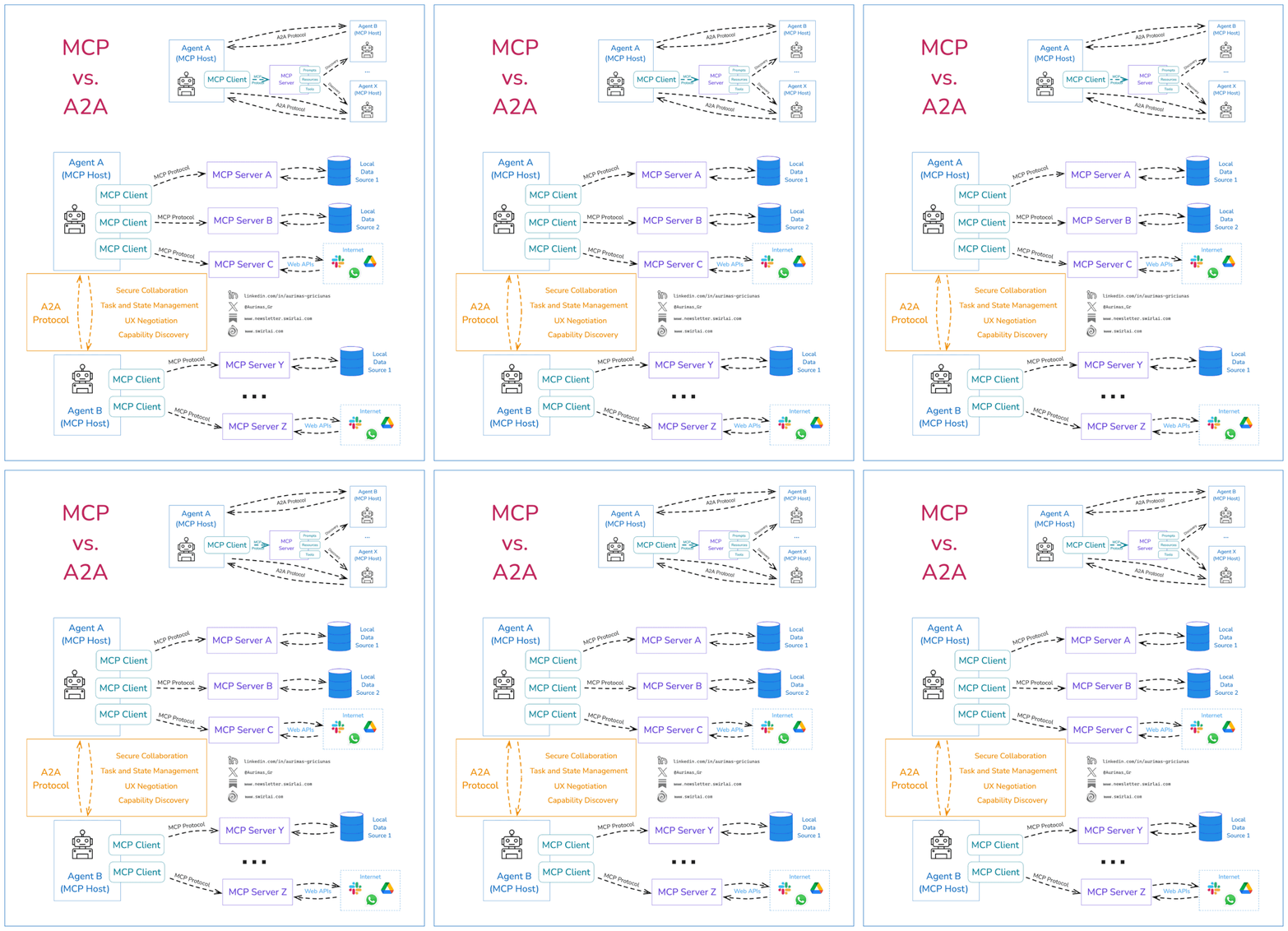
In essence, MCP provides a framework for understanding and using models effectively, while A2A provides the mechanisms for connecting applications so they can exchange data and functionality. They address different aspects of system integration, but they can be used together to create more robust and reliable systems.
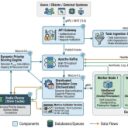
Aurimas Griciūnas shared a diagram comparing MCP and A2A
𝗠𝗖𝗣 and 𝗔𝟮𝗔: Friends or Foes? In my latest Newsletter episode I talk about both protocols. Could A2A eat up MCP in the long term?
I have been asked multiple times why I think the two protocols could become competitive in the future. I tried to outline my thoughts in this Newsletter episode.
After reading through you will get answers to the following questions:
➡️ What is A2A? ➡️ What is MCP? ➡️ How is A2A complimentary to MCP and vice versa? ➡️ Could A2A eat up MCP long term?