Why Reranking is Crucial for RAG and Agentic AI Systems? | ||
| ||
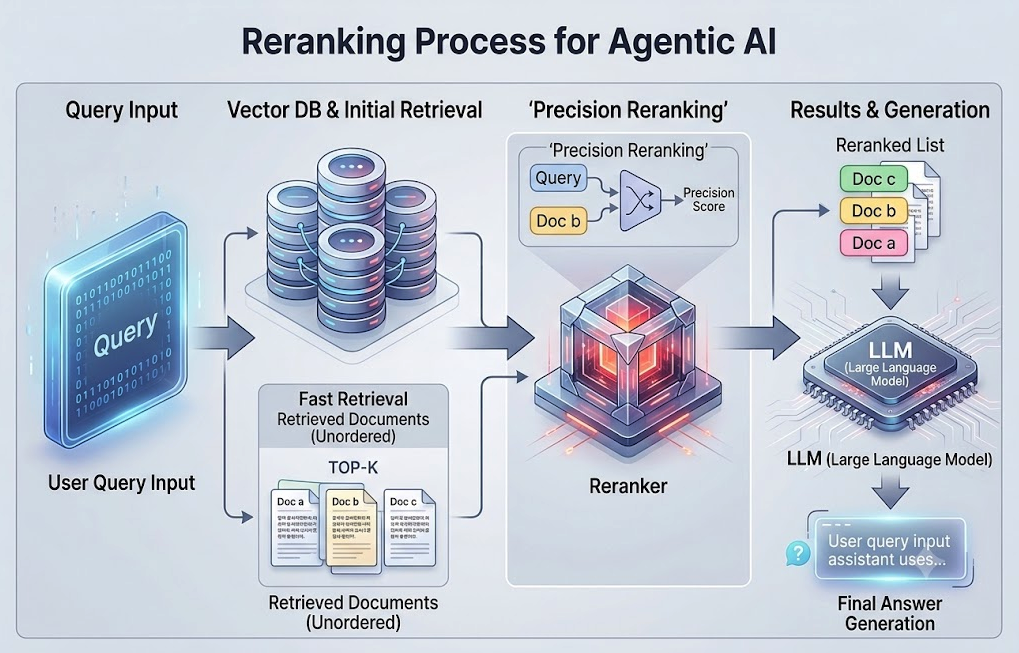
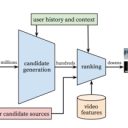
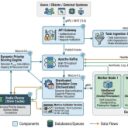
1. Initial Retrieval Prioritizes Speed Over PrecisionIn standard RAG systems, the first-stage retrieval (using dense embeddings or sparse keyword matching) is designed to scan vast databases rapidly. It focuses on speed and breadth, fetching a broad list of the top-k candidate documents. Because it optimizes for speed, this initial step often pulls in documents that are only tangentially related or lack the exact context needed.
2. Eliminating the "Noise" for the LLMIf you pass the raw, unfiltered results of the initial retrieval directly to a Large Language Model (LLM), it introduces several risks:
3. Precision Filtering via Advanced ModelsReranking acts as a second-stage, high-precision filter. It uses more powerful, computationally heavier models—such as cross-encoders or late-interaction rerankers—to re-evaluate the exact relationship between the user query and the retrieved documents. This ensures that the most semantically relevant and informative documents are pushed to the very top.
4. High Indispensability for Agentic AIFor autonomous AI agents that make decisions, call tools, and execute multi-step reasoning, accuracy is everything.
| ||
| | ||
| |