| LLMs, also known as AI Foundation Models, deliver excellent performance independently, yet their information regarding specific domains is frequently outdated or inaccurate. To develop a ChatGPT specialized for a particular field, a strategy is required that involves building a proprietary vector database and connecting it multimodally. 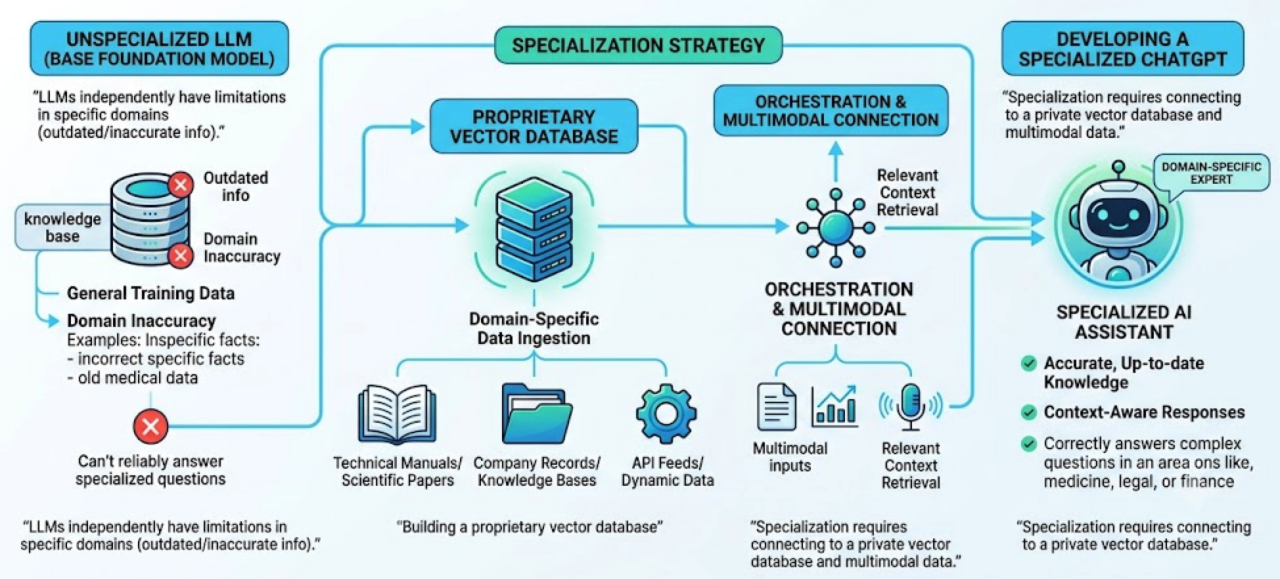
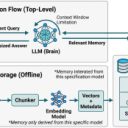
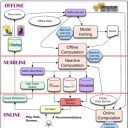
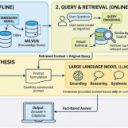
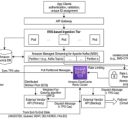
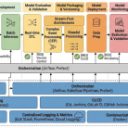
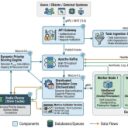
The recommended architecture for a specialized ChatGPT for a shopping mall, leveraging SageMaker and Milvus, follows a Retrieval Augmented Generation (RAG) pattern. This modular approach ensures scalability, maintainability, and the ability to combine the power of large language models with up-to-date, factual mall-specific information. 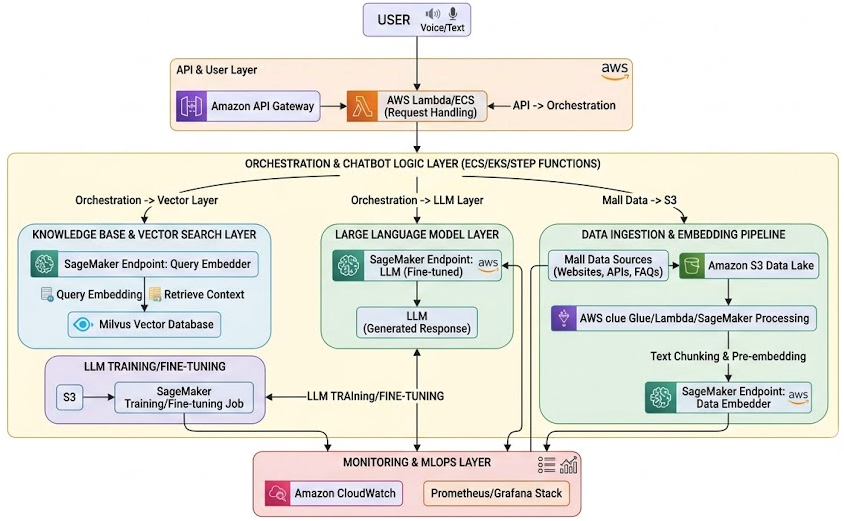
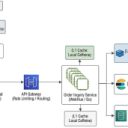
1. User Interface & API Layer- Amazon API Gateway: Acts as the secure, scalable entry point for user requests (text or voice).
- AWS Lambda / Amazon ECS/EKS: Handles initial request parsing, authentication, and routes the request to the orchestration layer. Lambda is suitable for stateless interactions, while ECS/EKS might be preferred for more complex session management or custom business logic.
2. Orchestration & Logic Layer- Amazon ECS/EKS Service (or AWS Step Functions): This is the brain of the chatbot.
- Intent Recognition: Determines if the user's query is conversational, a direct search, or a recommendation request.
- Query Pre-processing: Cleans and prepares the user input.
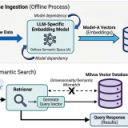
- Query Embedding: Sends the processed query to a SageMaker Endpoint hosting an embedding model.
- Context Retrieval: Uses the query embedding to perform a similarity search in Milvus, retrieving relevant chunks of mall information (stores, products, events, FAQs).
- Prompt Engineering: Constructs a comprehensive prompt for the LLM, combining the original user query with the retrieved context.
- LLM Invocation: Calls the SageMaker Endpoint hosting the large language model to generate a response.
- Post-processing: Filters, formats, and enhances the LLM's raw output before sending it back to the user.
- Recommendation Logic: If triggered, applies specific rules or calls a dedicated recommendation model (can also be on SageMaker).
3. Knowledge Base & Vector Search Layer- Milvus Vector Database: Stores vector embeddings of all shopping mall-specific information (store descriptions, product categories, promotions, event details, FAQs, floor plans, restaurant menus). It provides fast and accurate similarity search to retrieve relevant context.
- SageMaker Endpoint (Embedding Model): Hosts the text embedding model (e.g.,
all-MiniLM-L6-v2, bge-small-en) used to convert both mall knowledge base text and user queries into vector embeddings.
4. Large Language Model (LLM) Layer- SageMaker Endpoint (LLM): Hosts the chosen Large Language Model.
- Initially, this could be a powerful pre-trained model from SageMaker JumpStart (e.g., Llama 2, Falcon, Mistral).
- SageMaker Training/Fine-tuning Job: For specialized mall knowledge and conversational style, the base LLM can be fine-tuned using mall-specific datasets. This results in a more accurate and contextually relevant LLM.
5. Data Ingestion & Embedding Pipeline- Mall Data Sources: Various sources like mall websites, internal databases, PDFs (store directories, event calendars, tenant agreements), APIs from retailers, and FAQs.
- Amazon S3 Data Lake: Stores raw and processed data.
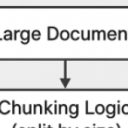
- AWS Glue / AWS Lambda / SageMaker Processing: ETL jobs for data extraction, cleaning, text chunking, and formatting. This prepares the data for embedding.
- SageMaker Endpoint (Data Embedder): Generates vector embeddings for the prepared text chunks from the knowledge base, which are then inserted into Milvus.
6. Monitoring, Logging & MLOps- Amazon CloudWatch: For collecting logs, metrics, and setting up alarms across all AWS components (API Gateway, Lambda, ECS, SageMaker).
- SageMaker Model Monitor: Continuously monitors the deployed LLM and embedding models for data drift, model quality, and bias.
- Prometheus/Grafana (for Milvus/ECS): For detailed observability of the Milvus cluster and custom ECS services.
Why This Architecture?1. Retrieval Augmented Generation (RAG): This is the core principle. The LLM handles natural conversation and general knowledge, while Milvus provides real-time, accurate, and up-to-date mall-specific facts. This prevents LLM hallucinations for factual mall data, allows easy updates to mall information without retraining the LLM, and significantly reduces LLM inference costs by providing targeted context.
2. Specialization for Shopping Mall Context: - Milvus: Acts as the dedicated, high-performance knowledge base for all mall entities (stores, products, promotions, events). Its vector search capabilities allow for semantic understanding of mall-related queries.
- SageMaker Fine-tuning: Customizing the LLM with mall-specific data (FAQs, common questions, local jargon, brand names) significantly improves its relevance, accuracy, and tone for the shopping mall environment.
3. Modularity and Scalability: Each layer is a distinct, decoupled service. This allows for: - Independent scaling of components based on their individual workload.
- Easier development, deployment, and maintenance.
- Improved fault isolation – a failure in one component doesn't necessarily bring down the entire system.
4. Leveraging SageMaker for LLM Lifecycle: - JumpStart: Provides a quick start with optimized, state-of-the-art open-source LLMs.
- Fine-tuning: Offers managed tooling for adapting LLMs efficiently and cost-effectively, crucial for domain specialization.
- Endpoints: Provides managed, scalable hosting for both embedding models and the main LLM, including features like auto-scaling, A/B testing, and blue/green deployments.
- Processing: Handles large-scale data preparation efficiently for embeddings and fine-tuning.
5. Milvus for Vector Search Excellence: Milvus is purpose-built for vector similarity search, offering high performance, various indexing techniques (e.g., HNSW for speed), and the ability to combine semantic search with metadata filtering (e.g., "Italian restaurants open after 8 PM on the 3rd floor").
6. AWS Managed Services: Utilizing services like API Gateway, Lambda, S3, Glue, and CloudWatch reduces operational overhead, provides inherent high-availability, and allows the development team to focus on core business logic rather than infrastructure management.
7. Natural Conversation & Recommendations: - Natural Conversation: The LLM's generative capabilities, combined with retrieved context from Milvus, enable fluid and contextually aware dialogue.
- Recommendation: Basic recommendations are supported by retrieving relevant entities (stores, restaurants) via RAG based on implicit or explicit user needs. For more sophisticated, personalized recommendations, the Orchestration layer can integrate user profiles and potentially invoke a separate recommendation model (also deployable on SageMaker).
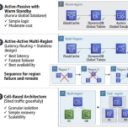
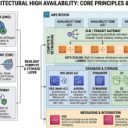
How to Achieve High-Availability (HA) and ScalabilityAchieving HA and scalability involves designing each component to be resilient and capable of handling varying loads, typically by leveraging AWS's distributed infrastructure and managed services. General Principles- Redundancy Across AZs: Deploy critical components across multiple AWS Availability Zones (AZs) within a region.
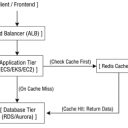
- Stateless Design: Prefer stateless services where possible, offloading state to highly available managed databases (e.g., DynamoDB, ElastiCache).
- Auto-Scaling: Configure dynamic scaling policies for compute resources based on demand.
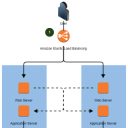
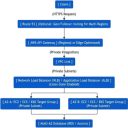
- Load Balancing: Distribute incoming traffic across healthy instances using load balancers.
- Monitoring & Alerting: Implement comprehensive monitoring to detect issues proactively and trigger alerts.
Component-Specific HA/Scalability1. Amazon API Gateway: - HA/Scalability: Fully managed by AWS, inherently highly available, and scales automatically to handle traffic spikes globally.
2. AWS Lambda: - HA/Scalability: Fully managed, functions run in parallel across multiple AZs. Scales automatically and elastically based on demand without configuration.
3. Orchestration Service (Amazon ECS/EKS): - HA: Deploy ECS tasks or Kubernetes pods across multiple AZs. Use ECS Service Auto Scaling or Kubernetes Horizontal Pod Autoscaler (HPA) to maintain desired capacity. Utilize an Application Load Balancer (ALB) to distribute traffic.
- Scalability: Use AWS Fargate for serverless container deployment to simplify scaling and management, or deploy on EC2 instances within an Auto Scaling Group for more control. Store session state in external, highly available services like Amazon DynamoDB or Amazon ElastiCache (Redis).
4. Milvus Vector Database: - HA: Deploy Milvus in a distributed cluster mode on Amazon EKS across multiple nodes and AZs.
- Object Storage: Use Amazon S3 as the primary storage backend for Milvus segments for high durability and cost-effectiveness.
- Metadata Storage: Deploy a highly available Etcd cluster (e.g., 3-5 nodes) across multiple AZs for Milvus metadata.
- Message Queue: Use Amazon MSK (Managed Streaming for Apache Kafka) or self-managed Kafka/Pulsar deployed across AZs for Milvus's message queue component, ensuring message durability and high throughput.
- Node Distribution: Distribute Milvus components (RootCoord, Proxy, QueryNode, IndexNode, DataNode) across different EKS nodes/pods and AZs.
- Scalability:
- Horizontal Scaling: Add more QueryNodes to increase query throughput, IndexNodes to accelerate indexing, and DataNodes for storage capacity.
- Resource Allocation: Allocate appropriate CPU/memory/storage to each Milvus component based on workload characteristics. Use performant storage (e.g., Amazon EBS
io2 Block Express) for data-intensive nodes. - Indexing Strategy: Choose appropriate index types (e.g., HNSW for balanced performance) and tune parameters for optimal query latency and recall.
5. SageMaker Endpoints (LLM & Embedding Models): - HA: When configuring
production_variants for your SageMaker Endpoint, set instance_count to greater than 1. SageMaker automatically distributes these instances across multiple AZs for high availability. - Scalability: Configure SageMaker Endpoint Auto Scaling based on metrics such as CPU utilization, GPU utilization, or inference latency. Choose appropriate instance types (e.g.,
ml.g5 or ml.p4d for LLMs, ml.c6i or smaller ml.g4dn for embedding models) and scale up/down as needed.
6. Data Ingestion & Embedding Pipeline (S3, Glue, SageMaker Processing): - HA/Scalability: Amazon S3 is inherently highly durable and available. AWS Glue and SageMaker Processing Jobs are managed services that dynamically scale their underlying compute resources based on job requirements. AWS Lambda for data processing also scales automatically.
7. Data Storage (S3, DynamoDB): - HA/Scalability: Amazon S3 offers 99.999999999% (11 nines) durability and high availability. Amazon DynamoDB provides built-in HA by synchronously replicating data across multiple AZs and offers scalable capacity modes (on-demand or provisioned) that automatically adjust throughput.
|