Autonomous Vehicle Machine Learning (AV ML): An Architectural Review
CK 3788 Created at Updated at
40400
What is AV ML?
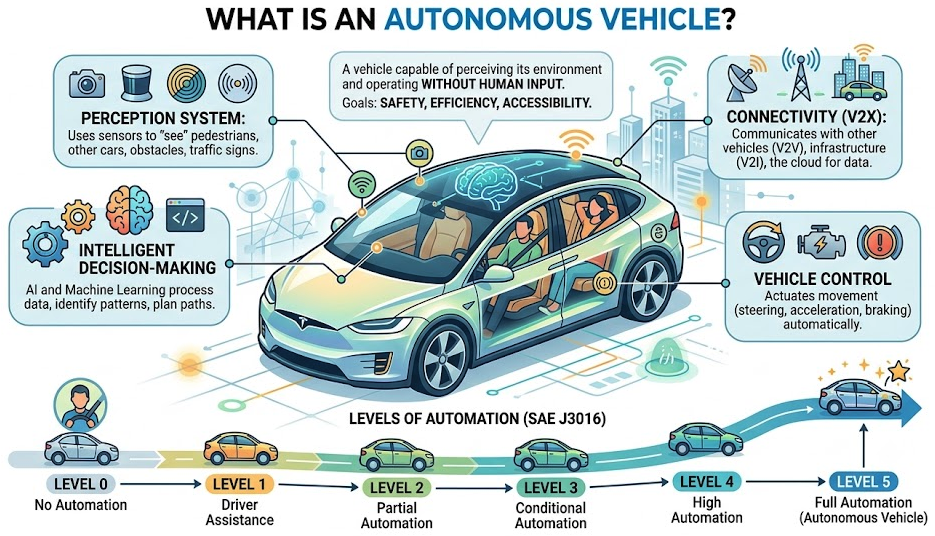
Autonomous Vehicle (AV): Refers to self-driving cars or vehicles capable of perceiving their environment and operating without human input. The ultimate goal of AVs is to enhance safety, efficiency, and accessibility in transportation.
Machine Learning (ML): A subset of artificial intelligence (AI) that empowers systems to learn from data, identify patterns, and make decisions with minimal human intervention. ML models are central to enabling intelligent behavior in complex systems.
AV ML: The application of sophisticated machine learning techniques to develop intelligent autonomous vehicles. This field focuses on building and deploying AI models that allow vehicles to perceive, understand, predict, and control their movement autonomously, essentially creating a "smart" self-driving car.
Core Technologies in AV ML
Real-time Object Recognition
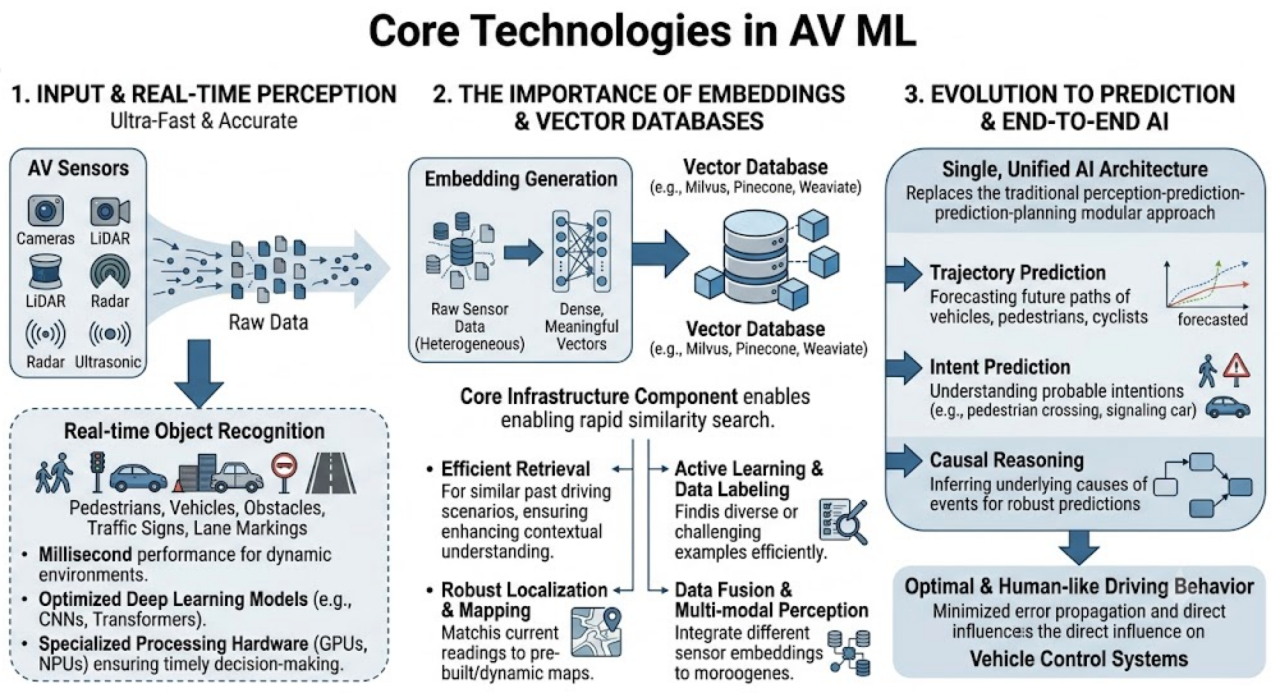
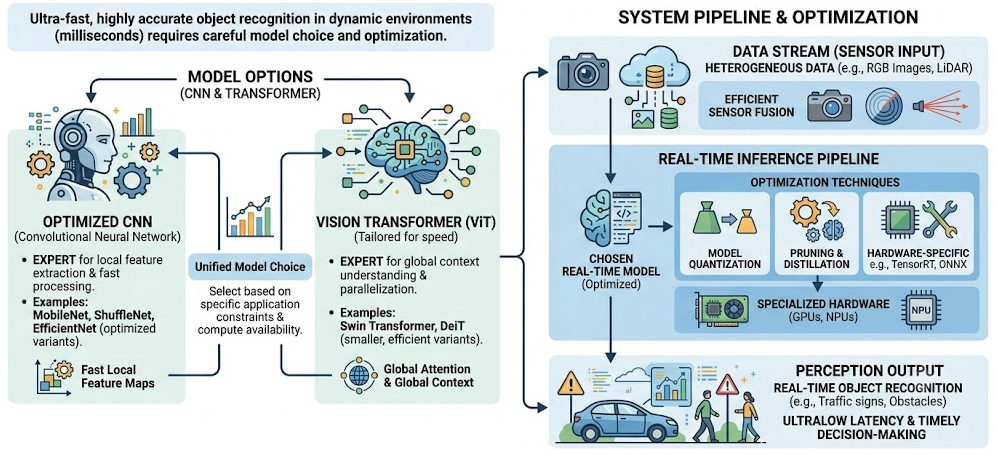
Operating in dynamic environments, autonomous vehicles require ultra-fast, highly accurate perception capabilities. The ability to identify surrounding pedestrians, other vehicles, obstacles, traffic signs, and lane markings must occur in milliseconds, especially when traveling at speeds of tens of kilometers per hour. This "real-time" aspect is paramount for ensuring timely decision-making and safe operation, demanding highly optimized deep learning models (e.g., CNNs, Transformers) and specialized processing hardware (GPUs, NPUs).
The Importance of Embedding and Vector Databases
Dealing with the vast and high-dimensional data streams from multiple sensors—cameras, LiDAR, radar, and ultrasonic—is a significant challenge. Embeddings play a crucial role here by transforming this raw, heterogeneous sensor data into dense, meaningful high-dimensional vectors. These vectors semantically represent objects, scenes, or even entire driving contexts, making them more efficient to process and compare.
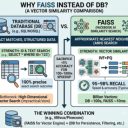
A vector database (e.g., Milvus, Pinecone, Weaviate) is a core infrastructure component for AV ML. It stores, indexes, and enables rapid similarity search on these embeddings. This allows the AV system to:
Efficiently retrieve past driving scenarios similar to the current one for contextual understanding.
Facilitate efficient data labeling and active learning by finding diverse or challenging examples.
Enable robust localization and mapping by matching current sensor readings to pre-built or dynamically generated maps represented as embeddings.
Support data fusion and multi-modal perception by integrating different sensor embeddings into a unified representation.
Vector Database Comparison: Milvus vs. Pinecone vs. Weaviate
Feature
Milvus
Pinecone
Weaviate
Type
Open-source, Cloud-Native Vector Database (with a managed offering, Zilliz Cloud)
Fully Managed SaaS Vector Database
Open-source, Graph-based Vector Database (with a managed offering, Weaviate Cloud)
Free for self-hosted (open-source). Weaviate Cloud is usage-based.
Strengths
- Open-source, community-driven - Highly flexible deployment options - Excellent for very large datasets - Decoupled architecture for cost-efficiency
- Fully managed, zero-ops - Extremely easy to get started and scale - High performance and reliability for production workloads - Strong enterprise support
- Open-source, strong community - Built-in RAG (Generative Search) capabilities - GraphQL-native API for rich data modeling - Schema-driven data types for better structure
Weaknesses
- Self-hosting requires more operational overhead - Can have a steeper learning curve for advanced configurations
- Vendor lock-in - Can become expensive at very high scale/usage - Less control over underlying infrastructure
- Self-hosting can be resource-intensive - GraphQL might be a learning curve for some - Less "pure" vector database, more of a semantic search engine
Best For
- Enterprises needing full control and customization - Large-scale open-source projects - Workloads requiring extreme flexibility in deployment
- Startups and enterprises prioritizing speed of development and minimal ops - Rapid prototyping and production with high traffic requirements - Teams without dedicated MLOps/DBA resources
- Teams building semantic search, RAG, and generative AI applications with rich metadata - Projects benefiting from a structured, graph-like data model - Developers preferring GraphQL for data interaction
Milvus is ideal for users who want an open-source, highly scalable, cloud-native solution and are comfortable managing their own infrastructure (or using Zilliz Cloud for a managed experience).
Pinecone excels in its simplicity and "zero-ops" approach, making it perfect for rapid development, managed scalability, and high-performance production workloads where the convenience of a fully managed service outweighs the cost and vendor lock-in.
Weaviate offers a compelling open-source option with unique features like GraphQL-native API and built-in Generative Search, making it particularly strong for semantic search, RAG, and AI applications that benefit from a richer, schema-driven data model.
Evolution to Prediction and End-to-End AI
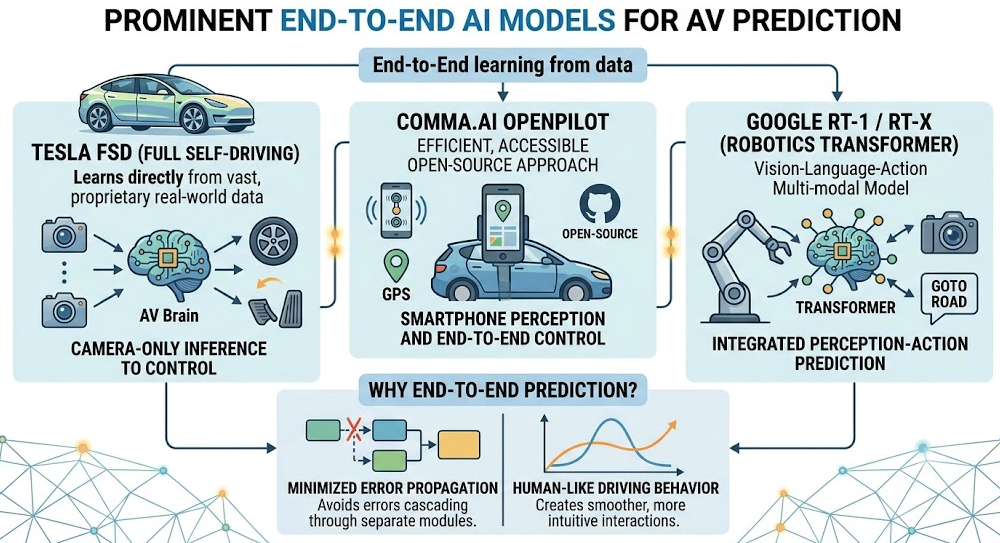
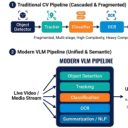
The AV ML paradigm is rapidly evolving beyond mere object recognition. The latest trend is to develop End-to-End AI models that not only identify objects but also predict their future behavior and directly influence the vehicle's control systems. This involves:
Trajectory Prediction: Forecasting the likely paths of other vehicles, pedestrians, and cyclists.
Intent Prediction: Understanding the probable intentions of agents (e.g., a pedestrian preparing to cross the road, a car signaling a lane change).
Causal Reasoning: Inferring underlying causes of events to make more robust predictions.
These end-to-end models aim to streamline the entire perception-prediction-planning pipeline into a single, unified AI architecture, potentially leading to more optimal and human-like driving behaviors by minimizing error propagation between modular components.
Open Source as a Foundation
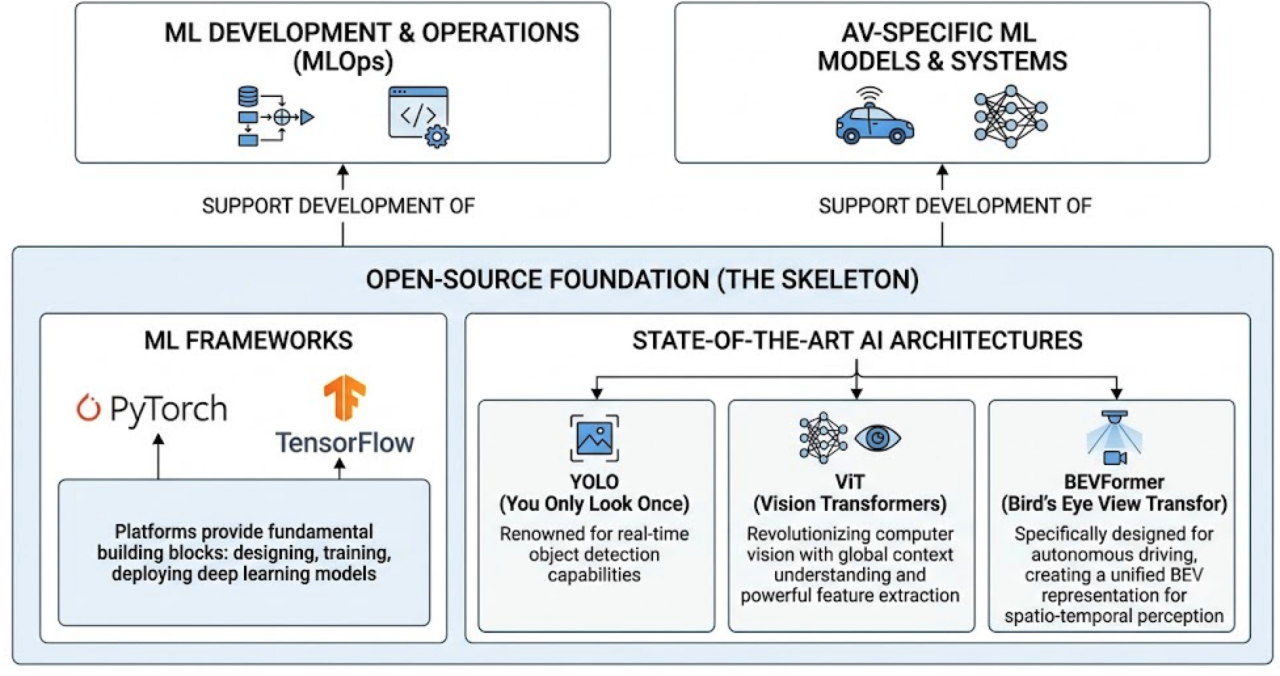
The development of AV ML solutions heavily leverages the robust ecosystem of open-source tools and frameworks. This forms the "skeleton" of the development process:
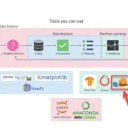
ML Frameworks: Platforms like PyTorch (or TensorFlow) provide the fundamental building blocks for designing, training, and deploying deep learning models.
State-of-the-art AI Architectures: Researchers and developers actively adopt and adapt cutting-edge open-source models such as:
YOLO (You Only Look Once): Renowned for its real-time object detection capabilities.
ViT (Vision Transformers): Revolutionizing computer vision by applying transformer architectures (originally for NLP) to image tasks, offering powerful feature extraction and global context understanding.
BEVFormer (Bird's Eye View Transformer): An innovative architecture specifically designed for autonomous driving, utilizing transformer networks to generate a unified Bird's Eye View representation from multiple camera inputs, crucial for spatio-temporal perception.
Proprietary Data and Optimization for Deployment
While open-source provides the foundational tools, the "flesh" of a high-performing AV system is built upon proprietary assets and meticulous optimization:
Massive, Exclusive Driving Data: Companies invest heavily in collecting and curating millions of miles of actual driving data. This unique dataset is paramount for:
Training robust models that generalize well across diverse environments, weather conditions, and rare "edge cases" not easily found in public datasets.
Validating model performance against real-world scenarios.
Continuously improving model accuracy and safety through iterative retraining.
Hardware Optimization and Lightweighting: After training on extensive datasets, models must be optimized for efficient deployment on vehicle-grade chipsets. This involves:
Model Quantization: Reducing the precision of model weights and activations (e.g., from 32-bit floating point to 8-bit integer) to reduce memory footprint and increase inference speed.
Pruning and Distillation: Removing redundant connections or transferring knowledge from a large teacher model to a smaller student model.
Hardware-Specific Optimizations: Tailoring models to leverage the specific accelerators (e.g., TPUs, NPUs) and instruction sets of embedded automotive processors, often using tools like NVIDIA's TensorRT or ONNX Runtime.
MLOps Pipeline Architecture for Autonomous Vehicles
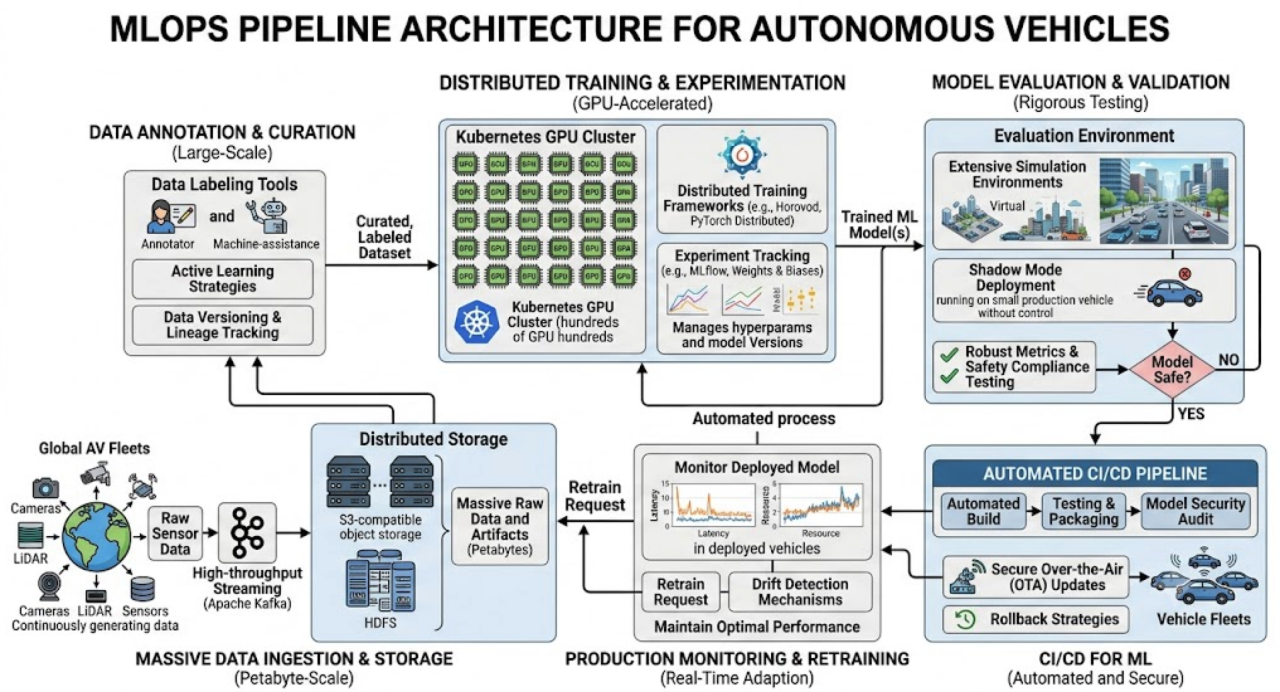
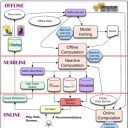
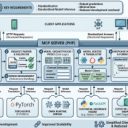
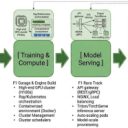
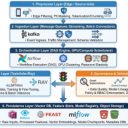
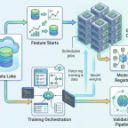
The development and deployment of AV ML systems necessitate a robust and scalable MLOps pipeline to manage the entire machine learning lifecycle. Given the petabyte-scale data continuously generated by global fleets of autonomous vehicles (such as those from GM), this pipeline must be built upon distributed systems capable of handling immense volumes and velocities of data reliably.
Key architectural components and considerations for such an MLOps pipeline include:
Massive Data Ingestion & Storage:
Scalable distributed storage solutions (e.g., S3-compatible object storage, HDFS) for petabytes of raw sensor data and derived artifacts.
High-throughput streaming platforms (e.g., Apache Kafka) for real-time data ingestion from vehicles.
Data Annotation & Curation:
Tools and processes for large-scale data labeling, often involving human annotators and active learning strategies to prioritize data that improves model performance.
Data versioning and lineage tracking to ensure reproducibility and accountability.
Distributed Training & Experimentation:
GPU-accelerated compute clusters managed by orchestrators like Kubernetes.
Distributed training frameworks (e.g., Horovod, PyTorch Distributed) to efficiently train models across hundreds or thousands of GPUs.
Experiment tracking (e.g., MLflow, Weights & Biases) to manage hyperparameters, model versions, and evaluation metrics.
Model Evaluation & Validation:
Extensive simulation environments for virtual testing and stress-testing models in various scenarios.
Shadow mode deployment (running models in production without controlling the vehicle) for real-world validation and performance monitoring.
Robust metrics and testing frameworks to ensure model safety and compliance.
Continuous Integration/Continuous Deployment (CI/CD) for ML:
Automated pipelines for building, testing, and packaging ML models.
Secure and efficient model deployment mechanisms (e.g., over-the-air updates) to vehicle fleets.
Rollback strategies for safe model updates.
Production Monitoring & Retraining:
Real-time monitoring of model performance, latency, and resource utilization in deployed vehicles.
Drift detection mechanisms to identify when model performance degrades due to changes in data distribution.
Automated triggers for retraining models with fresh data to maintain optimal performance and adapt to new driving conditions.
This integrated MLOps pipeline is critical for the rapid iteration, continuous improvement, and safe operation required in the fast-evolving field of autonomous vehicle development.