LLM Application Development with LangGraph: Features and Architectures for Stateful Multi-Actor LLM Applications | ||
| ||
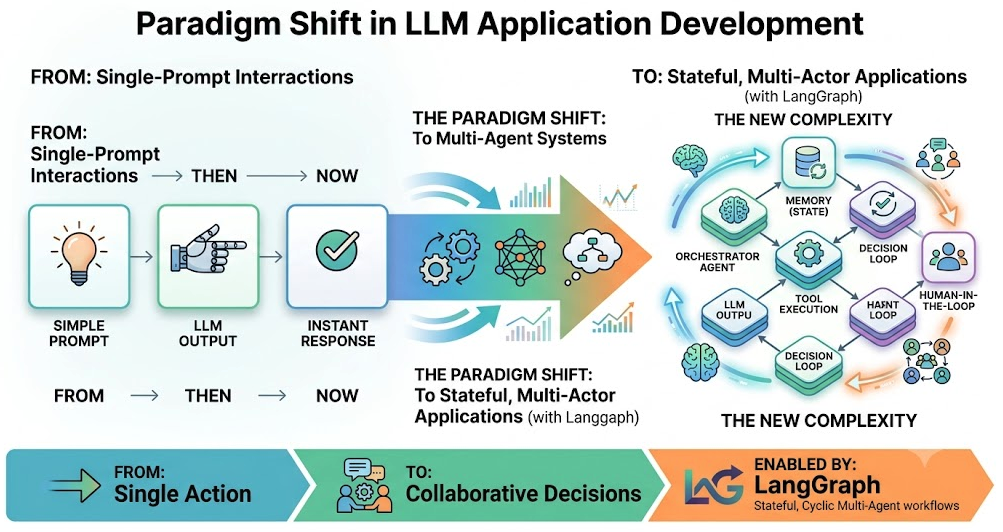
| The paradigm shift in building applications with Large Language Models (LLMs) has moved from simple, single-prompt interactions to complex, multi-agent systems that require memory, decision-making loops, and collaboration. To address this, the creators of LangChain developed LangGraph. LangGraph is the extension of LangChain specifically designed for building stateful, multi-actor applications with LLMs. Here is an in-depth investigation into LangGraph, its core features, and the proposed application integration architectures.
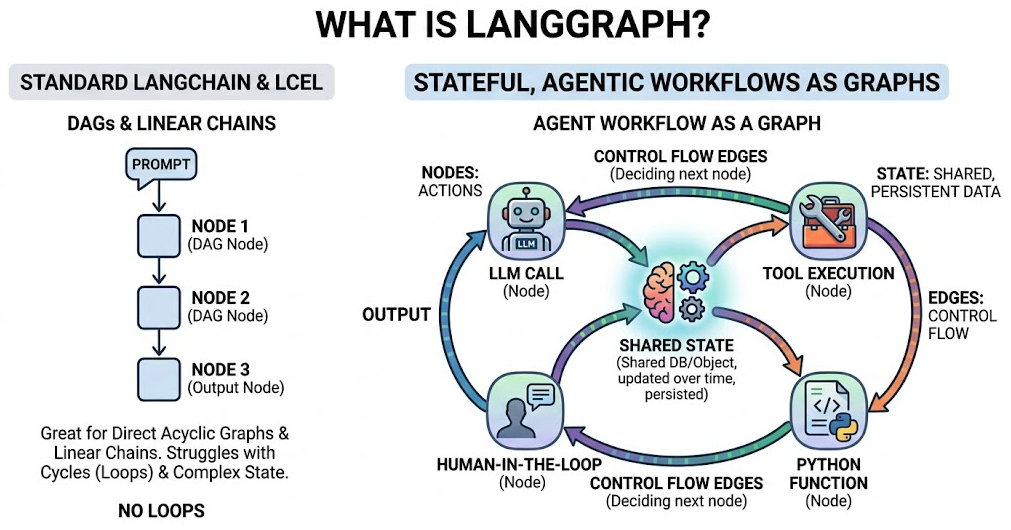
1. What is LangGraph?While standard LangChain (and LangChain Expression Language - LCEL) is great for DAGs (Directed Acyclic Graphs) and linear chains, it struggles with cycles (loops) and complex state management. LangGraph models agent workflows as graphs where:
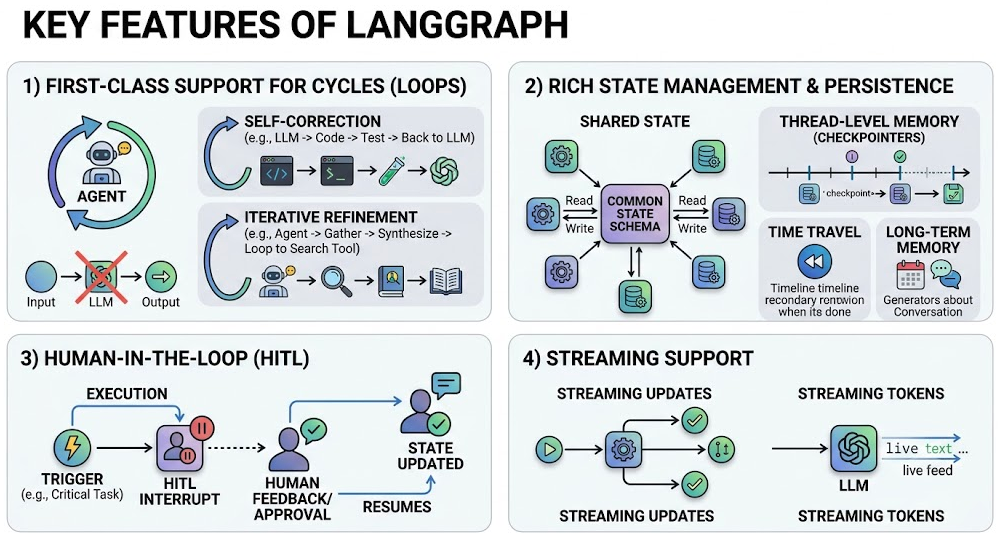
2. Key Features of LangGraphLangGraph provides several unique features designed for enterprise-grade, multi-actor LLM applications:
1) First-Class Support for Cycles (Loops)Traditional chains execute in a straight line (Input \rightarrow Prompt \rightarrow LLM \rightarrow Output). LangGraph allows nodes to loop back to previous nodes. This is essential for:
2) Rich State Management & Persistence
3) Human-in-the-Loop (HITL)For critical tasks (e.g., sending an email, executing a financial transaction, or approving code), LangGraph can interrupt execution before a specific node, wait for human feedback/approval, update the state based on that feedback, and resume execution.
4) Streaming SupportLangGraph supports multiple streaming modes out of the box:
3. Proposed Multi-Actor Architectures (Design Patterns)When building multi-actor (multi-agent) applications, LangGraph proposes three primary architectural patterns depending on the complexity of the task:
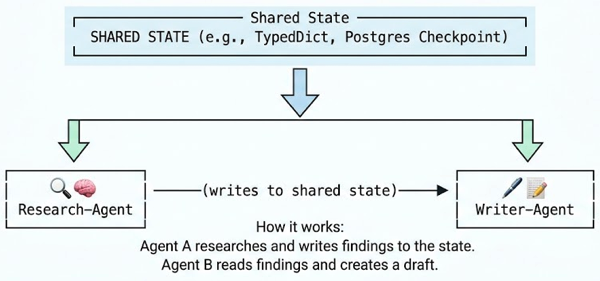
Pattern A: Collaboration via Shared State (The Boardroom)In this architecture, multiple specialized agents work on a single, shared state. They take turns reading the state, adding their contribution, and passing it on.
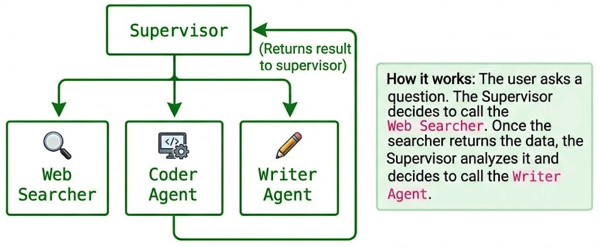
Pattern B: Supervisor-Worker (The Hierarchy)This is one of the most popular patterns. A central "Supervisor" agent (an LLM) acts as a project manager, delegating tasks to specialized "Worker" agents and deciding when the project is finished.
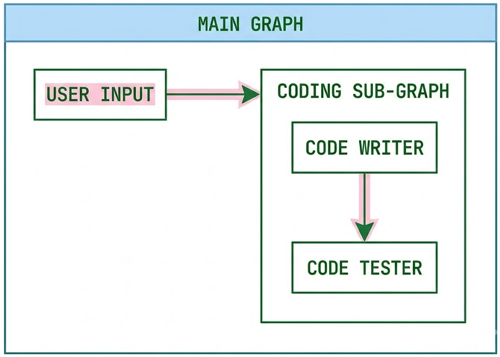
Pattern C: Hierarchical Teams (Sub-graphs)For massive enterprise applications, a single graph becomes too complex. LangGraph allows nodes to be nested graphs.
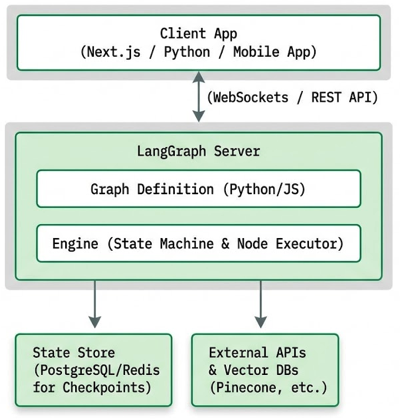
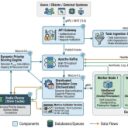
4. Proposed Application Integration InfrastructureTo run these multi-actor architectures in production, LangChain provides a robust infrastructure stack.
Components of the Production Architecture:1. LangGraph Server (or LangGraph Cloud):
2. State Store (Persistence Layer):
3. The API Layer (WebSockets & REST):
4. Observability (LangSmith Integration):
SummaryLangGraph elevates LangChain from a "prompt chaining" tool to a robust system architecture. By modeling agents as stateful graphs, it solves the hardest problems in agentic workflows: managing state, allowing loopbacks, implementing human oversight, and scaling through hierarchical sub-graphs. | ||
| | ||
| |