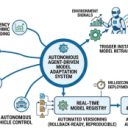
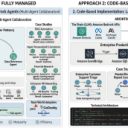
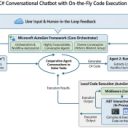
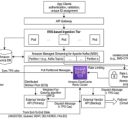
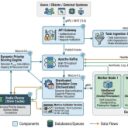
| The LLM-Powered Multi-Agent Orchestration System is designed as a decoupled, event-driven architecture that transforms complex unstructured tasks into structured outcomes through autonomous agent collaboration. The execution pipeline begins with asynchronous message queueing, priority handling, and deduplication, leading into a workflow engine that manages state persistence, error recovery, and Directed Acyclic Graph execution. Tasks are dynamically routed based on intent, capability, and cost constraints to specialized agents that handle classification, summarization, and schema-constrained data extraction. A rigorous quality validation layer enforces output schemas, performs hallucination checks, and executes self-correction loops before saving validated results to SQL and vector databases and emitting event notifications. Telemetry components capture token usage, financial metrics, and distributed tracing across all operations, while non-functional specifications ensure low queue overhead, auto-scaling to at least 500 concurrent workflows, 99.9% availability, PII redaction, TLS 1.3 and AES-256 encryption, and cost optimization through semantic caching and dynamic model selection. System Overview & Execution FlowThe LLM-Powered Multi-Agent Orchestration System processes complex, unstructured tasks through a decoupled, event-driven architecture. The pipeline converts heterogeneous user inputs into high-quality, structured outcomes through autonomous agent collaboration. 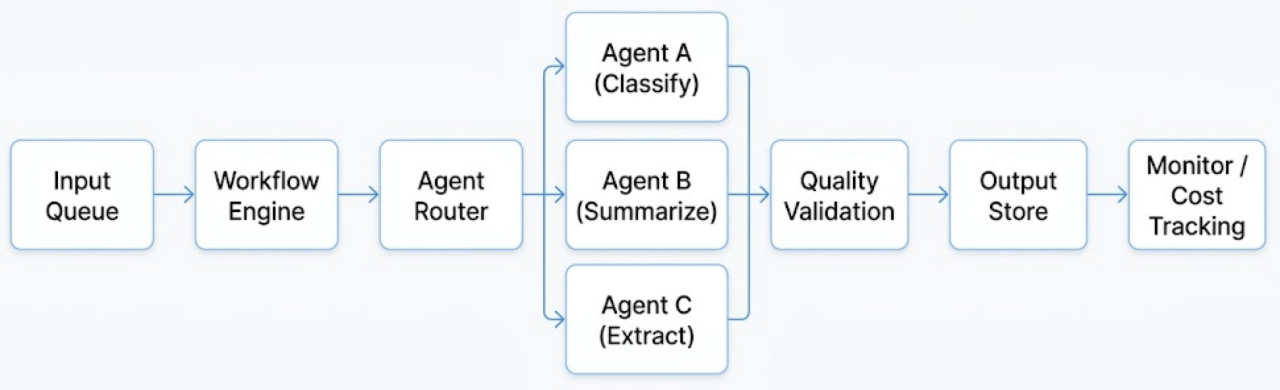
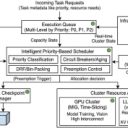
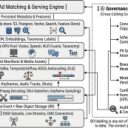
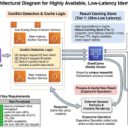
Conceptual Architectural Diagram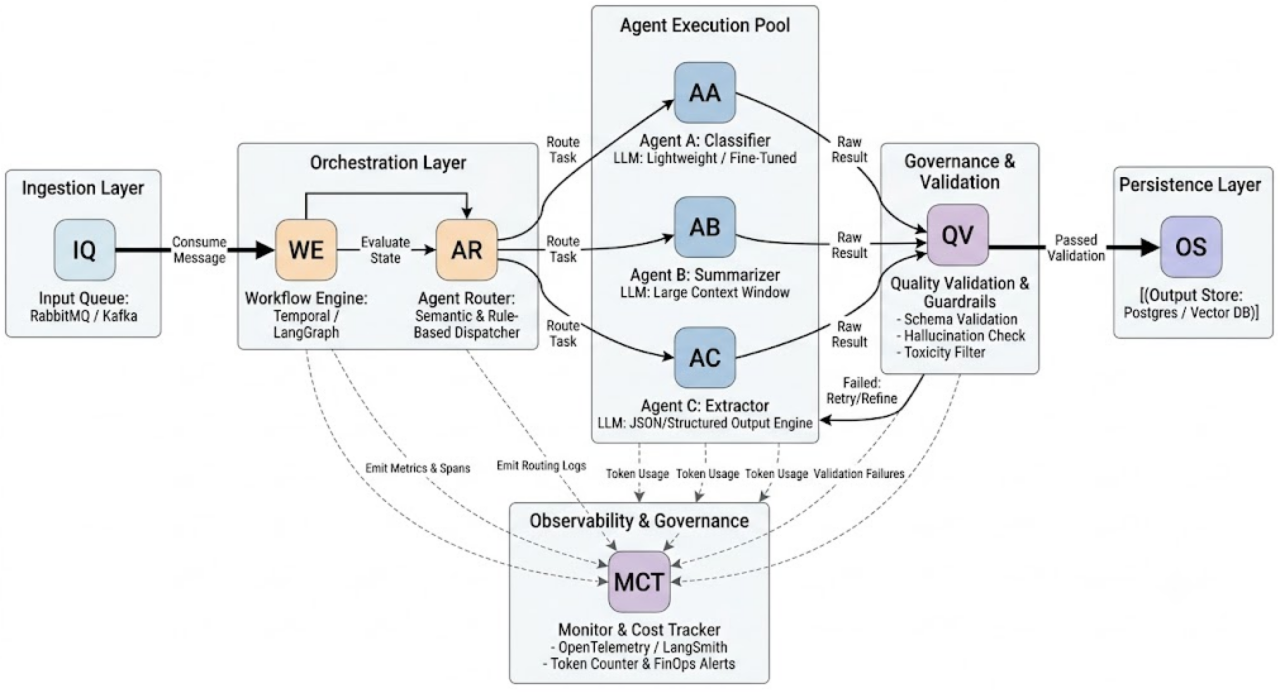
Functional Requirements (FR)1. Ingestion & Queue Management- FR-1.1 (Message Queueing): The system must accept incoming asynchronous requests via an Input Queue (e.g., Kafka, RabbitMQ, AWS SQS) to buffer bursts in traffic.
- FR-1.2 (Priority Handling): Support priority-based queueing to allow high-priority workflows to bypass standard processing lines.
- FR-1.3 (Deduplication): Identify and discard duplicate payloads submitted within a configurable time window.
2. Workflow Orchestration & State Management- FR-2.1 (DAG Execution): Execute multi-step task execution plans represented as Directed Acyclic Graphs (DAGs).
- FR-2.2 (State Persistence): Maintain current step state, history, and variable context throughout the lifecycle of a request.
- FR-2.3 (Fallback & Error Recovery): Automatically trigger retries, agent model downgrades, or human-in-the-loop escalation paths upon workflow execution errors.
3. Agent Routing- FR-3.1 (Dynamic Routing): Analyze incoming payloads and metadata to dynamically route tasks to appropriate agents based on capabilities, task intent, and cost constraints.
- FR-3.2 (Load Balancing): Distribute workloads across multiple instances of the same agent type to avoid rate-limiting bottlenecks on underlying LLM APIs.
4. Specialized Agent Execution- FR-4.1 (Agent A - Intent & Classification): Categorize incoming input into defined domain taxonomies, compute confidence scores, and determine downstream processing steps.
- FR-4.2 (Agent B - Summarization): Condense long-form inputs into specified formats (e.g., bullet points, executive summaries) while retaining key factual context.
- FR-4.3 (Agent C - Data Extraction): Parse unstructured text into strict JSON/Pydantic schemas for entities, dates, intent parameters, and domain-specific attributes.
5. Quality Validation & Guardrails- FR-5.1 (Schema Enforcement): Validate agent outputs against predetermined JSON structures or regular expressions before writing to storage.
- FR-5.2 (Hallucination & Fact Check): Perform consistency checks between agent outputs and original source inputs using cross-evaluation or lightweight verifier models.
- FR-5.3 (Self-Correction Loop): If validation fails, automatically route the error message and failed output back to the originating agent for re-generation (up to N configured attempts).
6. Output Storage & Data Access- FR-6.1 (Multi-Format Storage): Store final validated responses, intermediate outputs, and execution metadata in persistent databases (SQL for structured data, Vector DB for semantic indexing).
- FR-6.2 (Event Notification): Emit downstream webhooks or events upon successful task completion.
7. Monitoring & Cost Tracking- FR-7.1 (Token Usage Tracking): Capture prompt and completion token metrics per agent, per request, and per user tenant.
- FR-7.2 (Financial Dashboarding & Alerts): Provide real-time tracking of token expenditures and raise alerts when budget thresholds are reached.
- FR-7.3 (Distributed Tracing): Track end-to-end request IDs across queues, orchestration states, router decisions, and LLM API calls.
Non-Functional Requirements (NFR)1. Performance & Latency- NFR-1.1 (Queue Latency): Input queue ingestion latency must not exceed 50ms under standard operational load.
- NFR-1.2 (Routing Overhead): Agent Router decision logic must add no more than 100ms of overhead per routing event (excluding LLM inference time).
- NFR-1.3 (End-to-End SLA): 95% of standard requests (excluding long-form summarization) must complete within 5 seconds.
2. Scalability & Availability- NFR-2.1 (Horizontal Auto-scaling): The Workflow Engine, Router, and Agent execution units must auto-scale horizontally based on CPU/Memory utilization and queue depth.
- NFR-2.2 (System Availability): The orchestration system must maintain 99.9% uptime (excluding third-party LLM provider downtime).
- NFR-2.3 (Throughput): Support a baseline execution capacity of at least 500 concurrent agent workflows.
3. Reliability & Resilience- NFR-3.1 (Rate Limit Handling): Gracefully handle HTTP 429 (Too Many Requests) errors from LLM providers using exponential backoff and jitter strategies.
- NFR-3.2 (Idempotency): The system must guarantee that re-running a failed workflow with the same correlation ID produces identical results without duplicate side effects.
4. Security & Compliance- NFR-4.1 (Data Anonymization): Redact Personally Identifiable Information (PII) before sending payloads to external LLM provider APIs.
- NFR-4.2 (Encryption): Encrypt all data in transit via TLS 1.3 and data at rest (Input Queue, Output Store, logs) using AES-256.
- NFR-4.3 (Access Control): Implement Role-Based Access Control (RBAC) for accessing system telemetry, workflow states, and final storage outputs.
5. Cost Efficiency- NFR-5.1 (Model Selection Optimization): Route low-complexity classification tasks to smaller, cost-effective LLMs (e.g., GPT-4o-mini, Claude 3 Haiku) to minimize total API expenditure.
- NFR-5.2 (Response Caching): Cache identical input prompts and agent responses using a semantic caching layer (e.g., Redis/GPTCache) to reduce redundant LLM calls.
Others Input Queue → Workflow Engine → Agent Router → Agent A(Classify)|Agent B(Summarize)|Agent C(Extract) → Quality Validation → Output Store → Monitor/Cost Tracking
|