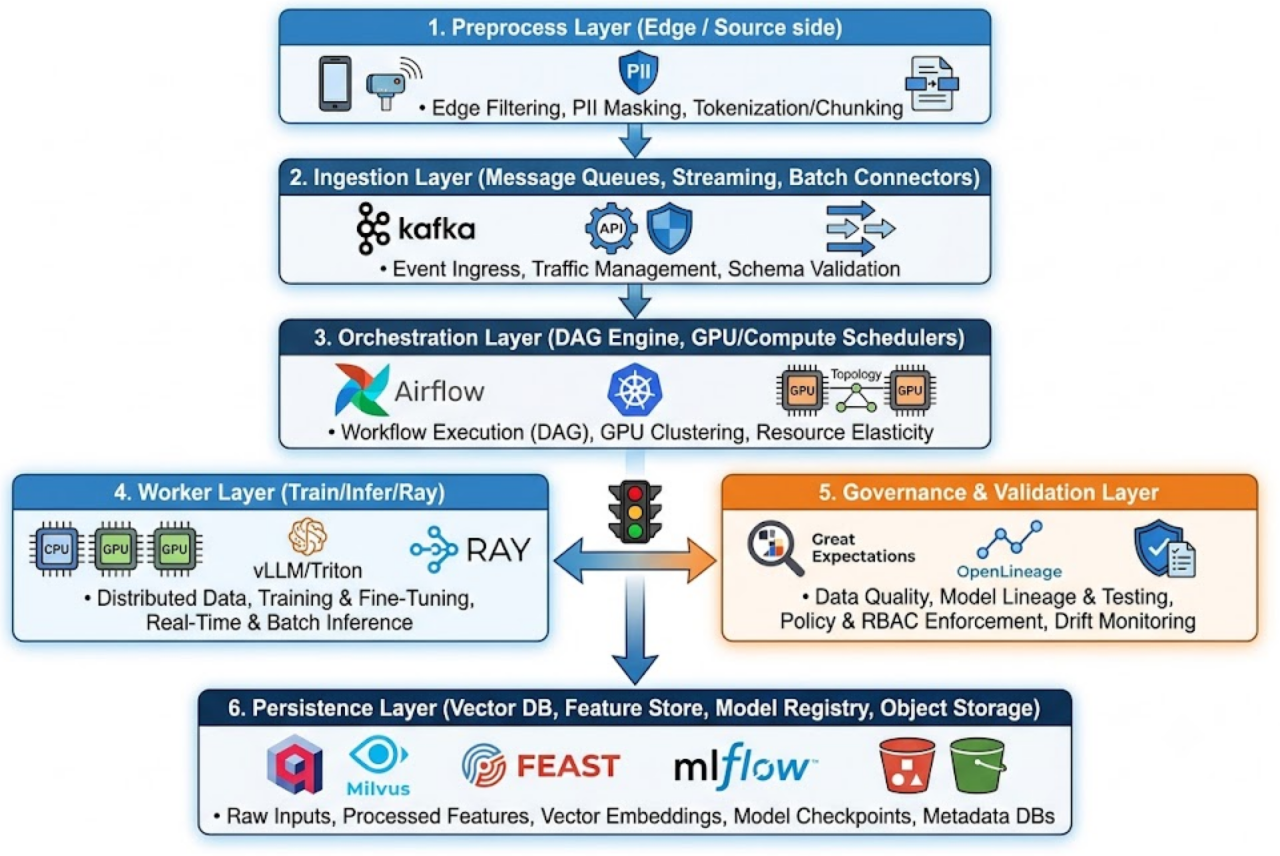
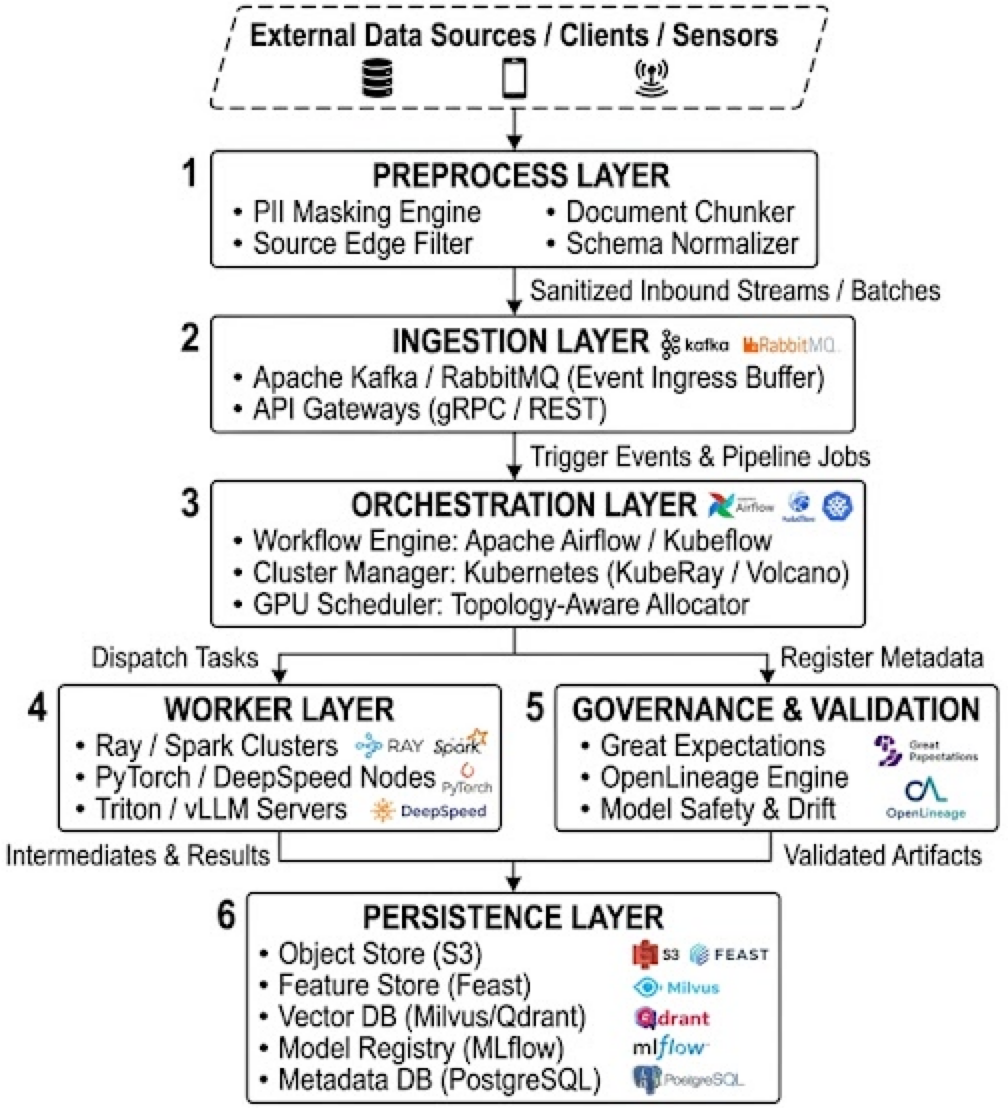
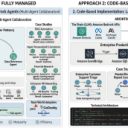
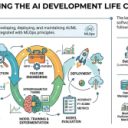
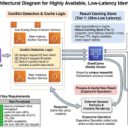
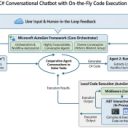
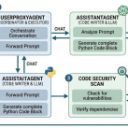
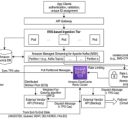
The architectural design for a modern Machine Learning and AI application adopts a cloud-native, event-driven microservices pattern structured across six core layers to satisfy functional requirements such as automated data transformation, model versioning, automated pipeline triggers, and real-time inference alongside non-functional requirements including high availability, sub-second latency, horizontal scalability, fault tolerance, and stringent data encryption.
Requirements Specification
Functional Requirements
Data Processing & Pipelines: The system must support both batch and real-time streaming ingestion, automated cleaning, normalization, chunking, and tokenization of structured and unstructured data.
Workload Orchestration: The system must dynamically schedule, execute, and monitor distributed Machine Learning (ML) workloads (training, fine-tuning, evaluation, and batch/real-time inference).
Resource Management: The system must manage heterogeneous compute clusters (CPUs, GPUs, TPUs) with topology-aware scheduling, GPU sharing/fractionalization, and dynamic auto-scaling.
Model & Data Governance: The system must enforce Data Quality Gates, track end-to-end data/model lineage, manage model versions, enforce fine-grained access control (RBAC/ABAC), and log audit trails for compliance.
Multi-Tier Persistence: The system must persist raw inputs, processed features, vector embeddings, checkpoints, model artifacts, and operational metadata in optimized storage systems.
Non-Functional Requirements
Scalability: Horizontal auto-scaling of compute nodes and workers up to thousands of GPU cores and petabytes of data without linear degrade in throughput.
High Availability & Fault Tolerance: 99.99% uptime for inference endpoints with automatic worker failover, checkpoint recovery, and self-healing orchestration nodes.
Latency & Performance: Low-latency inference (sub-50ms p99 for standard ML models; sub-100ms time-to-first-token for LLM inference) and high-throughput batch processing.
Security & Compliance: End-to-end encryption (at rest and in transit), PII detection/redaction, SOC2/GDPR/HIPAA compliance, and isolated tenant environments.
Cost Efficiency: Support for spot/preemptible instances, automatic scale-to-zero for idle clusters, and optimized GPU utilization via packing and multi-instance GPUs (MIG).
Layer-by-Layer Architectural Elaboration
1. Preprocess Layer (Before Ingestion)
The Preprocess Layer operates close to the data sources prior to central system ingestion. It acts as the first line of defense to sanitize, filter, and prepare raw data.
Primary Functions:
Edge & Source Filtering: Drops corrupted, duplicate, or out-of-bounds payloads at the source edge or client interface.
PII & Data Masking: Identifies and redacts Personally Identifiable Information (PII) or sensitive operational data before transmission using named entity recognition (NER) or regex rules.
Format Standardization: Converts raw payloads (PDFs, images, audio, raw JSON) into unified schemas (e.g., Apache Avro, Parquet, or standard JSON strings).
Text/Media Tokenization & Chunking: Pre-chunks large documents or formats multimodal assets for downstream embedding and ingestion pipelines.
2. Ingestion Layer
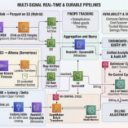
The Ingestion Layer securely captures, buffers, and routes high-volume streaming and batch data from disparate sources into the ML pipeline environment.
Primary Functions:
Batch & Stream Ingress: Consumes data via REST/gRPC endpoints, Webhooks, Message Brokers (Apache Kafka, RabbitMQ), or batch extractors (Apache NiFi, AWS Glue).
Traffic Management & Backpressure: Manages rate-limiting, request throttling, and backpressure buffering to protect downstream training/inference systems from traffic spikes.
Schema Validation & Enforcement: Validates inbound payloads against defined schema registries (e.g., Confluent Schema Registry) before allowing them into pipeline queues.
Event Triggering: Emits events (e.g., DataIngestedEvent) to notify the Orchestration Layer to start down-stream workflow runs.
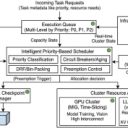
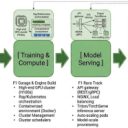
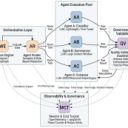
The Orchestration Layer acts as the central control plane, coordinating task dependencies, execution workflows, and raw hardware resources (CPU/GPU/TPU).
Primary Functions:
Workflow Orchestration: Executes Directed Acyclic Graphs (DAGs) using tools like Apache Airflow, Prefect, or Kubeflow Pipelines.
GPU Clustering & Allocation: Manages hardware topologies via Kubernetes (K8s) operators (KubeRay, Volcano, NVIDIA GPU Operator) or Slurm. Handles topology-aware placements (e.g., grouping nodes interconnected via NVLink/NVSwitch).
Resource Elasticity & Scheduling: Dynamic node provisioning, queue management, job prioritization, and support for GPU fractionalization (MIG, MPS) and spot instance migration.
State & Job Tracking: Monitors execution statuses, handles task retries, manages hardware failure fallbacks, and captures execution metrics.
4. Worker Layer
The Worker Layer contains the execution nodes responsible for compute-heavy ML workloads, including distributed data processing, model training, fine-tuning, and real-time/batch inference.
Primary Functions:
Distributed Data Workers: Scales processing pipelines across distributed compute frames (e.g., Apache Spark, Ray Data, Dask).
Training Workers: Runs distributed training algorithms leveraging PyTorch FSDP, DeepSpeed, or Megatron-LM across multiple multi-GPU nodes.
Inference Serving Workers: Host model instances using high-throughput serving engines like vLLM, TensorRT-LLM, or Triton Inference Server.
Task Isolation: Enforces containerized runtime environments (Docker/Containerd) with dynamic driver mounting and hardware acceleration runtime hooks.
5. Governance & Validation Layer
This cross-cutting layer ensures data quality, model safety, compliance, operational visibility, and regulatory transparency across all pipeline stages.
Primary Functions:
Data Quality Checks: Runs statistical validations (e.g., via Great Expectations or Deequ) to detect schema violations, missing values, or unexpected distributions.
Model Validation & Testing: Evaluates candidate models against performance metrics, accuracy baselines, bias/fairness tests, and safety benchmarks before deployment.
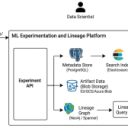
Data & Model Lineage: Tracks full end-to-end lineage (linking raw data versions, preprocessing scripts, model weights, hyperparameter configs, and evaluation metrics) using tools like OpenLineage or MLflow.
Policy Enforcement & Access Control: Applies Role-Based Access Control (RBAC) and Attribute-Based Access Control (ABAC) for data/model access, while maintaining immutable audit logs.
Drift & Monitoring: Continuously monitors deployed models for concept drift, data drift, and performance degradation.
6. Persistence Layer
The Persistence Layer maintains state, raw assets, features, model checkpoints, structured outputs, and operational logs in storage infrastructure tailored for each data type.
Primary Functions:
Object Storage: Stores raw datasets, model weights, logs, and artifacts (e.g., AWS S3, Azure Blob Storage, MinIO).
Feature Store: Maintains offline/batch and online/low-latency features for training and serving consistency (e.g., Feast, Hopsworks).
Vector Database: Indexing and low-latency nearest-neighbor search for embeddings used in RAG and semantic lookup engines (e.g., Qdrant, Milvus, Pinecone).
Model Registry: Versioned store for trained model artifacts, signatures, and lifecycle states (e.g., MLflow Model Registry, Weights & Biases).
Metadata & Operational DBs: Relational and NoSQL storage (e.g., PostgreSQL, Redis) for task state, system logs, user access credentials, and pipeline configurations.
System Architectural Design
Target Component Architecture
Data and Lifecycle Workflow
Ingress & Preprocessing: Data from sources arrives at the Preprocess Layer, where edge agents mask PII, normalize payload schemas, and drop corrupted records.
Ingestion: Validated payloads pass into the Ingestion Layer message queues (Kafka) to decouple client ingress speed from internal processing capabilities.
Orchestration Execution: The Orchestration Layer picks up ingestion events, resolves processing dependencies, and requests necessary compute resources from Kubernetes/Slurm. The GPU scheduler calculates optimal node placement based on topology (NVLink) and MIG profiles.
Worker Processing: Jobs are dispatched to the Worker Layer:
Data pipelines run on Ray/Spark workers.
Model training runs on PyTorch/DeepSpeed distributed workers.
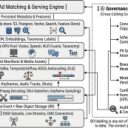
Governance Interception: Throughout worker execution, the Governance & Validation Layer intercepts data to run schema checks, logs data/model lineage metadata to OpenLineage, evaluates model performance metrics against gates, and checks for data drift.
Persistence Write-Back: Processed data, trained weights, vectors, features, and evaluation metrics write back to specialized storage subsystems in the Persistence Layer (S3, Feast, Qdrant, MLflow).