1. Original Meaning of "Scaffold"The term scaffold originates from physical construction and was later adapted into developmental psychology and education before being applied to computer science and artificial intelligence. 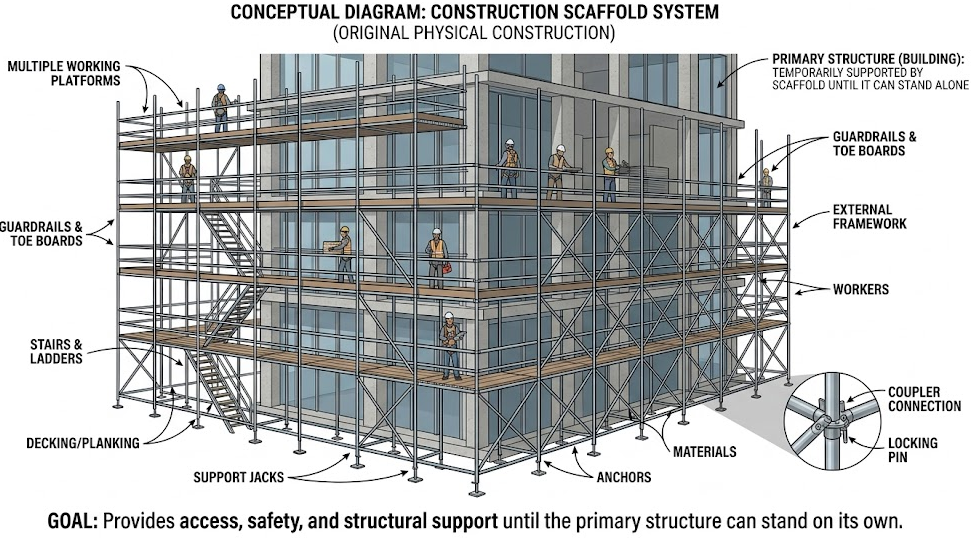
- Physical Construction: A scaffold is a temporary, external framework erected to support construction workers, materials, and the building itself while it is being constructed or repaired. It provides access, safety, and structural support until the primary structure can stand on its own.
- Educational Psychology: Coined by Jerome Bruner (building on Lev Vygotsky's Zone of Proximal Development), instructional scaffolding refers to a teaching method where an educator provides temporary support to a student to help them master a task slightly beyond their current independent capabilities. As the student gains competence, the support is gradually removed ("faded").
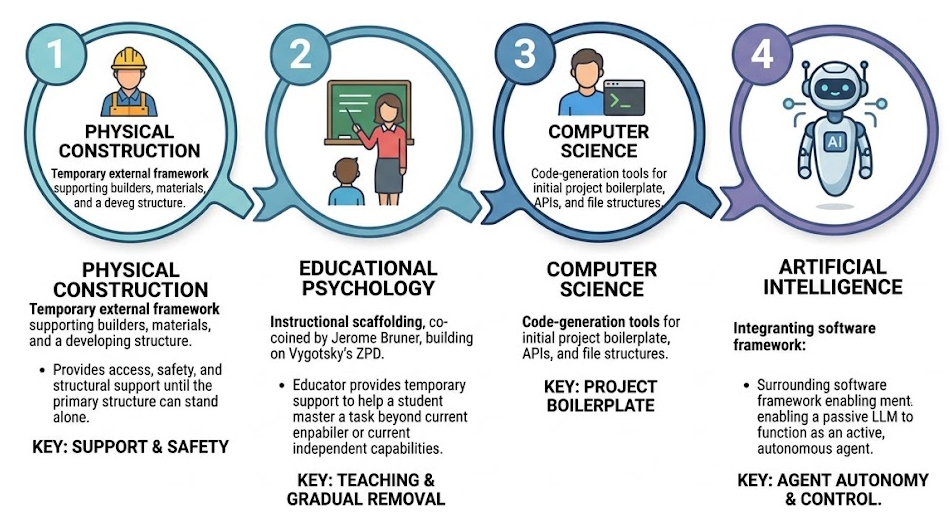
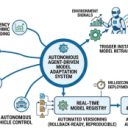
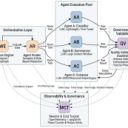
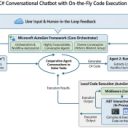
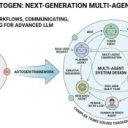
2. Concept of Scaffold in AI AgentsIn artificial intelligence, particularly concerning Large Language Models (LLMs), a scaffold refers to the surrounding software framework, control loops, and code infrastructure that turn a passive language model into an active, autonomous agent. An LLM on its own is merely a stateless, next-token predictor—it takes a prompt and produces text. The agent scaffold provides the system context, execution environment, and operational logic required for the model to reason, act, evaluate, and persist over time. 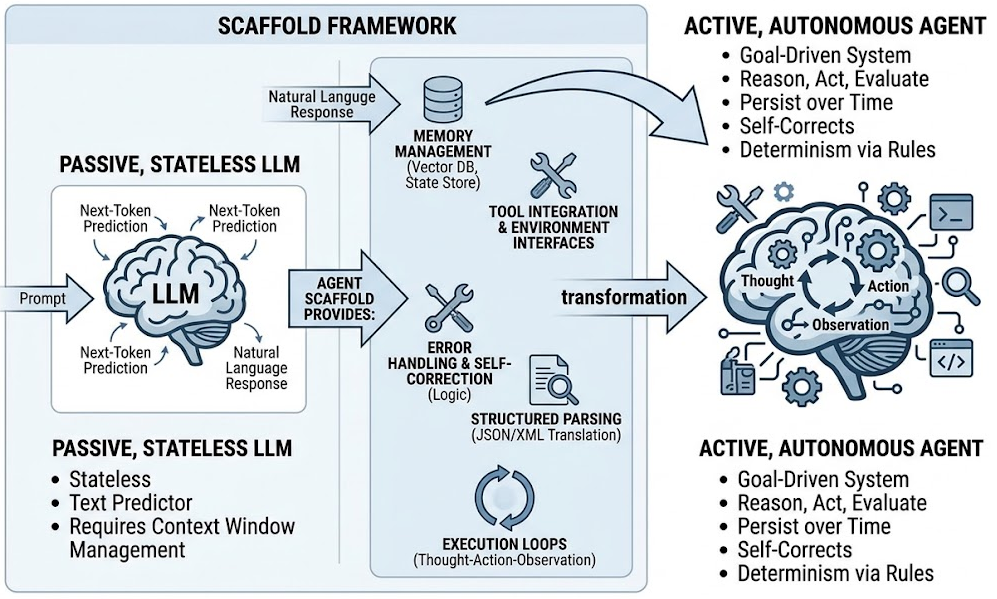
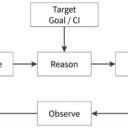
Core Components of an AI Scaffold- Execution Loops (Control Flow): Code that continuously drives the interaction cycle (e.g., Thought → Action → Observation → Repeat like the ReAct framework).
- Tool Integration & Environment Interfaces: Code that allows the LLM to invoke external functions, execute code, run web searches, or read/write to files.
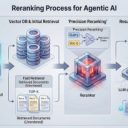
- Memory Management: Systems for maintaining short-term context (managing the context window) and long-term memory (vector databases, RAG systems, state stores).
- Structured Parsing: Translation layers that force the LLM's natural language output into structured formats (like JSON, XML, or specific function calls) that traditional software can execute deterministically.
- Error Handling & Self-Correction: Logic that catches execution failures, API errors, or invalid model outputs and feeds them back to the LLM to attempt a fix.
3. Why Scaffolding Is ImportantScaffolding is crucial because foundation models (LLMs) cannot function as autonomous agents in isolation. The scaffold bridges the gap between raw generative intelligence and reliable, real-world task execution. 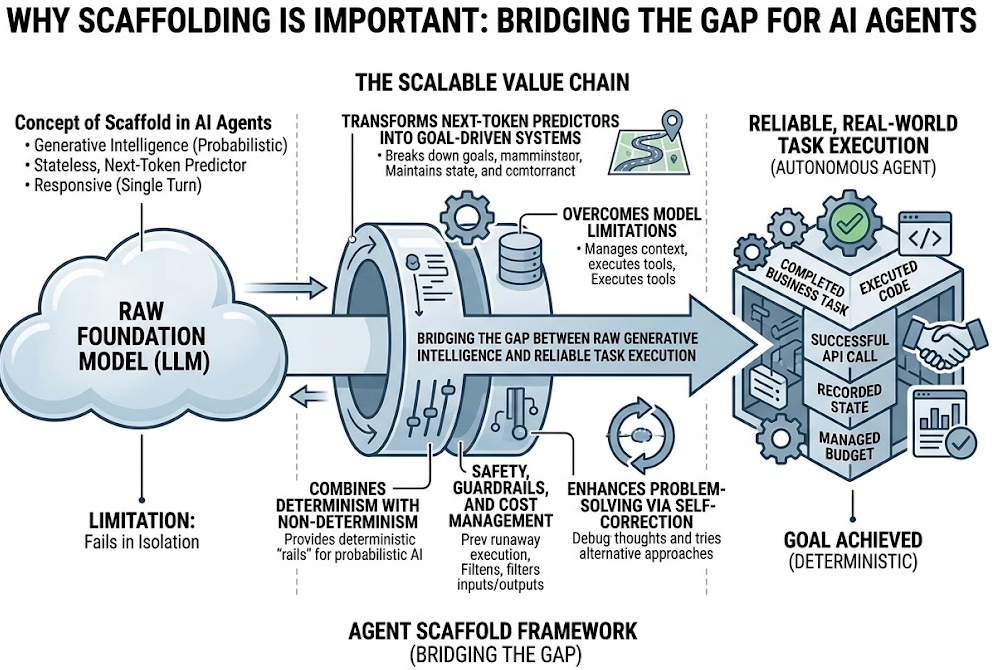
Key Reasons for Its Importance:- Transforms Next-Token Predictors into Goal-Driven Systems: Without scaffolding, an LLM responds to a single input and stops. Scaffolding gives the model an overarching goal, breaks that goal down into sub-tasks, and maintains state until the goal is achieved.
- Overcomes Model Limitations
- Context Windows: Scaffolding manages what gets kept, summarized, or retrieved via long-term memory so the LLM doesn't exceed its token limits.
- Statelessness: It maintains state across multi-step processes.
- Lack of Real-World Execution: It executes the code, API calls, or database operations that the model merely suggests.
- Combines Determinism with Non-Determinism: AI models are probabilistic (non-deterministic), whereas traditional software is rule-based (deterministic). Scaffolding provides the deterministic "rails" (conditional logic, loops, input/output validation) that keep the non-deterministic LLM focused and bounded.
- Safety, Guardrails, and Cost Management
- Prevents runaway execution loops that could drain API budgets or stall applications.
- Enforces safety guardrails by filtering inputs and outputs before they reach the model or the user.
- Enables human-in-the-loop (HITL) intervention at critical decision checkpoints.
- Enhances Problem-Solving via Self-Correction: When an API call fails or a code execution throws an error, the scaffold catches the trace and presents it back to the LLM. This enables the agent to "debug" its own thoughts and try alternative approaches, significantly raising success rates on complex tasks.
|