Designing a Skill Registry Architecture: Minimize Token Usage and Maximize AI Performance | ||||||||||||||||||||
| ||||||||||||||||||||
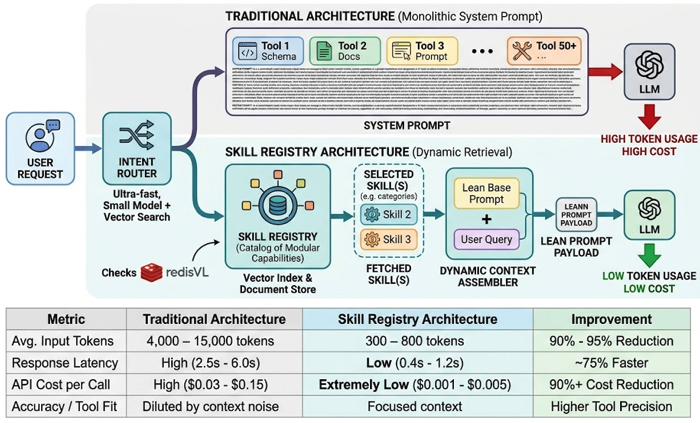
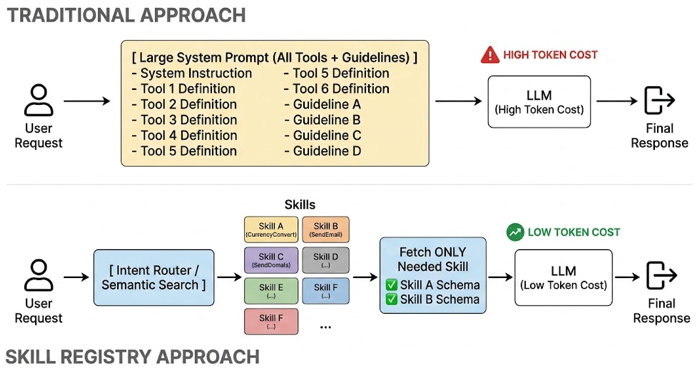
| A Skill Registry in AI is a centralized catalog that stores, manages, and defines modular tools, functions, or prompt capabilities that an AI agent can dynamically access. Instead of forcing developers to preload the descriptions, schemas, and instructions for every available tool into the system prompt for every interaction, a Skill Registry allows the AI to search for and load only the specific skills relevant to the user's current request. This dynamic retrieval drastically reduces the length of the input context window sent to the language model, directly decreasing the number of input tokens processed per call and significantly lowering overall API operational costs.
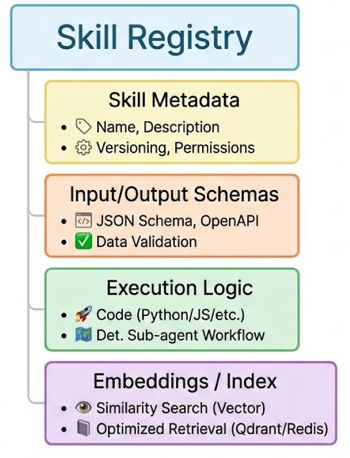
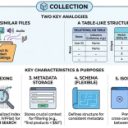
1. Understanding Skill RegistryA Skill Registry is a centralized management system and catalog for modular AI capabilities, tools, functions, and prompt templates. In modern LLM-driven architectures (such as Agentic systems), rather than relying on a single monolithic prompt containing all instructions and tool definitions, capabilities are broken down into discrete units called Skills.
Core Components of a Skill
2. How a Skill Registry Minimizes Token UsageStandard LLM tool-use patterns often inject all available tool definitions and instructions into every request's system prompt. As toolkits grow, this leads to prompt bloat, drastically increasing input token consumption and latency. A Skill Registry mitigates this through four key strategies:
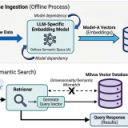
1) Dynamic Context Retrieval (Just-In-Time Prompting)Instead of feeding 50+ tool schemas into the context window, the system uses semantic search (vector embeddings) or lightweight metadata filtering against the Skill Registry to retrieve only the top-N relevant skills (typically 1 to 3) matching the user's current request.
2) Schema Minimization & Progressive Disclosure
3) Offloading Deterministic Logic from PromptsInstead of writing complex chain-of-thought rules inside LLM prompts to handle edge cases, procedural rules are moved out of the LLM prompt and into the code layer of the registered Skill. The LLM simply provides parameters, reducing prompt size significantly.
4) Hierarchical Routing (Multi-Agent Deconstruct)A high-level router LLM consumes a minimal set of domain categories. Once a domain (e.g.,
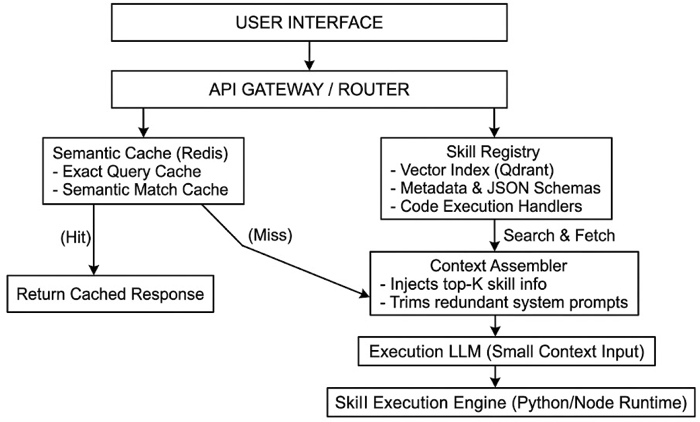
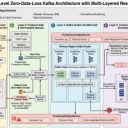
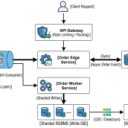
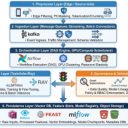
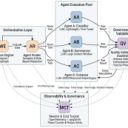
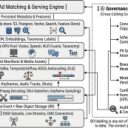
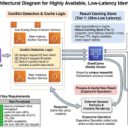
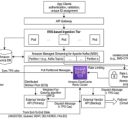
3. Optimized System ArchitectureThe following architecture combines a Skill Registry, Semantic Router, and Caching Layer to minimize token consumption while maximizing response speed and accuracy.
High-Level Architecture Diagram
Detailed Architecture Components1. Skill Registry Service
2. Intent Router (Lightweight Layer)
3. Dynamic Context Assembler
4. Execution Layer & Deterministic Engine
5. Semantic Caching Layer
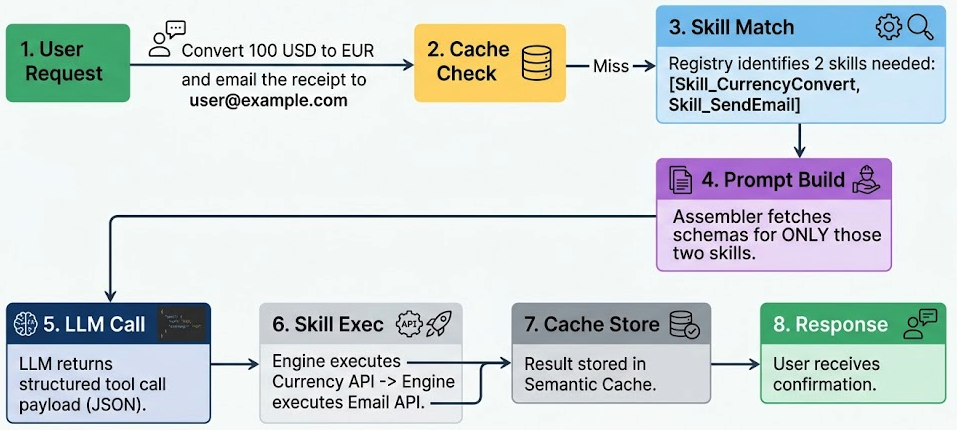
End-to-End Request Workflow
Performance Impact Comparison
| ||||||||||||||||||||
| | ||||||||||||||||||||
| |