Predictable Ad Spend: Architecting Pacing at Hyperscale | ||||||||||||||||||||||||||||
| ||||||||||||||||||||||||||||
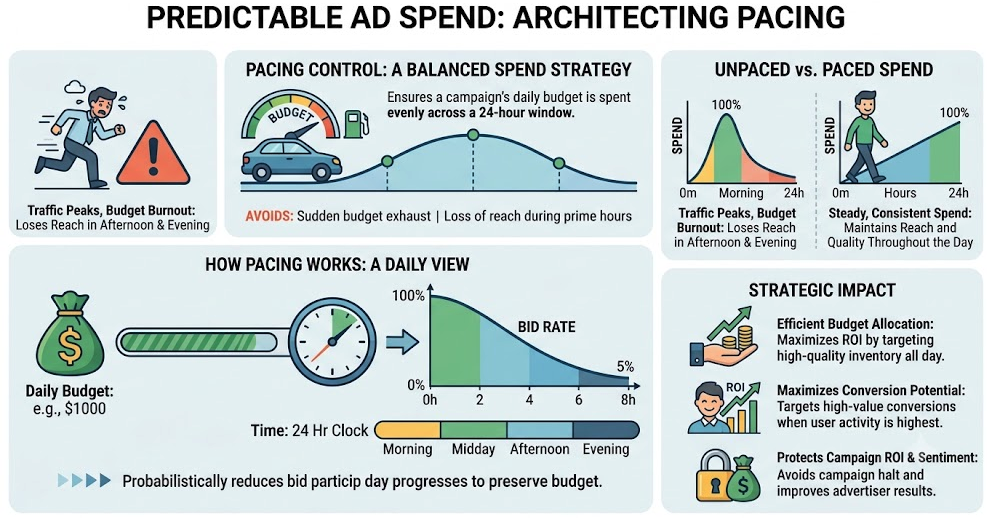
| Pacing control ensures that a campaign's daily budget is spent evenly across a 24-hour window rather than burning out in the first few hours when user traffic peaks. In real-time bidding, milliseconds matter — yet a campaign manager wants predictable, steady spend to maintain consistent reach and impression quality throughout the day.
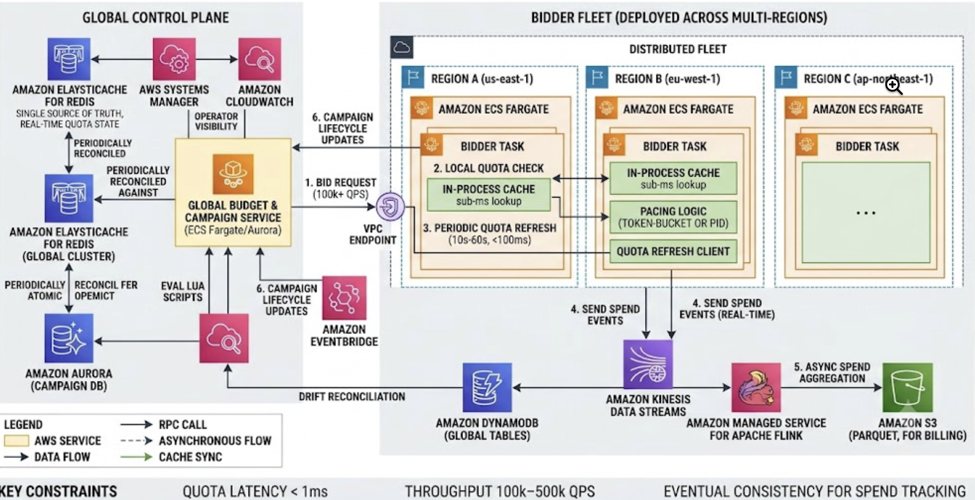
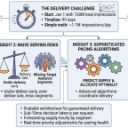
The core technical challenge is coordinating quota across a distributed fleet of bidders (often 10–500+ Amazon ECS Fargate tasks deployed across multiple AWS Regions and Availability Zones) without a centralized bottleneck. Each bidder needs to know how much budget it can spend in the current minute or second, but a naive synchronous request to a central quota server for every bid leads to severe scaling issues. A hyperscale exchange handles 100,000+ bid requests per second; multiplying that by 365 days of operation makes the quota service alone a critical bottleneck. The business impact is direct: campaigns that exhaust their budget early lose reach during prime-time hours, while uneven pacing wastes spend on lower-quality inventory. Financial services, automotive, and CPG advertisers depend on pacing to hit daily spend targets within a 5–10% variance. At scale, a 5% deviation across $1B in daily spend results in a $50M daily error. Key challenges include the following: (1) coordination latency—refreshing quotas across a global fleet introduces millisecond delays that accumulate; (2) drift reconciliation—when local quotas are leased asynchronously, the true global spend can lag behind the sum of local allocations; (3) handling traffic spikes—if user volume jumps 2× mid-day, the pacing algorithm must adapt without oscillation; (4) operator visibility—humans must be able to understand and tune pacing behavior in production via Amazon CloudWatch dashboards and AWS Systems Manager runbooks. Scale considerations: hyperscale exchanges see 100k–500k bid requests per second across multi-region deployments (us-east-1, eu-west-1, ap-northeast-1), 86 billion bids per day, and campaign spend ranging from $10 to $100M daily. A 1-minute quota window means ~60 pacing decisions per campaign per day; a 10-second window means ~8,640. Sub-millisecond access to quota state requires Amazon ElastiCache for Redis or in-process caching backed by it.
Key RequirementsFunctional Requirements
Non-Functional Requirements
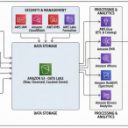
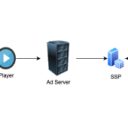
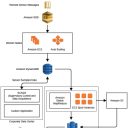
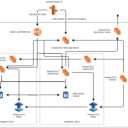
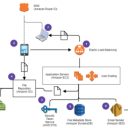
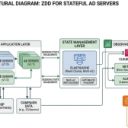
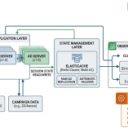
Simplified Architecture
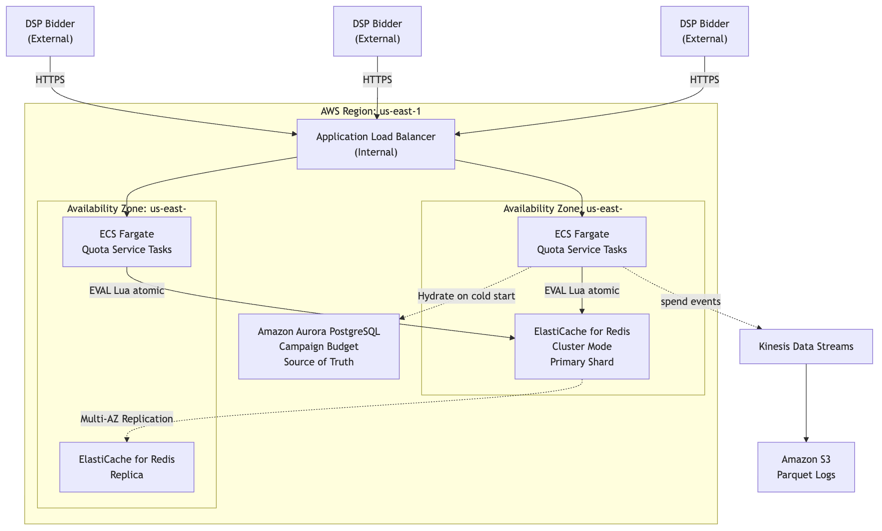
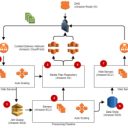
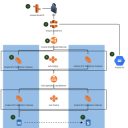
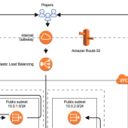
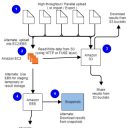
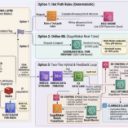
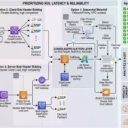
Architecture ProposalsOption 1: Centralized Token-Bucket on ElastiCache for RedisA central quota service runs the token-bucket algorithm: tokens accumulate at a rate proportional to a campaign's hourly budget. Each bidder requests tokens before bidding; the service grants or denies based on bucket state stored in Amazon ElastiCache for Redis (cluster mode). The quota service itself runs on Amazon ECS Fargate behind an internal Application Load Balancer. The quota service maintains a token bucket per campaign in ElastiCache, manipulated atomically with
Pros:
Cons:
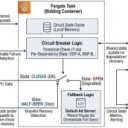
Failure Modes & Mitigations:
When to Choose: Best for single-Region deployments or where the auction service already lives in the same Region as the quota service, and operational simplicity outweighs cross-Region latency concerns.
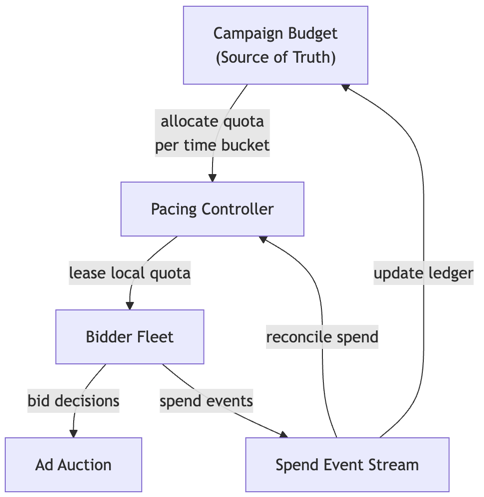
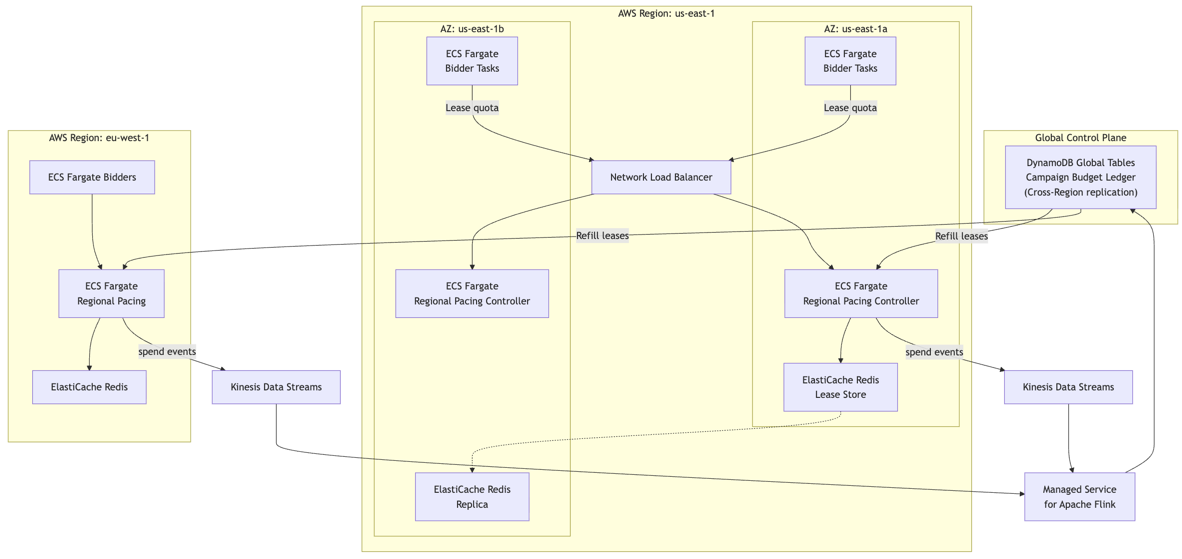
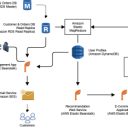
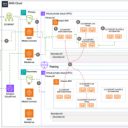
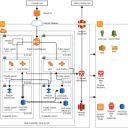
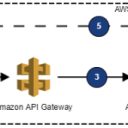
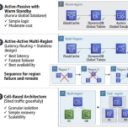
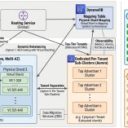
Option 2: Hierarchical Leased Quota with Async ReconciliationA two-tier control plane: a global budget service (one per AWS Region with cross-Region replication via DynamoDB Global Tables) leases time-bounded local quotas to regional pacing controllers, which in turn distribute quotas to bidder ECS tasks within their Region. Spend is collected asynchronously via Amazon Kinesis Data Streams and reconciled into the next lease cycle. Bidder tasks pre-pull a 1-minute quota at task start and refresh every 30 seconds via a sidecar ECS service inside the same task definition. The regional pacing controller (ECS Fargate behind a Network Load Balancer for low-latency gRPC) serves quota leases from ElastiCache for Redis; on lease expiration, leftover quota is recycled into the next bucket. Spend events flow continuously through Kinesis Data Streams to a Managed Service for Apache Flink job that updates the global ledger in Amazon DynamoDB Global Tables (replicated across Regions).
Pros:
Cons:
Failure Modes & Mitigations:
When to Choose: Best for multi-Region exchanges, hyperscale traffic (>200k QPS), and teams that already operate Kinesis + Flink stacks. Recommended default for production hyperscale ad servers.
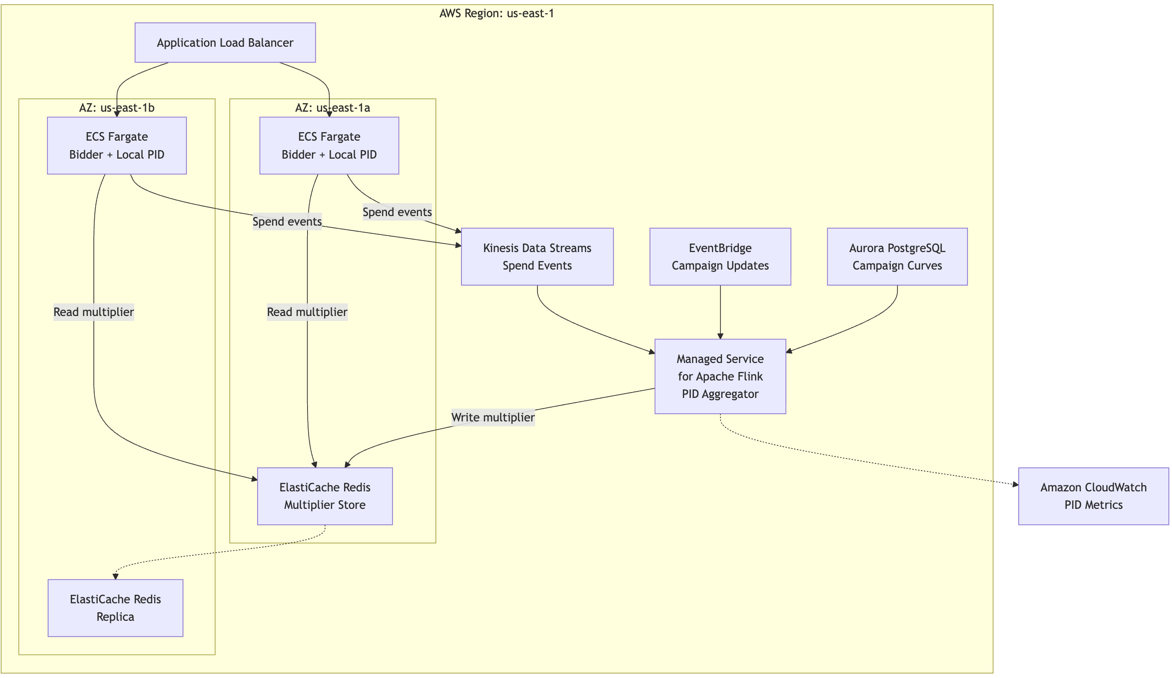
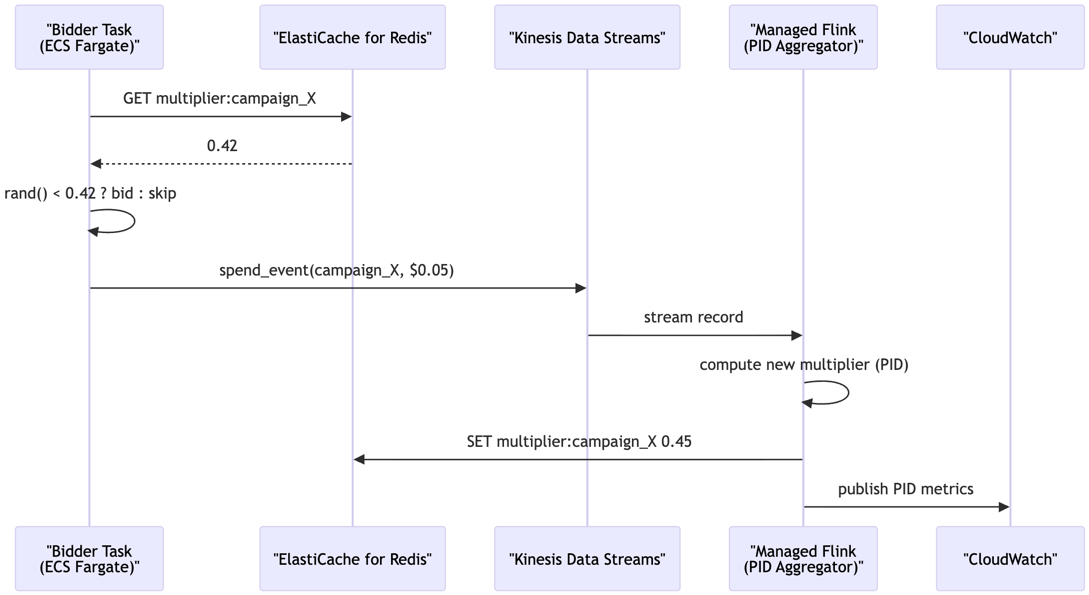
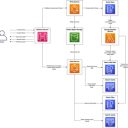
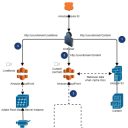
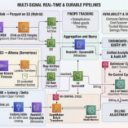
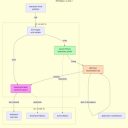
Option 3: PID-Controller Pacing on Managed Service for Apache FlinkEach ECS Fargate bidder task ingests its own spend velocity and adjusts a probability of bidding using a PID (Proportional-Integral-Derivative) controller. A central Amazon Managed Service for Apache Flink job consumes the global spend stream from Kinesis Data Streams, computes target spend curves per campaign, and publishes adjustment factors to Amazon ElastiCache for Redis. Bidder tasks read the latest factor every few seconds and combine it with their local PID state. The control loop is: target spend curve (linear or front-loaded) minus actual spend = error; PID terms compute a new bid-probability multiplier. The multiplier is in [0, 1]; bidders sample uniformly and only enter the auction if the random draw is below the multiplier. Aurora holds the campaign curve definition. ElastiCache holds the live multiplier. Amazon EventBridge fires on campaign updates so the Flink job recomputes targets within seconds.
Pros:
Cons:
Failure Modes & Mitigations:
When to Choose: Best when sophisticated pacing curves matter (e.g., front-loaded delivery, day-parted budgets) and the team has Flink/Kinesis expertise. Used by mature DSPs that need fine-grained control beyond simple uniform pacing.
Comparison Table
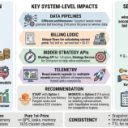
RecommendationFor a small or mid-size DSP serving fewer than 50k QPS in a single AWS Region, Option 1 (Token-Bucket on ElastiCache for Redis) is the right starting point. Its operational simplicity (one ECS service, one ElastiCache cluster, one Aurora database) matches the team size, and the AWS Multi-AZ patterns provide enough resilience for production. ElastiCache cluster mode handles vertical scaling up to ~150k QPS per shard before sharding becomes necessary. Hyperscale exchanges with global footprints should default to Option 2 (Hierarchical Leased Quota). The combination of DynamoDB Global Tables, regional ECS pacing controllers, and Kinesis + Flink reconciliation is a common pattern at companies like The Trade Desk and Criteo. The operational cost is higher but it cleanly handles regional failures, traffic spikes, and the cross-Region drift that pure-centralized designs cannot. Option 3 (PID Controller on Managed Flink) is the right choice when pacing fidelity directly impacts revenue — for example, premium guaranteed-delivery products, day-parted campaigns, or front-loaded seasonal flights. It requires more sophisticated operations (CloudWatch alarms on PID metrics, scheduled tuning jobs in SageMaker) but produces measurably smoother delivery curves. Many production systems deploy Option 2 as the foundation and layer Option 3's PID multiplier on top for premium campaigns.
Capacity & Performance Notes
| ||||||||||||||||||||||||||||
| | ||||||||||||||||||||||||||||
| |