Measuring Ad Viewability: AWS Architectures for Programmatic Accountability
CK 3788 Created at Updated at
47400
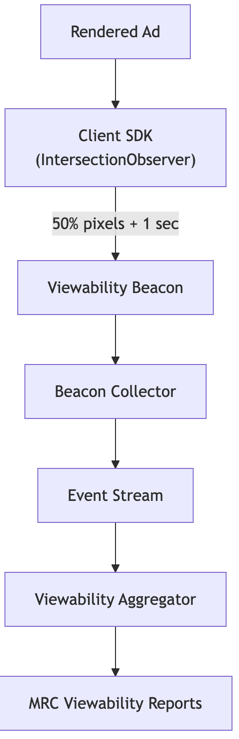
Viewability—the measurable confirmation that an ad impression was actually visible to a user—is central to programmatic advertising accountability. Historically, impressions were counted on serve; now, media buyers demand "viewable impressions" (in-view for ≥1 sec, ≥50% of pixels visible). Advertisers refuse to pay for non-viewable ads; publishers lose revenue if viewability rates are poor. Industry bodies (MRC—Media Rating Council, IAB) have standardized definitions, but measurement infrastructure varies widely: client-side JavaScript tracking, mobile SDKs, server-side CDN observations for video, and proprietary tag-based solutions all coexist.
The core challenge is distributed trust: client JavaScript reports viewability, but can be spoofed; CloudFront metrics are authoritative for video but unavailable for display ads; mobile impressions require SDK integration. Reconciliation between buyer-reported viewability and seller-measured viewability is a daily headache. At scale (billions of impressions/day), beacon infrastructure must handle 10x the impression traffic, with sub-second latency and 99.9% data fidelity.
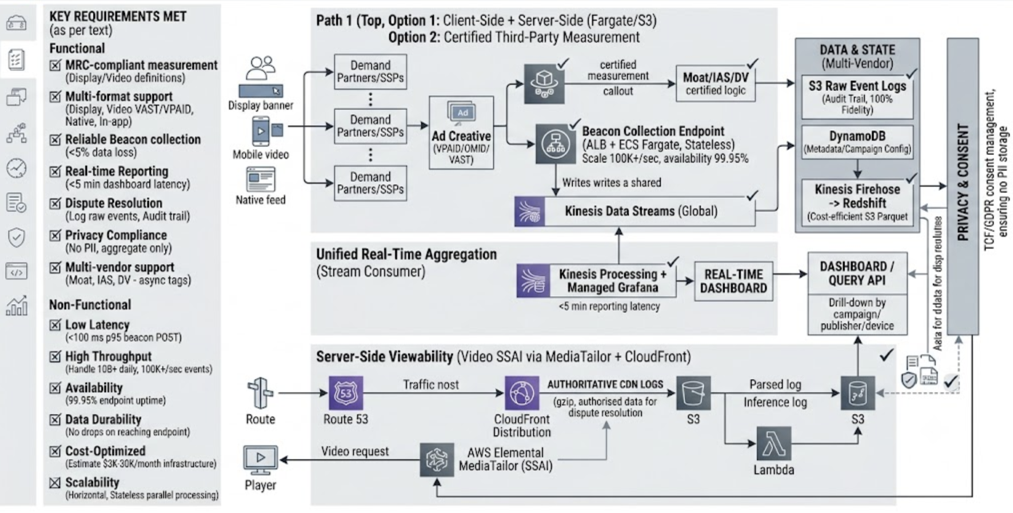
This case examines three architectural patterns: lightweight client-side beacons posted to a dedicated AWS API Gateway endpoint (simple, standard, highest latency tolerance), MRC-compliant third-party measurement using Open Measurement Interface Definition (OMID) or IAB standard tags (best practice, certified, external validation), and server-side viewability via AWS Elemental MediaTailor SSAI (Server-Side Ad Insertion) with CloudFront playback attestation (deterministic for video, minimal client overhead, high infrastructure cost).
Availability: 99.95% uptime for beacon endpoint (missed beacons = lost revenue data).
Data durability: No drops; 100% fidelity on events that reach endpoint.
Cost: ~10–100 μ per beacon (storage + processing); at 10B/day, ~$3–30K/month infrastructure.
Scalability: Horizontal scale; beacons are embarrassingly parallel (no state dependency).
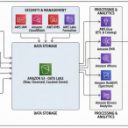
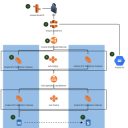
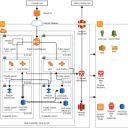
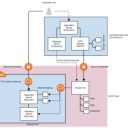
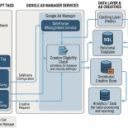
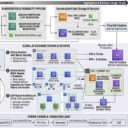
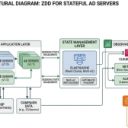
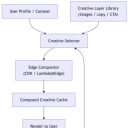
Simplified Architecture
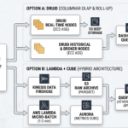
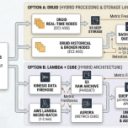
Architecture Proposals
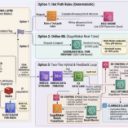
Option 1: Client-Side Beacons to API Gateway + ECS Fargate Endpoint
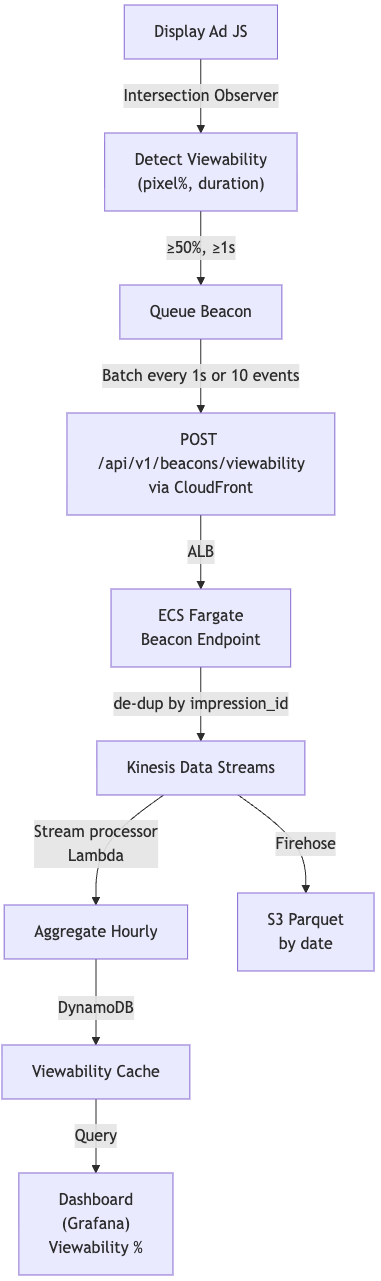
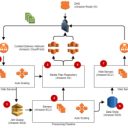
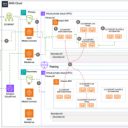
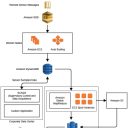
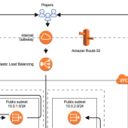
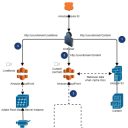
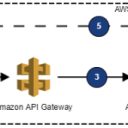
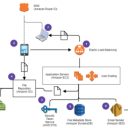
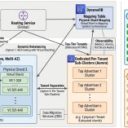
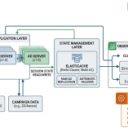
Description: Client-side JavaScript (in creative or publisher ad tag) detects viewability using Intersection Observer API (modern browsers) or polling getBoundingClientRect() (legacy). When ad becomes viewable (≥50% visible, ≥1 sec elapsed), the JS fires a POST beacon via CloudFront distribution to API Gateway HTTP API (/api/v1/beacons/viewability). Beacon payload is minimal: campaign ID, placement ID, impression ID, timestamp, in_view (boolean), pixels_visible (percentage). Beacons are queued client-side and batched (fire every 1 sec or 10 events) to reduce network overhead. Server-side, an ALB routes to ECS Fargate tasks that de-duplicate and stream beacons to Kinesis Data Streams. Kinesis Firehose buffers and compresses to S3 Parquet hourly. Near-real-time aggregation via Kinesis Processing (stream consumer) feeds a real-time dashboard via Managed Grafana.
Pros:
Minimal server-side infrastructure: beacons are stateless, horizontally scalable via ECS Fargate auto-scaling.
Standard approach: client-side JS is well-understood, widely deployed (Google Ad Manager, OpenX use this model).
No third-party dependencies: full control over measurement logic and data.
Per-impression granularity: can track viewability on a 1:1 basis with ad serving.
Privacy-friendly: beacons contain no PII, only IDs and aggregates.
Cost-effective: beacon endpoint on Fargate is cheap ($500–2K/month even at scale); Kinesis Firehose is pay-per-GB.
CloudFront caching: reduces origin load; beacons served from edge.
Cons:
Client-side spoofing risk: malicious JS can report false viewability; no server-side validation.
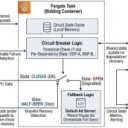
Beacon loss due to page unload: User navigates away before beacon POST completes. Mitigation: use sendBeacon() API (browser queues request, allows graceful unload); ECS endpoint retries via SQS dead-letter queue.
Duplicate beacons: Same impression fires multiple viewability events. Mitigation: de-duplicate on ECS via DynamoDB table keyed by (impression_id, timestamp); accept one beacon per impression per 500 ms window.
Spoofed viewability: Automated bot (headless browser) reports false viewability to inflate metrics. Mitigation: cross-check against fraud detection signals (C3-01); flag suspicious patterns via CloudWatch; use WAF rules on ALB.
When to Choose:
Starting point for viewability; simplicity and low cost are primary drivers.
Publishers unwilling to invest in third-party measurement partnerships.
Campaigns where buyer/seller trust is high and reconciliation is rare.
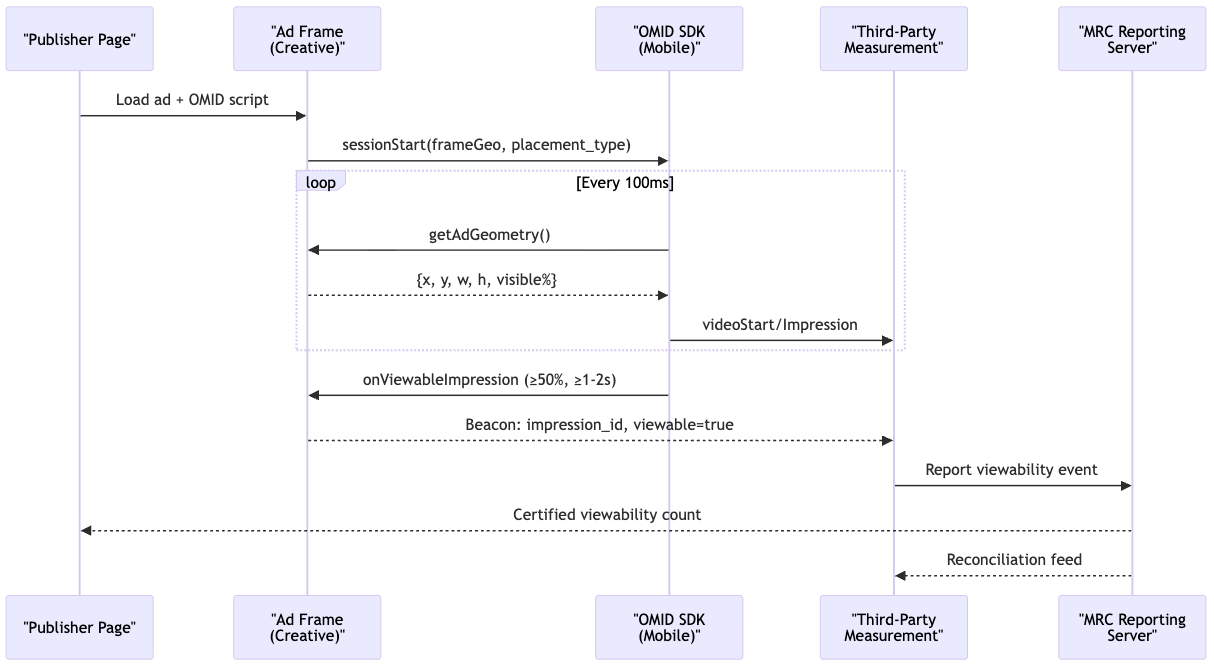
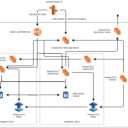
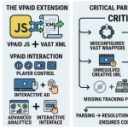
Description: Integrate Open Measurement Interface Definition (OMID) SDKs for mobile/in-app ads and IAB's standard HTML measurement tags for display/video. OMID is a JavaScript framework where publishers expose ad frame geometry and visibility to measurement partners; partners call OMID APIs to get pixel coordinates, visibility state, etc. in real time, then report back to a compliance server. For web display, use IAB's viewable impression definition via JavaScript—same as Option 1, but executed by a certified third-party vendor (Moat, Integral Ad Science, DoubleVerify). Vendors post beacons to their own endpoints, then reconcile with publisher and advertiser via standardized reporting feeds. Publisher can aggregate vendor data via AWS Lambda pulling daily CSV reports from vendor SFTP/S3, joining against internal beacon data using Athena.
Pros:
Third-party credibility: vendor is MRC-certified; reports are accepted by buyers/sellers without question.
Standardized: OMID and IAB tags are industry-wide; portable across publishers.
Less spoofing risk: vendors have sophisticated anti-fraud checks; SDK runs in isolated context.
Multi-vendor reconciliation: multiple measurement partners can run simultaneously; consensus reduces bias.
Video support: OMID natively tracks video playback (quartiles: start, 25%, 50%, 75%, complete).
Compliance audit trail: vendors maintain detailed logs for regulatory review (FTC, media agencies).
Cons:
Cost: $100–500K/year per vendor (minimum contracts); multiple vendors add up.
Latency overhead: OMID SDK adds JS execution time (2–10 ms per impression).
SDK conflicts: multiple OMID sessions or measurement partners can interfere with each other.
Data fragmentation: vendor-specific data formats; requires custom Lambda integration per partner.
Vendor SLA risk: if vendor endpoint is slow/down, measurement is incomplete (though not blocking ad serve).
Publisher complexity: need to manage OMID SDK integration, compliance SDKs, reconciliation feeds via Lambda/Glue.
Failure Modes & Mitigations:
OMID SDK crashes: Measurement script throws error, stops tracking. Mitigation: wrap OMID calls in try-catch, log errors to CloudWatch separately, fall back to simpler beacons if SDK unavailable.
Vendor data drift: Third-party vendor reports 15% viewability; internal measurement reports 22%. Mitigation: define reconciliation process via Athena/Glue; accept vendor as ground truth, or use average if <10% delta; require vendors to publish methodology.
Consent blocking: Privacy/consent manager blocks measurement vendor. Mitigation: ensure consent tags include measurement (typically pre-checked); document that viewability tracking requires consent; store consent signals in DynamoDB.
When to Choose:
Premium publishers needing buyer trust and compliance attestation.
High-value campaigns where audit trail and third-party validation are negotiated requirements.
Video/in-app inventory where OMID is standard expectation.
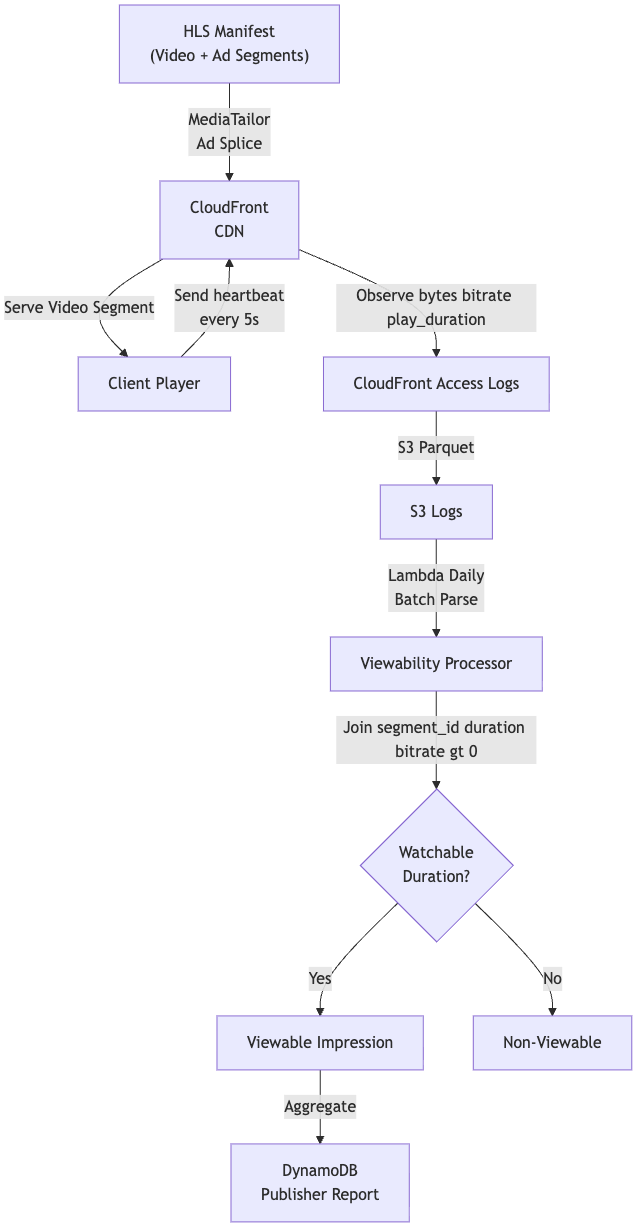
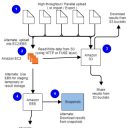
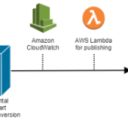
Description: For video content, ads are inserted server-side via AWS Elemental MediaTailor at the manifest/stream level rather than client-side VAST. MediaTailor intercepts HLS/DASH manifests, splices ad segments (sourced from your ad decision service), and delivers the combined manifest to players. The CloudFront CDN (origin for MediaTailor) observes actual video playback: bytes downloaded, play progress, rebuffer events, bitrate. CloudFront access logs are written to S3 hourly; a Lambda function parses logs to infer viewability: if the ad segment was fully delivered and the stream was actively playing (monitored via heartbeat telemetry), the ad was viewable. No client-side beacon required; CloudFront logs are authoritative.
Pros:
Deterministic: no client spoofing; CloudFront data is ground truth for bytes delivered and network activity.
Zero client overhead: no beacon JS, no SDK integration; reduces ad load time.
Server-side trust: advertiser can audit CloudFront logs independently; no dispute on measurement.
Video-native: integrates with HLS/DASH standard; works across all players.
High data fidelity: every segment delivery is logged; sampling not needed.
Scales cheaply: MediaTailor and CloudFront are one-time infrastructure investment; per-beacon cost near zero.
Cons:
Display ads only for video: MediaTailor doesn't apply to display banners or static ads (native, rich media).
Cold start: MediaTailor requires upfront integration with origin video service; not retrofit-friendly.
Inference uncertainty: presence of bytes delivered doesn't guarantee viewing (user may have tabbed away, paused).
Privacy complexity: CloudFront logs contain IP addresses and user agents; must be anonymized per privacy policy before archival.
Vendor lock-in: MediaTailor is AWS-specific; migrating to other CDN requires re-integration.
Partial delivery edge cases: network interruption partway through ad segment; unclear if viewable.
Failure Modes & Mitigations:
User pauses stream during ad: Bytes delivered but user didn't watch. Mitigation: use heartbeat absence as secondary signal; if no heartbeat for >2 sec during ad segment, mark non-viewable. Lambda post-processes CloudFront logs to check heartbeat data (if available).
Slow network, rebuffering: User watches but with long rebuffer; segment takes 10 sec to download. Mitigation: track bitrate in CloudFront logs; if bitrate >0 and duration >1 sec, consider viewable. Accept some false positives (user may have closed tab mid-rebuffer).
CloudFront failover: Primary CloudFront down, traffic reroutes to backup; logs are incomplete. Mitigation: aggregate logs from all CloudFront distribution points; use eventual consistency (report viewability 4 h later after all logs arrive).
High-volume video (>100M video ads/day) where MediaTailor ROI is clear.
Scenarios where advertiser demands CloudFront-backed viewability attestation.
Comparison Table
Aspect
Client Beacons (API GW + Fargate)
Third-Party (OMID/IAB)
MediaTailor + CloudFront
Latency
<100 ms beacon via CloudFront; 5 min reporting
<200 ms (vendor dependent); 10 min reporting
4–24 h (batch log processing)
Throughput
100K–500K beacons/sec (ECS auto-scale)
50K–200K beacons/sec (vendor limits)
1B+ log entries/day (no bottleneck)
Cost/Month
$1K–5K (ALB, ECS Fargate, Kinesis)
$10K–50K (vendor fees)
$20K–100K (MediaTailor + CloudFront integration)
Operational Complexity
Low (stateless API GW + Fargate, Kinesis aggregation)
Medium (vendor integration, Lambda reconciliation)
High (MediaTailor partnership, log pipeline)
Data Fidelity
90–95% (client loss, spoofing)
95–98% (vendor verified)
98–99% (deterministic)
Spoofing Risk
High (client-side only)
Low (vendor anti-fraud)
None (CloudFront authoritative)
Format Support
Display, Video (via VAST tag)
Display, Video, Native (OMID)
Video only (HLS/DASH)
Reconciliation
Buyer vs. seller often diverge
Vendor reconciles; low dispute
CloudFront logs are definitive
Compliance
Basic; manual audit trail
MRC-certified; full audit
Publisher-owned; less standard
Cold Start
Immediate (JS in tag)
1–2 weeks (vendor setup)
Weeks to months (MediaTailor redesign)
Time to Reporting
5 min
10 min
4–24 h
Recommendation
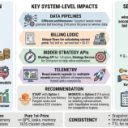
For most publishers, adopt a hybrid strategy: Option 1 (client beacons via API GW + Fargate) as the primary measurement with real-time reporting, supplemented by Option 2 (third-party OMID) for high-value campaigns and video inventory, and Option 3 (MediaTailor + CloudFront) for video-primary publishers as a long-term roadmap.
Option 1 is the pragmatic starting point: beacons via API Gateway and Fargate are easy to deploy, require no vendor contracts, and provide sufficient data for internal reporting and buyer confidence in most cases. The 5% spoofing loss is acceptable if fraud detection (C3-01) flags suspicious viewability patterns. Use Kinesis Firehose for cost-efficient S3 storage.
For video or campaigns where buyer trust is critical (premium CPM, direct deals), layer in Option 2: integrate an OMID SDK or third-party tag via Lambda-based reconciliation. The vendor cost (50K–100K/year for a single vendor) is recouped in advertiser willingness to pay for certified viewability; negotiate volume discounts. Reconciliation with buyer-side measurement becomes straightforward because vendors publish standard reporting APIs; Athena/Glue jobs can join vendor feeds with internal data.
Option 3 (MediaTailor + CloudFront) is a multi-year initiative for publishers with dedicated video platforms and AWS partnerships. The payoff is deterministic viewability with zero client overhead and inherent audit trail, but the upfront engineering cost (4–8 weeks, close coordination with AWS) is high. Prioritize MediaTailor if video represents >50% of inventory and you operate your own video origin or have exclusive CDN contracts.
Capacity & Performance Notes
Client Beacon Endpoint (Option 1 via API Gateway + ECS):
Impression volume: 1B/day → 10B beacon events (assume 10:1 ratio; each impression may fire multiple beacons).
Processing: daily batch job (Lambda step function starts 2 AM UTC, after traffic quiets) parses logs in 30 min, aggregates by segment via Athena in 1 h, posts results to DynamoDB by 4 AM.
Join cost: segment_id maps to placement_id via metadata table (50 MB, in-memory after cache warming in Lambda).
Athena cost: ~$5–10/day for scan of 10 GB logs (queries are partitioned by date).
Monitoring & Alerting:
Viewability rate by campaign (hourly) via CloudWatch dashboard: alert if drops >5% unexpectedly (may indicate fraud, player issue, or measurement outage).
Beacon loss rate (Option 1): monitor API Gateway error rate; alert if >1% 5XX errors (may indicate Fargate overload).
Kinesis Firehose: monitor data freshness; alert if delivery latency to S3 >15 min.
Third-party vendor SLA (Option 2): track vendor latency and completeness daily; alert if SLA violated two days in a row.
Data freshness: dashboard queries should see <10 min staleness; alert if hourly aggregation job runs >5 min late.