Attribution's New Blueprint: Balancing Performance and Privacy
CK 3788 Created at Updated at
50200
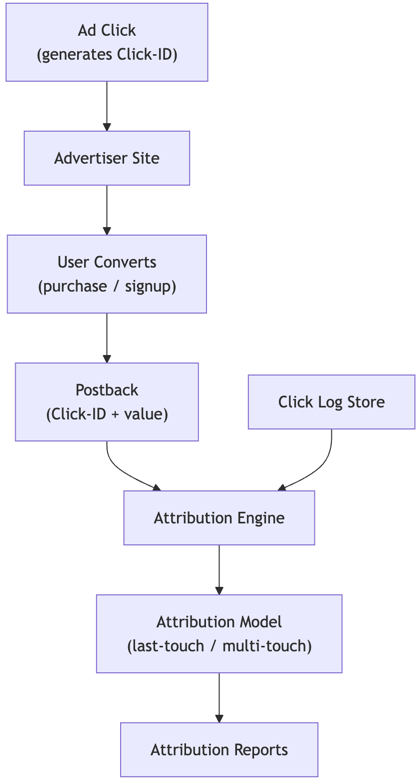
Attribution answers a fundamental question: which marketing touchpoint deserves credit for a conversion? A user might click a display ad on Monday, click again on Friday, and finally purchase after an email on Saturday. How much credit goes to each channel? Ad tech attribution systems must balance simplicity (deterministic click-ID matching) with accuracy (multi-touch models assigning fractional credit across touchpoints) while respecting iOS privacy constraints (SKAdNetwork) and upcoming aggregation APIs.
The traditional approach—last-click attribution—assigns 100% credit to the final touchpoint before conversion. This starves upstream awareness channels (display, social) of credit and skews budget allocation toward retargeting. Modern marketing attribution uses data-driven models (Shapley value, Markov chain, position-based) that distribute credit more fairly. However, privacy regulations and browser restrictions (third-party cookie deprecation, Apple SKAdNetwork) increasingly constrain data collection, forcing trade-offs between attribution accuracy and user privacy.
This case examines three architectures: deterministic click-ID postback matching (simple, requires cookies), multi-touch attribution pipelines (data-intensive, requires historical click/conversion data), and privacy-safe attribution via SKAdNetwork and aggregation APIs (lossy but future-proof).
Key Requirements
Functional Requirements
Click-to-conversion matching: Reliably associate a click with a downstream conversion within a 7–30 day attribution window.
Multi-touch credit assignment: Support fractional credit allocation across multiple touchpoints in a user journey.
Privacy compliance: Adapt to GDPR deletion rights, CCPA opt-out signals, and iOS/Safari privacy constraints.
Latency: Postback delivery to partners within 1–4 hours of conversion (near real-time).
Deduplication: One conversion logged once; prevent double-counting across partners.
Attribution model flexibility: Support last-click, first-touch, linear, time-decay, and data-driven models per advertiser.
Audit trail: Log all conversions, attribution decisions, and model changes for dispute resolution.
Non-Functional Requirements
High throughput: Process 100,000+ conversions/day per advertiser without latency degradation.
Consistency: Conversion deduplication across web and app via unified ID (MMP or first-party).
Scalability: Model retraining for >10,000 advertisers daily without blocking real-time attribution.
Data retention: Archive conversion and click logs for 12–24 months for model retraining.
Explainability: Marketing team can query "why did this touch receive X% credit?" with clear reasoning.
Cost efficiency: Attribution infrastructure should not exceed 5–10% of marketing software spend.
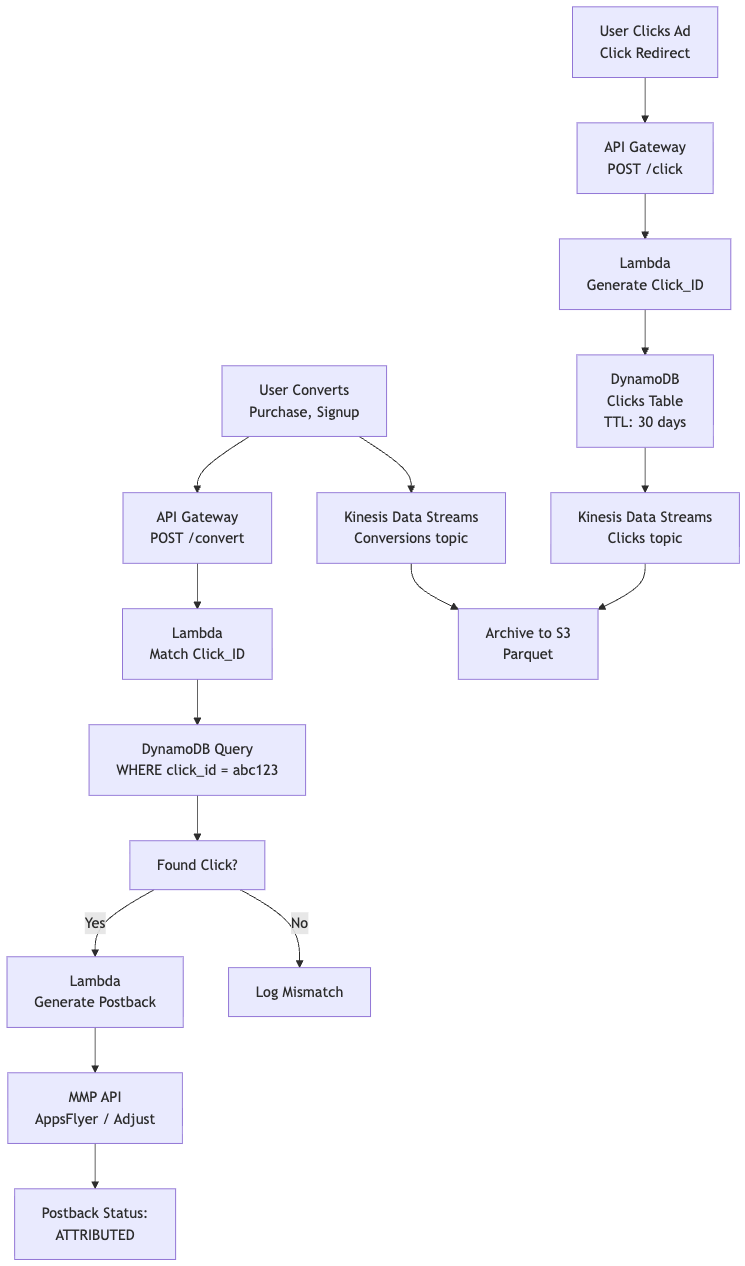
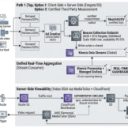
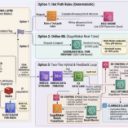
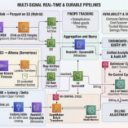
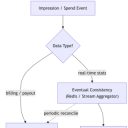
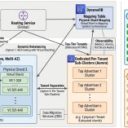
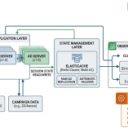
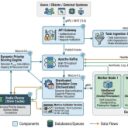
A unique Click_ID is generated at ad click time (via Lambda function handling click redirects), embedded in a redirect URL or first-party cookie, and stored in DynamoDB with TTL of 30 days. When a conversion occurs, an API Gateway endpoint receives the conversion pixel, Lambda function matches the Click_ID against DynamoDB click logs, and fires a postback to the MMP (mobile measurement partner like AppsFlyer, Adjust, Branch). Kinesis Data Streams ingests both clicks and conversions for multi-touch analysis in parallel.
Pros:
Simple: no machine learning, statistical inference, or data science. Click-ID matching is deterministic.
Fast attribution: can attribute within seconds of conversion pixel fire; postbacks delivered within 1–4 hours.
No data loss: does not rely on statistical sampling; every click counted.
Partner-friendly: partners receive clear postbacks with click-to-conversion proof.
Compliant: deterministic matching requires only first-party cookies/IDs; no need to build probabilistic models on cross-site behavior.
DynamoDB scale: handles 100k+ conversions/sec with on-demand pricing; no provisioning friction.
Cons:
Single-touch only: attributes 100% credit to a single click. Does not handle multi-touch journeys.
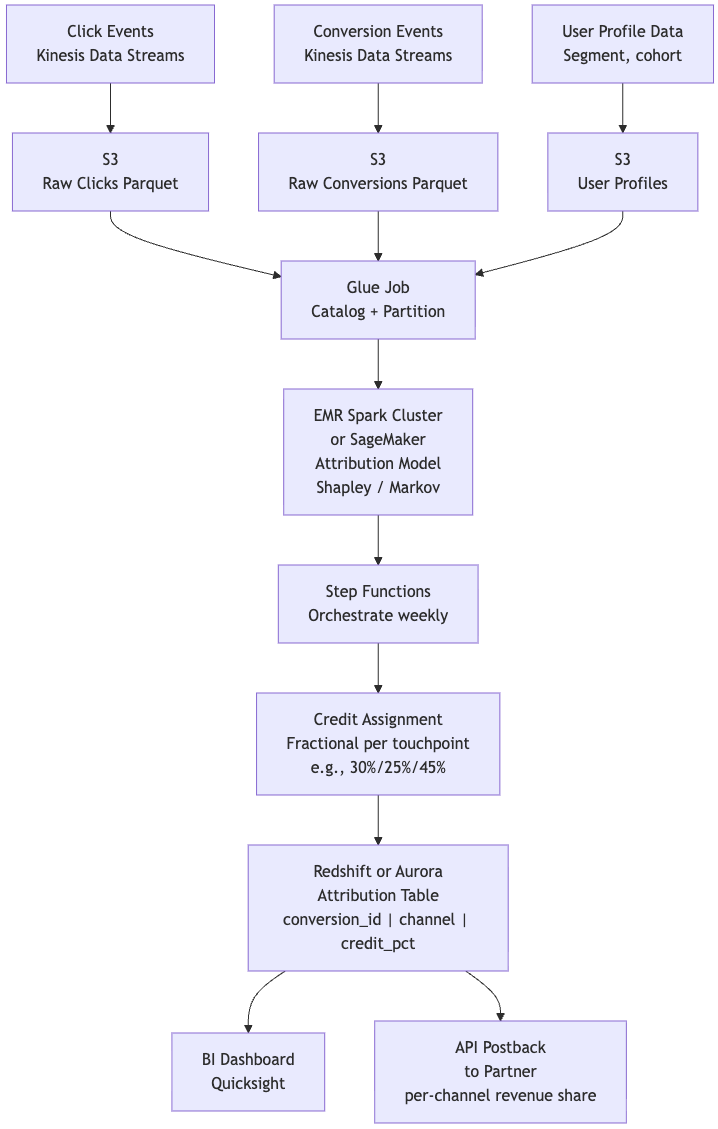
Build a data warehouse pipeline on S3 + Athena that ingests click logs (Kinesis Data Streams → S3 Parquet), conversion logs (Kinesis Data Streams → S3 Parquet), and user behavioral signals (S3 event logs). Run an EMR Spark job or SageMaker training job weekly that retrains a statistical attribution model (Shapley value, Markov chain, position-based). Results materialized to Redshift or Aurora for advertiser dashboards. Glue jobs orchestrate the entire pipeline via AWS Step Functions.
Pros:
Multi-touch fair credit: accurately reflects user journeys; upper-funnel awareness channels get credit.
Model flexibility: swap Shapley for position-based or time-decay without infrastructure change.
Scalable: batch retraining via EMR or SageMaker can process billions of journeys.
Insightful: reveals which channels drive conversions vs awareness; informs budget allocation.
Auditable: each conversion has explicit credit distribution with model version logged.
Data infrastructure heavy: requires Kinesis streams, S3 buckets, EMR cluster or SageMaker training, Redshift cluster.
Latency: retraining daily/weekly; real-time per-conversion attribution not possible (typically 24 hours lag).
Model complexity: Shapley value computationally expensive for journeys >5 touchpoints; approximation needed; SageMaker training jobs 2–4 hours.
Attribution window ambiguity: must define "journey start" (e.g., first touch or 30 days back). Backward-looking leads to old conversions re-attributed.
Privacy constraints: Shapley value trained on cross-site behavior (display → social → email → purchase) requires comprehensive behavioral data. GDPR right-to-forget complicates model retraining.
Failure Modes & Mitigations:
Incomplete journey data: offline conversions (phone call, in-store) not logged. Solution: integrate CRM; accept that attribution only covers digital channels.
Model overfitting: Shapley value assigns high credit to noise-correlated channels. Mitigate: holdout test set, cross-validation, regularization in SageMaker training job.
GDPR deletion request: user asks for data deletion; conversion already attributed and reported. Solution: implement "soft delete" on Kinesis/S3 click logs; recompute affected conversions only.
Sampling bias: only tracking users with cookies lose mobile/privacy-focused users. Bias worsens as third-party cookies deprecate.
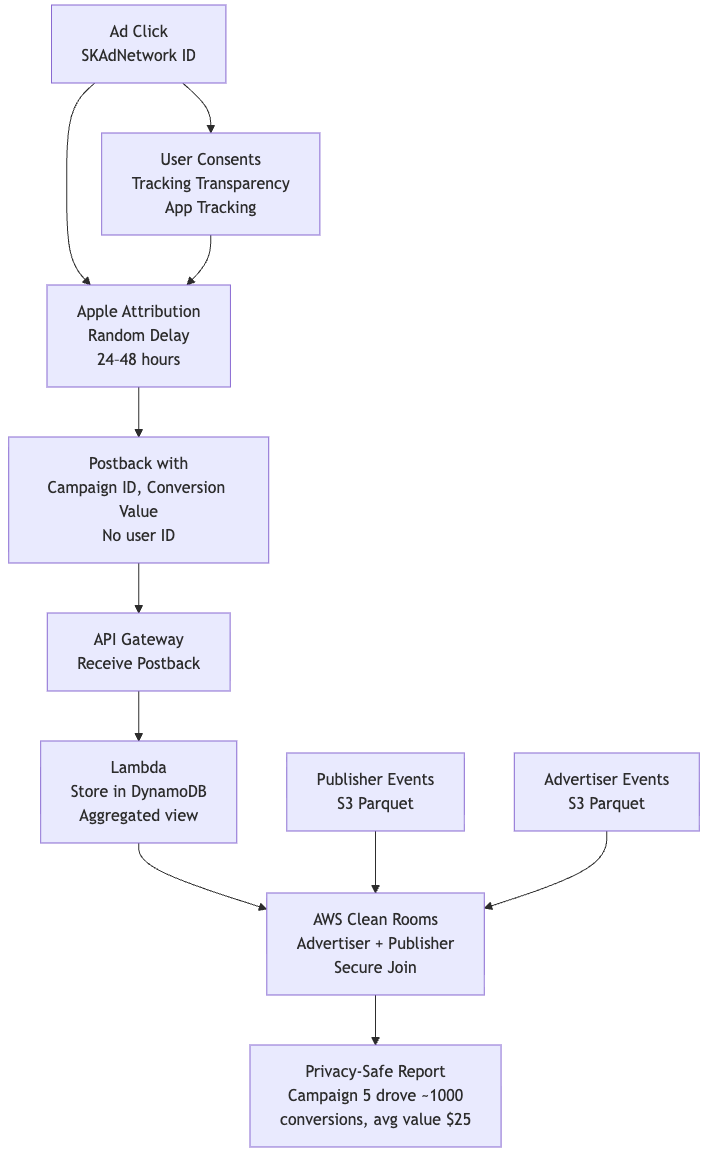
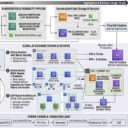
Apple's SKAdNetwork (iOS) and Google's Privacy Sandbox Attribution Reporting API (coming to Chrome) enforce strict privacy rules: no deterministic click-to-conversion matching. Instead, Apple generates a postback "anonymously" containing only coarse conversion value (6 bits, ~64 buckets) and a subset of attributes. Data is noisy; multiple users' conversions aggregated before reporting. On Android, Google Play Install Referrer offers limited click data; Privacy Sandbox APIs coming for web. For advertiser + publisher joins, use AWS Clean Rooms (secure multi-party computation) to match users without exposing individual records.
Pros:
Privacy by design: no user ID sent; postbacks anonymous and noisy.
Future-proof: aligns with upcoming browser changes (Privacy Sandbox, ITP).
Regulatory safe: complies with GDPR, CCPA, App Tracking Transparency (ATT).
Works at scale: iOS billions of devices; Apple handles privacy math.
Built-in delay: 24–48 hour random delay prevents real-time targeting feedback.
Coarse conversion value: only ~64 buckets; cannot distinguish $10 vs $1000 purchase reliably.
No user-level attribution: cannot build multi-touch models; no click-to-user matching.
Random noise: aggregated postbacks contain intentional noise; small campaigns get very noisy signals.
Delayed reporting: 24–48 hour delay minimum; no real-time feedback.
Limited implementation: SKAdNetwork only on iOS; Android still evolving; web Privacy Sandbox not yet live.
Low conversion trigger cap: iOS 14.5+ caps conversions reported (64 total per campaign per day); high-volume campaigns lose signal.
Failure Modes & Mitigations:
Postback never arrives: Apple may suppress postback for noisy/privacy reasons. Expect 10–30% of expected postbacks never delivered.
Conversion value collision: two campaigns map to same value bucket. Mitigate: tune conversion value mapping; use different campaign IDs to separate.
ATT opt-out: user denies tracking permission; no postback sent. Segment users by ATT status; measure organic + non-attributable conversions separately.
Can operate with noisy/aggregated attribution (not real-time, not user-level).
Web/app hybrid; need consistent privacy treatment across platforms.
Long-term roadmap: expect full browser-level privacy changes within 12–24 months.
Comparison Table
Dimension
Click-ID + Postback
Multi-Touch Attribution
Privacy-Safe (SKAdNetwork)
Attribution Latency
<1 second
24–48 hours
24–48 hours
Throughput (conversions/sec)
100,000+ (DynamoDB on-demand)
50,000+ (batch)
Native (Apple handles)
Data Fidelity
High (deterministic)
High (full journeys)
Low (coarse value, noisy)
Multi-Touch Support
No (single touch)
Yes
No (aggregated only)
User-Level Insights
Yes
Yes
No (anonymized postback)
Privacy Compliance
Moderate (first-party only)
Requires behavioral data
High (built-in privacy)
Implementation Cost
Low (API Gateway + Lambda + DynamoDB)
High (Kinesis + EMR/SageMaker + Redshift)
Low (SDK integration + Clean Rooms)
Operational Complexity
Low
High
Medium
Geographic Scope
Everywhere
Everywhere (with consent)
iOS only (SKAdNetwork)
Recommendation
Use a hybrid approach tailored by region and user cohort:
For mobile app (iOS): Implement SKAdNetwork natively via Adjust or AppsFlyer SDKs. Accept coarse conversion values and aggregated postbacks. Layer with deterministic click-ID attribution for Android and web (via Lambda + DynamoDB). Use SKAdNetwork as the privacy anchor; measure and accept ~20–30% postback loss due to privacy noise.
For web advertiser (performance marketing): Start with Click-ID + postback (Option 1) for real-time attribution and immediate partner payouts. Layer multi-touch attribution pipeline as secondary analysis (dashboard only, not payouts) for budget allocation insights. Use first-party IDs (email, CRM ID) to bridge web and app. As third-party cookies disappear, gradually shift toward first-party data cooperative models (AWS Clean Rooms, data clean rooms).
For brand advertiser (upper-funnel aware): Invest in multi-touch attribution pipeline from the start. Build Kinesis + EMR/SageMaker pipeline, model Shapley or Markov attribution, and measure brand lift via controlled experiments (geo-lift, hold-out cohorts) in parallel. Accept that deterministic last-click is structurally biased against brand channels.
Migration path (next 24–36 months):
Maintain click-ID postback as operational baseline (payouts, partner reconciliation).
Deploy SKAdNetwork natively for iOS in parallel; accept aggregated postbacks.
Build privacy-safe cohort analysis via AWS Clean Rooms to replace individual-level behavioral attribution.
Deprecate third-party cookie-based attribution; migrate to first-party IDs and explicit consent.
Capacity & Performance Notes
Click-ID Postback System (DynamoDB):
Postback latency: 500 ms–2 seconds from conversion pixel to MMP API.
Throughput: 100,000 conversions/second per partition key; DynamoDB on-demand scales automatically.
Storage: ~500 bytes per click; 1 billion clicks/month = 500 GB (compressed to ~50 GB with Parquet on S3).
Matching cost: O(1) lookup via click_id hash; <100 microseconds per match.
Deduplication: DynamoDB streams to Lambda for duplicate detection; bloom filter optional for 24-hour window.
Cost: DynamoDB on-demand ~$1.25 per million write units, ~$0.25 per million read units; 1B conversions/month ≈ $2,000–5,000/month.