Disaster recovery solution in AWS for local applications | ||
| ||
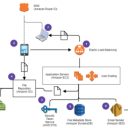
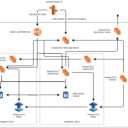
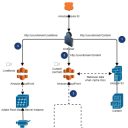
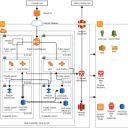
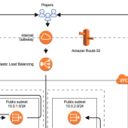
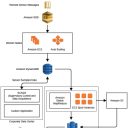
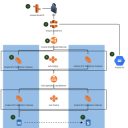
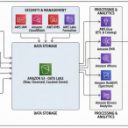
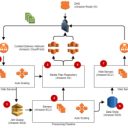
| Building a Disaster Recovery Center (DRC) in the cloud allows organizations to maintain business continuity during disruptions by providing a secure and resilient environment for critical applications and data. This approach offers cost-effective scalability, rapid deployment, and minimal infrastructure management, enabling organizations to quickly restore operations in the event of a disaster, minimizing downtime and data loss, and ensuring business resilience. The best practice for building a Disaster Recovery Center (DRC) in the cloud involves adopting a multi-cloud approach, leveraging diverse services like IaaS, PaaS, and SaaS. This allows for geographic redundancy, minimizing downtime during disasters. Implement a robust orchestration framework for automated failover and recovery processes, ensuring seamless transition of workloads. Utilize immutable infrastructure principles to prevent accidental modifications, and adopt comprehensive testing and validation strategies to guarantee the DRC's readiness and resilience. Finally, incorporate cybersecurity best practices for the DRC, including multi-factor authentication, encryption, and regular security assessments. Disaster recovery is about preparing for an recovering from any event that has a negative impact on your IT systems. A typical approach involves duplicating infrastructure to ensure the availability of spare capacity in the event of a disaster. For a disaster recovery solution, this results in significant cost savings. The following diagram shows an example of a disaster recovery setup for a local application.

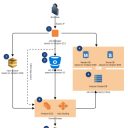
AWS Storage Gatway is a service connection an on-premises software appliance with cloud-based storage. AWS Storage Gateway securely uploads data to the AWS cloud for cost effective backup and rapid disaster recovery. Database server backups, application server volume snapshots, and Amazon Machine Images (AMI) of the recovery servers are stored on Amazon Simple Storage Service (Amazon S3). AMIs are pre-configured operating system and application software that are used to create a virtual machine Amazon Elastic Compute Cloud (Amazon EC2). Oracle database can directly back up to Amazon S3 using the Oracle Secure Backup (OSB) Cloud Module. In case of disaster in the corporate data center, you can recreate the complete infrastructure from the backups on Amazon Virtual Private Cloud (Amazon VPC) that enables to provision a private, isolated section of the AWS cloud where you can recreate your application. The application and database servers are recreated using Amazon EC2. To restore volume snapshots, you can use Amazon Elastic Block Store (EBS) volumes, which are then attached to the recovered application server. To remotely access the recovered application, you can use a VPN connection created by using the VPC Gateway. | ||
| | ||
| |