What is Amazon Bedrock?Amazon Bedrock is a fully managed service that makes it easy for customers to build and scale generative AI applications using a variety of foundation models (FMs). Its functional role is to provide access to these powerful, pre-trained AI models without requiring customers to build and manage the complex infrastructure themselves. Think of it as a one-stop shop for accessing and leveraging the power of generative AI.
Here's a breakdown of its key functional roles and benefits: 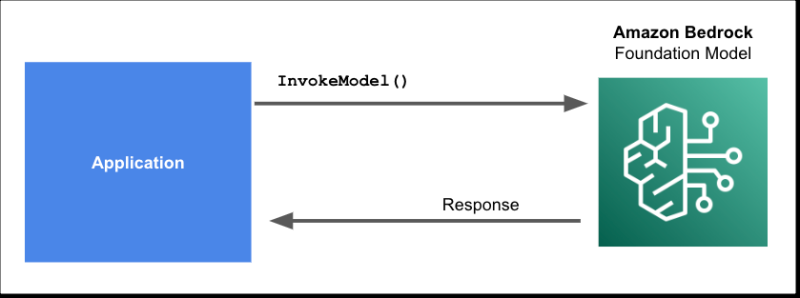
Functional Roles: - Access to diverse foundation models: Bedrock offers access to a range of FMs from Amazon and leading AI startups, allowing users to choose the model best suited for their specific needs (e.g., text generation, image generation, code generation). This diversity enables experimentation and finding the optimal model for different tasks.
- Simplified model deployment and management: Bedrock handles the complexities of infrastructure, scaling, and model management, freeing developers to focus on building applications rather than managing the underlying technology.
- API-driven access: Access to the FMs is through a simple API, making integration with existing applications straightforward.
- Secure and scalable infrastructure: Bedrock leverages AWS's secure and highly scalable infrastructure, ensuring reliability and performance.
- Prompt engineering and optimization tools: While not explicitly stated as a core functional role in every announcement, the implication is that the service will facilitate efficient prompt engineering and potentially offer tools for optimizing the performance of chosen models.
Benefits: - Faster time to market: By eliminating the need to build and manage the infrastructure for FMs, developers can bring their generative AI applications to market much faster.
- Reduced infrastructure costs: Eliminates the need for significant investment in hardware and engineering talent to build and maintain the AI infrastructure.
- Increased efficiency: Developers can focus on building applications, rather than managing complex infrastructure.
- Improved application quality: Access to high-quality FMs leads to better performing applications.
- Experimentation and innovation: The access to multiple FMs allows for easy experimentation and finding the best models for different tasks, fostering innovation.
- Enhanced security and compliance: Leveraging AWS's robust security infrastructure ensures compliance and protection of sensitive data.
In short, Amazon Bedrock aims to democratize access to generative AI by making powerful foundation models easily accessible and usable for developers of all skill levels, regardless of their existing AI expertise or infrastructure capabilities.
What is Amazon Bedrock Agent?Amazon Bedrock Agents consists of the following two main sets of API operations to help you set up and run an agent: - Build-time API operations to create, configure, and manage your agents and their related resources
- Runtime API operations to invoke your agent with user input and to initiate orchestration to carry out a task
Amazon Bedrock Agent - Build-time configurationAmazon Bedrock Agents are built using several key components configured at build time: - Foundation Model (FM): The underlying large language model used for interpreting user input, generating responses, and orchestrating the agent's actions.
- Instructions: Detailed instructions defining the agent's overall purpose and behavior. Advanced prompts allow for further customization at each step, potentially including Lambda functions for processing intermediate outputs.
- Action Groups: Define the actions the agent performs. These actions are specified using:
- OpenAPI schema: Defines API operations the agent can invoke, including parameters to elicit from the user.
- Function detail schema: Defines parameters to elicit from the user, usable for further orchestration or in your application.
- (Optional) Lambda function: Processes API or function invocation input and returns the response.
- Knowledge Bases: External knowledge sources consulted by the agent to enrich responses and inform orchestration steps.
- Prompt Templates: Templates used to create prompts for the FM. Amazon Bedrock provides four base templates (pre-processing, orchestration, knowledge base response generation, post-processing) which are customizable. You can modify these or disable steps for troubleshooting.
Build Process: At build time, all components are combined to create base prompts that guide the agent's orchestration. Advanced prompts, with added logic and examples, can further refine these prompts for each step. The base prompts incorporate instructions, action descriptions, knowledge base details, and conversation history. The final step is preparing the agent, which packages all components (including security settings) for runtime testing.

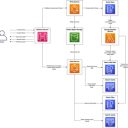
Amazon Bedrock Agent - Runtime ProcessThe InvokeAgent API manages the runtime of an agent, which follows a three-step sequence: - Pre-processing: This stage contextualizes and categorizes user input, potentially validating it before proceeding.
- Orchestration: This is the core of the agent's operation. It involves:
- Interpretation and Rationale Generation: The agent uses a foundation model (FM) to interpret user input and generate a rationale explaining its next steps.
- Action/Knowledge Base Selection: The agent predicts which action group (via a Lambda function) to invoke or which knowledge base to query.
- Action Invocation/Knowledge Base Query: If an action is chosen, the agent sends parameters to the associated Lambda function. If insufficient information exists, it may query a knowledge base for more context or reprompt the user.
- Observation and Iteration: The agent generates an "observation" (output from an action or knowledge base summary). This observation augments the base prompt, which is then re-interpreted by the FM. This iterative process continues until a response is generated or further user input is required. The base prompt is dynamically updated with agent instructions, action groups, and knowledge base information at each iteration. The FM guides the selection of API operations or knowledge bases at every step.
- Post-processing: This optional stage formats the final response for the user (disabled by default).
Tracing: Runtime tracing can be enabled to track the agent's rationale, actions, queries, and observations at each step, including full prompts sent to the FM and its outputs.
Conversation History: The conversation history is preserved across multiple InvokeAgent requests, enriching the base prompt and improving the agent's performance over time.

|