Visualizing an ExabyteAn exabyte (EB) is a staggering unit of data, equal to one quintillion bytes or one billion gigabytes. Visualizing its scale can be challenging, but here are a few attempts to put it into perspective: - Books: Imagine digitizing all the books ever written. Even that vast collection would likely fall short of a single exabyte.
- Hard Drives: You would need one million 1TB hard drives to store an exabyte of data. Imagine a massive warehouse filled floor to ceiling with hard drives, and then multiply that image.
- Streaming Video: You could stream HD video continuously for over 27,000 years to consume one exabyte.
The sheer physical manifestation of this much data highlights the challenges it presents. 
Handling and Managing Exabyte DataHandling and managing data at the exabyte scale requires a comprehensive and multi-faceted approach. The traditional methods of data storage and processing are simply inadequate. - Distributed Storage: Single-system storage solutions are obsolete. Exabyte-scale data demands distributed storage systems, where data is spread across numerous interconnected storage devices. Think massive data centers with tens of thousands of servers working in concert.
- Scalable Processing: Similar to storage, processing exabyte-scale data requires distributed computing frameworks. Technologies like Apache Hadoop and Apache Spark are essential for parallel processing across a cluster of machines.
- Data Governance and Metadata Management: With such a massive volume of data, maintaining data quality and consistency is crucial. Robust data governance policies and comprehensive metadata management systems are necessary to track data lineage, ensure compliance, and enable effective data discovery.
- Automated Data Lifecycle Management: An automated system should be in place to handle the full lifecycle of the data, from ingestion and storage to processing, analysis, archiving, and eventual deletion. This reduces human intervention and enables more efficient resource allocation.
Potential Applications and Data CollectionThe ability to handle exabyte-scale data opens up a world of possibilities across various fields: - Scientific Research: Analyzing massive datasets from telescopes, particle accelerators, and climate models to uncover new insights about the universe and our planet.
- Personalized Medicine: Storing and analyzing vast amounts of patient data, including genomic information, medical records, and lifestyle data, to develop personalized treatments and improve healthcare outcomes.
- Financial Modeling: Analyzing complex financial data to identify trends, predict market movements, and manage risk more effectively.
- Artificial Intelligence and Machine Learning: Training sophisticated AI models on massive datasets to improve accuracy and performance in areas such as natural language processing, computer vision, and robotics.
- Internet of Things (IoT): Processing data streams from billions of connected devices to optimize energy consumption, improve traffic flow, and enhance public safety.
- Social Media Analysis: Gaining a deeper understanding of human behavior and societal trends by analyzing social media data. This could range from identifying emerging narratives to detecting early signs of social unrest.
Collecting exabyte-scale data often involves large networks of sensors, high-throughput instruments, or the aggregation of data from millions of users and devices. Examples include: - Telescopes and Observatories: Modern telescopes generate terabytes of data per night, quickly accumulating to exabyte-scale archives.
- Particle Accelerators: Experiments at facilities like CERN's Large Hadron Collider produce petabytes of data per second, requiring massive storage and processing capabilities.
- Social Media Platforms: Daily, these platforms generate massive amount of data from user's posts, pictures and videos
- E-commerce websites: E-commerce websites generate large amounts of data from users' shopping habits.
Required TechnologiesEffectively managing exabyte-scale data requires a combination of cutting-edge technologies: - High-Performance Computing (HPC): Powerful supercomputers are essential for complex simulations and data analysis.
- Cloud Computing: Cloud platforms provide scalable and on-demand computing and storage resources, enabling organizations to handle exabyte-scale data without investing in expensive infrastructure.
- Distributed File Systems: File systems like Hadoop Distributed File System (HDFS) are designed to store and manage large datasets across a cluster of machines.
- NoSQL Databases: NoSQL databases, such as Cassandra and MongoDB, are capable of handling massive volumes of unstructured and semi-structured data.
- Data Compression and Deduplication: Techniques to reduce the physical storage footprint of data, minimizing storage costs and improving data transfer speeds.
- Data Visualization Tools: Tools that enable users to explore and understand complex datasets through interactive visualizations.
- Data Security and Encryption: Robust security measures to protect sensitive data from unauthorized access and cyber threats.
Meeting the challenge of exabyte-scale data requires a holistic approach that integrates advanced technologies, robust management strategies, and skilled personnel. As data continues to grow exponentially, these capabilities will become increasingly critical for organizations across all industries. Handling Exabyte-Scale Data with AWS - Infrastructure and Services for Massive Data StorageAWS is well-equipped to handle exabyte-scale datasets. This is achieved through a combination of scalable storage services, powerful compute resources, and optimized data processing tools. Key services that enable exabyte data management include: - Amazon S3 (Simple Storage Service): S3 is a highly scalable, durable, and cost-effective object storage service designed to store virtually unlimited amounts of data. Its pay-as-you-go pricing model makes it suitable for long-term archiving and large-scale data lakes. S3 scales horizontally to accommodate growing data volumes and automatically manages data redundancy and availability.
- Amazon S3 Glacier: For data that is accessed infrequently, S3 Glacier offers low-cost archival storage. It provides multiple retrieval options, ranging from expedited to bulk retrieval, allowing users to balance cost and access speed.
- Amazon EBS (Elastic Block Storage): EBS provides block-level storage volumes for use with EC2 instances. While not directly designed for storing exabytes in a single volume, EBS can be used in conjunction with other AWS services for high-performance data processing and analysis. For example, large RAID arrays can be created to support applications requiring very high I/O throughput.
- AWS Snow Family: AWS Snowcone, Snowball, and Snowmobile facilitate the transfer of large datasets into and out of AWS. Snowball and Snowcone are ruggedized, portable devices that can be physically shipped to your location to transfer data to S3. Snowmobile is a semi-trailer truck equipped with storage servers, designed to move exabytes of data.
Handling Exabyte-Scale Data with AWS - Data Processing and Analytics at ScaleStoring exabytes of data is only the first step. AWS offers various services for processing, analyzing, and deriving insights from this massive data: Amazon EMR (Elastic MapReduce): EMR is a managed Hadoop framework that simplifies the processing of large datasets using open-source tools like Apache Spark, Hive, and Presto. It enables distributed data processing and analysis at scale, allowing users to run complex analytics jobs on exabyte-scale datasets. EMR supports auto-scaling to dynamically adjust cluster resources based on workload demands. 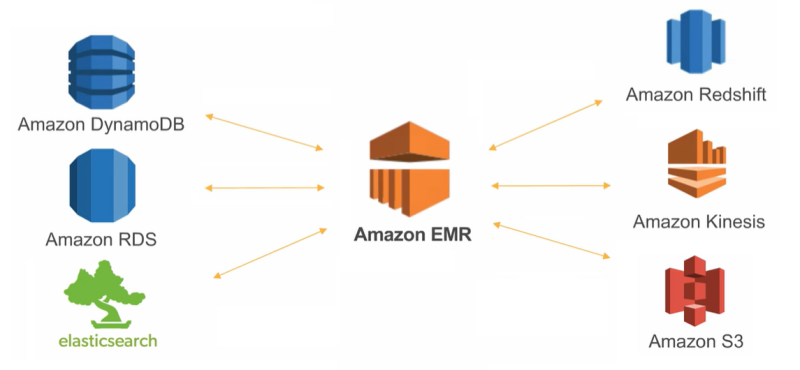
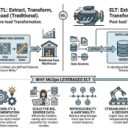
AWS Glue: Glue is a fully managed ETL (Extract, Transform, Load) service that makes it easy to prepare and load data for analytics. It provides features like data cataloging, schema discovery, and code generation to simplify the ETL process. Glue can be used to prepare data stored in S3 for analysis with EMR, Athena, or other analytics services. 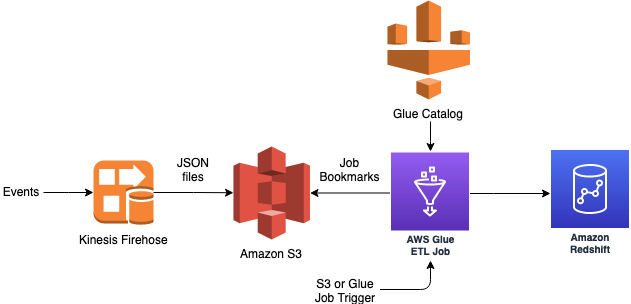
Amazon Athena: Athena is an interactive query service that enables users to analyze data directly in S3 using standard SQL. It is serverless, so there is no infrastructure to manage, and you pay only for the queries you run. Athena is well-suited for ad-hoc analysis and exploration of large datasets. 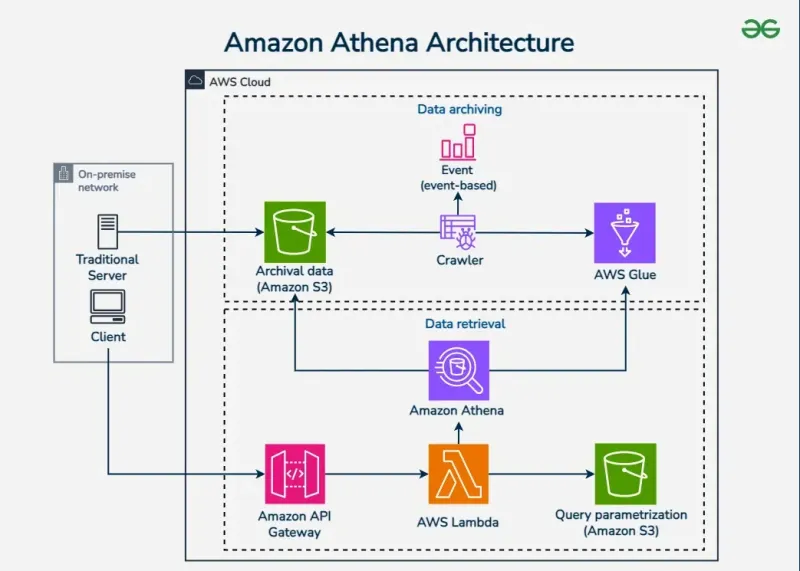
Amazon Redshift: Redshift is a fully managed data warehouse service that is optimized for analytical workloads. It allows users to store and analyze structured and semi-structured data from various sources. Redshift provides fast query performance and supports parallel data processing. 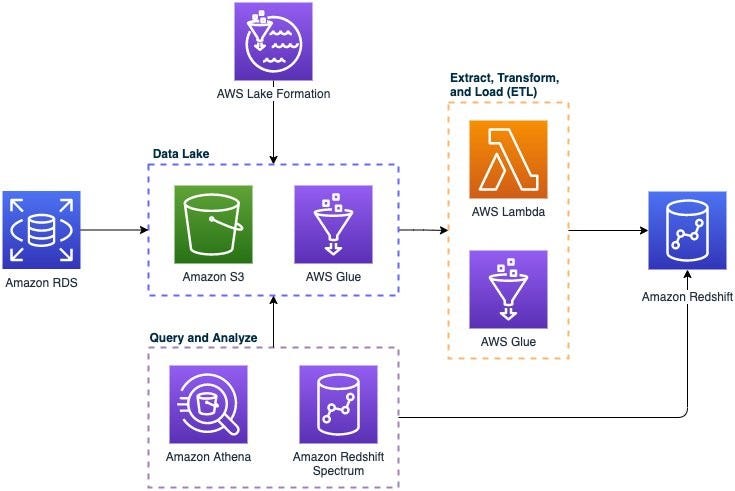
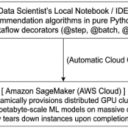
Amazon SageMaker: SageMaker is a comprehensive machine learning platform that allows users to build, train, and deploy machine learning models at scale. It integrates with other AWS services like S3 and EMR, enabling users to use exabyte-scale datasets for training machine learning models. 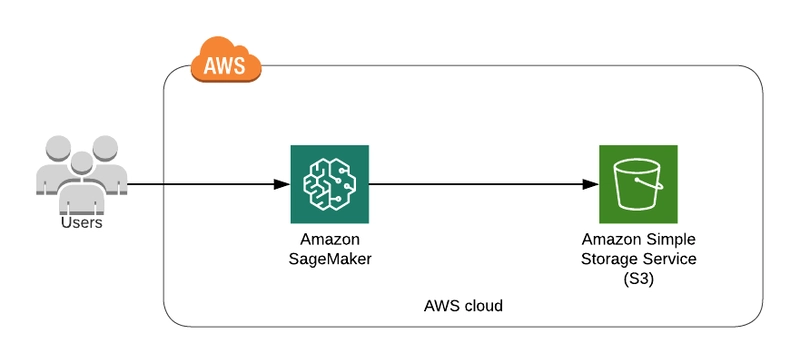
Handling Exabyte-Scale Data with AWS - Strategies for Effective Exabyte Data ManagementSuccessfully managing exabyte-scale data on AWS requires a well-defined strategy that addresses data ingestion, storage, processing, and access: - Data Ingestion: Choose the appropriate data ingestion method based on data source, data volume, and network bandwidth. Options include AWS Snow Family for offline data transfer and AWS Direct Connect for dedicated network connections. Use services like Kinesis for real-time data ingestion.
- Data Lake Design: Implement a well-architected data lake based on S3 to ensure data organization, security, and accessibility. Use data partitioning and indexing to optimize query performance. Use metadata management tools like AWS Glue Data Catalog to track data lineage and schema information.
- Cost Optimization: Optimize storage costs by leveraging S3 storage classes like S3 Standard, S3 Intelligent-Tiering, and S3 Glacier based on data access patterns. Use data compression and deduplication techniques to reduce storage footprint. Leverage AWS Cost Explorer to monitor and optimize spending.
- Data Security and Governance: Implement robust security measures to protect sensitive data. Use AWS Identity and Access Management (IAM) to control access to data and resources. Encrypt data at rest and in transit. Comply with relevant regulatory requirements. Utilize AWS CloudTrail for auditing and monitoring.
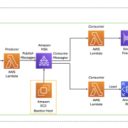
- Automation: Automate data processing and management tasks using AWS Lambda, AWS Step Functions, and other automation tools. This can help reduce operational overhead and improve efficiency.
Taming Exabytes: AWS Data Wrangling Taming Exabytes: AWS and the Data Deluge |