AWS

How Netflix Runs Recommendations for Hundreds of Millions of Users Using Amazon SageMaker & Metaflow

CK CK 3788 
Created at  
183 0 0

Every evening when you open Netflix, your home screen greets you with personalized movie thumbnails and tailored content suggestions. Netflix delivers hyper-customized recommendations to over 200 million users in a matter of seconds.

From a data scientist's perspective, however, this sounds like an engineering nightmare:

"Teres of petabytes (PB) of user viewing logs arriving daily, hundreds of recommendation and search models running simultaneously, and endless A/B testing cycles..."

To solve these complex MLOps challenges, Netflix combined the massive cloud computing power of Amazon SageMaker with Metaflow, an internal framework they built and open-sourced. Here is a breakdown of how Netflix built a human-centric, highly efficient infrastructure to power its recommendation system.


1. The Problem: "Infrastructure Hell" for Data Scientists

In the early days, Netflix data scientists spent more time configuring infrastructure than developing Machine Learning algorithms.

  • GPU Memory Constraints: Training large-scale deep learning models on local machines or single servers was nearly impossible.
  • Complex MLOps Pipelines: Navigating AWS Kinesis, S3, Docker, and Kubernetes (EKS) created a steep learning curve.
  • Resource Inefficiency: GPU instances were often left running after training, wasting costs—or jobs crashed mid-way due to insufficient resources.

Netflix set out with a clear objective: "Let data scientists focus 100% on writing ML code."


2. The Solution: Metaflow (Abstraction) + Amazon SageMaker (Cloud Power)

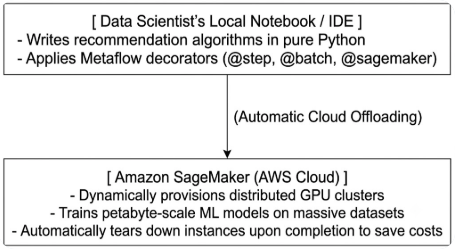
Netflix's core MLOps strategy was to unify the Developer Experience (DX) through Metaflow while offloading heavy-duty computation to Amazon SageMaker.

How Netflix Runs Recommendations for Hundreds of Millions of Users Using Amazon SageMaker & Metaflow


1) Metaflow: Pythonic MLOps Orchestration

Metaflow is a Python framework developed by Netflix. Data scientists don't need to write complex YAML files or manage Kubernetes setups—they build pipelines using simple Python decorators (@step).

from metaflow import FlowSpec, step, schedule

class NetflixRecommendationFlow(FlowSpec):

    @step
    def start(self):
        # 1. Ingest user viewing logs & interaction data from S3
        self.next(self.train)

    @batch(gpu=8, memory=64000) # Metaflow automatically scales this step to AWS GPUs
    @step
    def train(self):
        # 2. Train large-scale recommendation model (PyTorch / TensorFlow)
        self.model = train_netflix_recommendation_model(self.data)
        self.next(self.end)

    @step
    def end(self):
        # 3. Register model to SageMaker Model Registry for deployment
        print("Model training completed successfully!")

if __name__ == '__main__':
    NetflixRecommendationFlow()


2) Amazon SageMaker: Scalable Cloud Backend

Adding @sagemaker or configuring the Metaflow environment seamlessly routes execution from a local machine to AWS SageMaker clusters.

  • Serverless Elasticity: The moment a training job starts, SageMaker provisions dozens of P3/P4/G5 GPU instances.
  • Cost Efficiency: Once training finishes, model artifacts are stored in Amazon S3 and GPU instances are instantly terminated to eliminate idle server costs.


3. Netflix's SageMaker Recommendation Pipeline Architecture

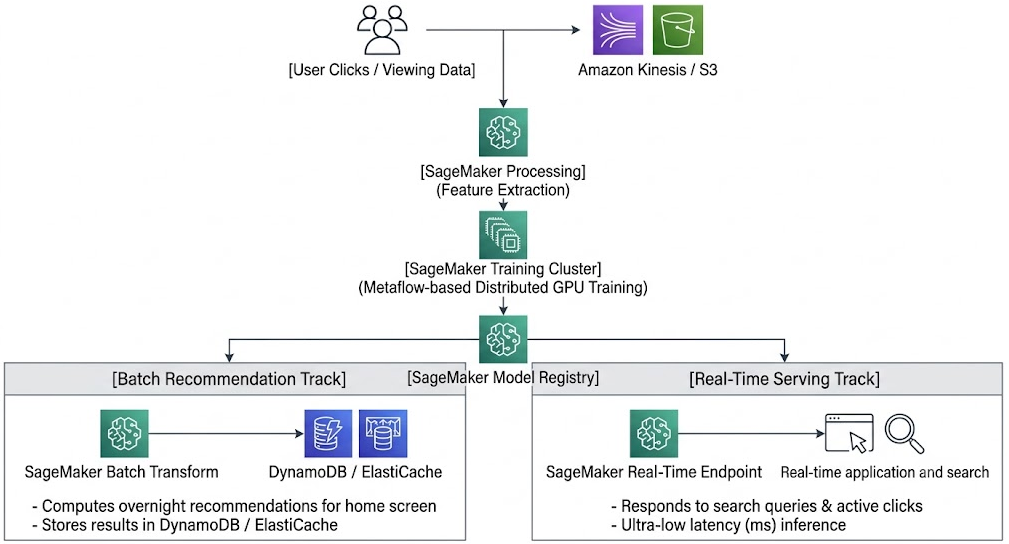
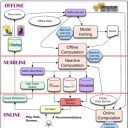
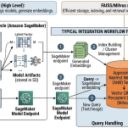
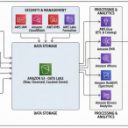
The end-to-end pipeline—from data ingestion to real-time serving—follows this MLOps architecture flow:

How Netflix Runs Recommendations for Hundreds of Millions of Users Using Amazon SageMaker & Metaflow

  1. Data Preparation: User watch history, click logs, and interaction events are ingested into an Amazon S3 Data Lake.
  2. Distributed Training: Metaflow triggers Amazon SageMaker Training to run collaborative filtering and deep learning algorithms across multi-node GPU clusters.
  3. Dual-Track Serving:
    • Batch Recommendations: SageMaker Batch Transform calculates top picks overnight and saves them into DynamoDB for instant rendering when users log in.
    • Real-Time Recommendations: As users type in search terms or tap on titles, SageMaker Real-Time Endpoints evaluate active session context to deliver immediate recommendations.


4. Key Results Achieved by Netflix

1) Maximized Data Scientist Productivity

Engineers and data scientists no longer spend hours configuring Docker containers or Kubernetes clusters. They focus 100% on Python code and algorithm innovation.

2) Significant Cloud Cost Savings

Instead of maintaining 24/7 dedicated GPU servers, Netflix utilizes SageMaker On-Demand & Managed Spot Instances to spin up infrastructure only when training, reducing AWS overhead drastically.

3) Rapid A/B Testing

New algorithm iterations can be deployed via Metaflow to SageMaker within hours, accelerating A/B testing loops with real production traffic.


💡 Key Takeaway

Netflix's MLOps story highlights a crucial lesson: "Success in MLOps isn't just about adopting tools; it's about abstracting infrastructure away from data scientists."

  • For developer workflow & simplicity ➔ Metaflow
  • For cloud computing, GPU scalability, and production hosting ➔ Amazon SageMaker
Tags Amazon SageMaker Cloud Computing Data Science Workflow MLOps MLOps Architecture Machine Learning Infrastructure Metaflow Model Deployment Neflix Netflix Recommendations OTT Recommendation Systems SageMaker Scalable Machine Learning Search & Recommendation Facebook X
Comments 0
Similar posts
  1. The Immense Scale and Management of Exabyte Data with AWS
    518
  2. Building a Video Content Recommendation System with Amazon SageMaker
    527
  3. Is PyTorch Dead? Deep Learning's Enduring Role Beyond LLMs & Essential Skills
    699
  4. Netflix's Recommendation System
    429
  5. Python code using GPU on CentOS with AWS
    1,258
  6. Beyond SDLC: Why the Entertainment Sector Needs an AI Development Life Cycle Now
    299
  7. Building GPU Clusters on GCP, Azure, and AWS: A Practical Guide and Head-to-Head Comparison
    390
  8. End-to-End Autonomous Vehicle ML Training Pipeline
    341
  9. Bridging the Gap: How Machine Learning Integrates with Infrastructure
    292
  10. When Do You Need Real-Time Model Registry Versioning Powered by Autonomous Agents?
    242
  11. Understanding Data Lineage
    272
  12. Designing MLOps Architectures to Handle Seasonal Data Drift in EV Fleet Models
    201
  13. Designing a Data Curation System Around a Vector Database
    230
  14. MLOps Explained: Spark, Flink, and Reference Architecture Deep Dive
    247
  15. AI-DLC vs. AI-SDLC: Model-Centric vs. System-Centric AI Development
    269
  16. How to Set Up and Deploy Containerized Applications with AWS ECS
    10,683
  17. Power of Containerized Deployment with AWS ECS
    10,599
  18. TikTok's Recommendation System - Monolith
    302
  19. FAISS Already Does ANN... So Why Do Top Teams Still Pay for SageMaker?
    315
  20. Reinforcement Learning–Based Methods for CTR Improvement based on Recommendation System
    273
  21. Sequence Models (RNN / Transformer) for Recommendation Service widely used at OTT and e-Commerce
    254
  22. Neural Collaborative Filtering (NCF) for Recommendation Service
    250
  23. Content-Based Filtering for Recommendation Service (aka User-based Model)
    194
  24. Common Recommendation Service Architecture
    539
  25. Word counting source program based on MapReduce framework
    693
  26. Your Video – VoD content recommendation service on Samsung Smart TV
    562
  1. Architectural Diagram Gallery for Amazon MSK
    505
  2. Architectural Diagram Gallary for Amazon Kinesis
    526
  3. Real-time Data Streaming Solutions - Kafka vs. Kinesis Comparison
    857
  4. How to change your AWS Credential Region in CLI?
    759
  5. Default Timeout for Amazon Bedrock invoke_model
    742
  6. When you face 504 Timeout Errors by Amazon ALB
    1,487
  7. When you face 504 Gateway Timeout while you wait a response from Bedrock in Fast API
    540
  8. How to overcome the prompt size limit when you use Claude via Bedrock - Chunking / Splitting the Input
    502
  9. Integrating VectorDB stored in S3 with Amazon Bedrock
    429
  10. When you need AWS_ACCESS_KEY_ID and AWS_SECRET_ACCESS_KEY for Amazon Bedrock
    545
  11. Why Amazon VPC satisfies with PCI-DSS and SOC 2 Type on Fintech Industry?
    649
  12. You shouldn't use Amazon CloudFront distribution as an origin
    643
  13. Amagi CLOUDPORT Architecture based on AWS for FAST for channel playout on AWS
    1,330
  14. Creating a serverless Apache Kafka publisher using AWS Lambda
    568
  15. AWS System Design Example - Instagram Architecture
    1,928
  16. A Python script to create an EC2 Spot instance using boto3
    1,611
  17. A Python/PHP code to deregister anormalous instaces in Amazon ECS
    1,861
  18. Where to get AWS API Key at AWS Management Console?
    1,078
  19. Understanding Amazon Bedrock Agent for AI-based ChatBot
    647
  20. Media sharing service architecture in AWS
    10,375
  21. Enterprise Data Lake Architecture based on AWS
    10,412
  22. "502 Bad Gateway" Error easy to happen at the combination of nginx and node.js in AWS Elastic Beanstalk
    10,495
  23. Recommended Vector DB Structure for Amazon Bedrock Integration
    393
  24. Product Marketing & Recommendation Architecture in AWS for e-commerce website
    10,748
  25. What cause a 502 bad gateway error in AWS environment?
    445
Recently updated
  1. Google OAuth Token Expiration: Causes and Solutions
    31
  2. Why 100% SEO Guarantees Better User Engagement and How to Achieve It in Your Service
    57
  3. Why SPF and DKIM Are Essential for Linux Email Servers?
    51
  4. How do I create animated background for Google Meet?
    23,256
  5. MaxMind GeoLite2 vs. DB-IP Lite vs. ip-api.com: Choosing the Right Free IP Geolocation Solution
    273
  6. Meet Valkey: Why Redis Changed Its License, Why Valkey is Better, and How to Use It as a Drop-in Replacement
    105
  7. How Rogue Web Scrapers Are Stealing My Content and Destroying My Server
    170
  8. Array of arguments passed to script in PHP
    99
  9. Invalid Auction Storms in Ad Tech
    108
  10. Building MRC-Compliant Instrumentation in Ad Tech: Implementation Steps and Key Challenges
    209
  11. The Two Clocks of Ad Server Architecture
    78
  12. Frequency Cap Architecture Overview
    527
  13. Collecting Proof-of-Play from 100,000 Screens
    154
  14. Vector Search in Relational Databases (RDBs): Trends & Usage Environments
    303
  15. What is RedisVL?
    117
  16. Designing a Skill Registry Architecture: Minimize Token Usage and Maximize AI Performance
    247
  17. TPU & GPU Cluster Management Tools
    258
  18. The Concept of Scaffolding in AI Agents
    245
  19. Beyond Static Pipelines: Architecting LLM Multi-Agent Systems for Autonomous Workflow Orchestration
    599
  20. Fine-Tuning Open-Weight LLMs: Training, Licensing, and Deploying Custom Models with Ollama
    355
  21. Inside the Next-Generation Streaming Architecture: Ultra-Low Latency, SGAI, and AI Codecs
    207
  22. Machine Learning: Training vs. Ranking
    231
  23. The Continuous Learning Machine: Designing a Loop That Actually Turns
    229
  24. The Next-Gen Low-Latency Standards: LL-HLS & MoQ
    204
  25. Extracting Context from Live Video: The Architecture Got Simpler When We Stopped Building Features
    263
  26. The New Ad Stack Behind Live Sports Streaming: Inside SGAI, EABN, and the Standards Race to Fix Live Monetization
    674
  27. From 15 to 40+ FPS: Accelerating PyTorch Object Detection on Automotive ECUs
    233
  28. System Requirements and Architecture: Intelligent Priority-Based Scheduler
    176
  29. GPU & LLM Cluster Infrastructure & Task Scheduling Architecture
    255
  30. Java Variant Type
    213