What is Ethereum?Ethereum is a decentralized, open-source blockchain platform that enables the creation and execution of smart contracts and decentralized applications (dApps). Unlike Bitcoin, which primarily focuses on cryptocurrency transactions, Ethereum's platform supports a broader range of functionalities through its programmable nature, utilizing its native cryptocurrency, Ether (ETH), for transaction fees and computational resources. 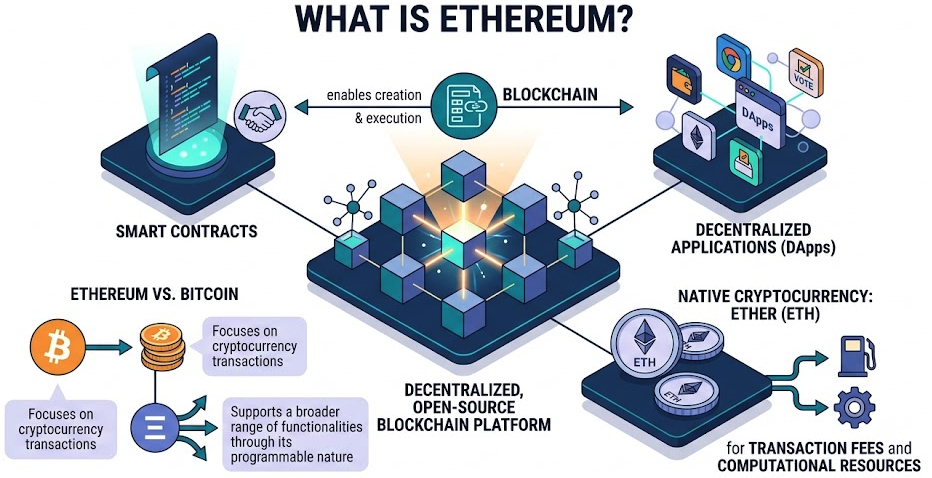
What is Ethereum Ecosystem?The Ethereum ecosystem encompasses the decentralized network, its native cryptocurrency Ether (ETH), and a vast array of decentralized applications (dApps), smart contracts, and services built on its blockchain. This ecosystem facilitates the creation and execution of diverse applications ranging from decentralized finance (DeFi) and non-fungible tokens (NFTs) to supply chain management and gaming, all powered by smart contracts that automate processes and enforce agreements without intermediaries. 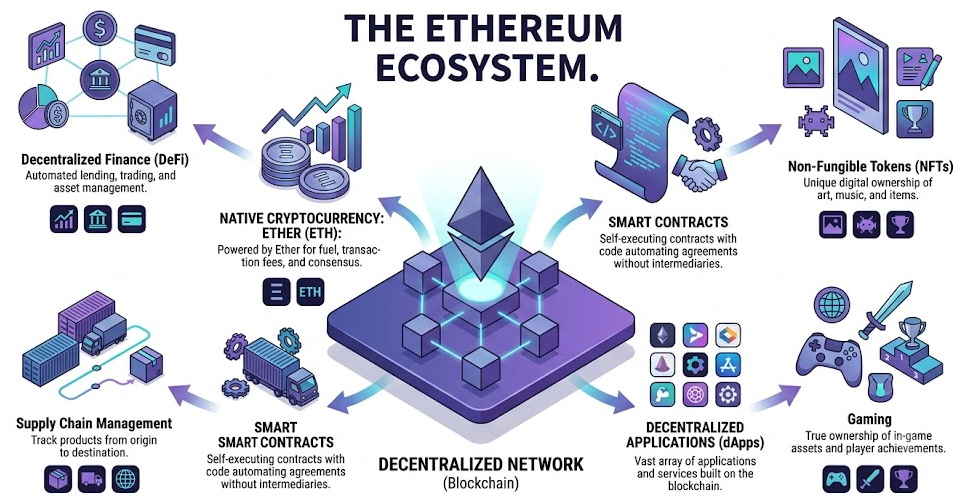
Contributing to the Ethereum Foundation Contributing to the Ethereum Foundation involves engaging with its ecosystem through development, community support, research, or other initiatives. The Ethereum Foundation (EF) is the primary organization supporting the Ethereum blockchain, and it relies on a global community for its success. Here’s a detailed guide to contributing: 1. Understand the Ethereum Ecosystem- Familiarize yourself with Ethereum’s core principles, such as decentralization, smart contracts, and the Ethereum Virtual Machine (EVM).
- Learn about Ethereum’s ongoing transition to Ethereum 2.0 (now called Ethereum Beacon Chain or Proof-of-Stake) and scaling solutions like Layer 2 technologies.
2. Ways to Contributea. Development Contributions- Core Protocol Development:
- Work on the Ethereum protocol itself, such as consensus mechanisms, client software (e.g., Geth, Besu), or EIPs (Ethereum Improvement Proposals).
- How to Start:
- DApp Development:
- Build decentralized applications (DApps) or tools that use the Ethereum blockchain.
- Smart Contract Development:
- Write and audit smart contracts using Solidity or Vyper.
b. Ethereum Research- Contribute to cutting-edge research in cryptography, consensus mechanisms, and scaling solutions.
- Collaborate with the EF’s research team by proposing new ideas or solving open problems.
c. Bug Bounties- Participate in Ethereum’s bug bounty program to identify and report vulnerabilities in its protocol or software.
d. Documentation and Educational Resources- Improve Ethereum’s documentation to make it easier for developers and users to understand.
- Write tutorials, guides, or technical blogs to educate others about Ethereum.
e. Community Building- Host meetups, workshops, or hackathons to grow the Ethereum community.
- Join or organize Ethereum developer communities on platforms like Discord, Reddit, and Twitter.
f. Advocacy and Outreach- Become an Ethereum ambassador by spreading awareness about the technology.
- Help onboard new users and developers by providing support in forums or on social media.
3. Apply for Ethereum Foundation Grants- The EF funds projects that contribute to the growth of the Ethereum ecosystem.
- How to Apply:
- Visit the EF Grants page.
- Submit a proposal outlining your project idea, how it benefits Ethereum, and the resources required.
- Examples of funded areas include developer tools, Layer 2 solutions, cryptographic research, and ecosystem growth.
4. Join Ethereum Working Groups- Participate in Ethereum working groups such as the Ethereum Cat Herders or EthStaker.
- Collaborate on initiatives like implementing EIPs, improving testnets, or enhancing Ethereum’s governance.
5. Participate in Hackathons- Join Ethereum hackathons, such as those organized by ETHGlobal, to build projects, network with developers, and showcase your skills.
6. Donate or Fund Projects- Contribute financially to projects within the Ethereum ecosystem via platforms like Gitcoin, which supports open-source Ethereum projects.
7. Build and Maintain Ethereum Clients- Work on Ethereum client implementations like Geth, Besu, or Lighthouse.
- Engage in developing interoperability between different clients.
8. Engage in Layer 2 and Rollup Development- Contribute to Layer 2 scaling solutions like Optimism, zkSync, or Arbitrum.
- Develop applications that leverage these rollups for faster and cheaper transactions.
9. Join the Ethereum Fellowship Program- Participate in mentorship opportunities, research, and community initiatives via EF fellowship programs when they are open for applications.
10. Stay Informed and Network- Join the Ethereum Discord or Reddit communities.
- Follow the EF blog and other updates from Ethereum’s ecosystem.
- Attend Ethereum conferences like Devcon and other industry events.
Key ResourcesBy actively engaging in these areas, you can contribute meaningfully to the Ethereum Foundation and its ecosystem while showcasing your skills and passion for blockchain technology. 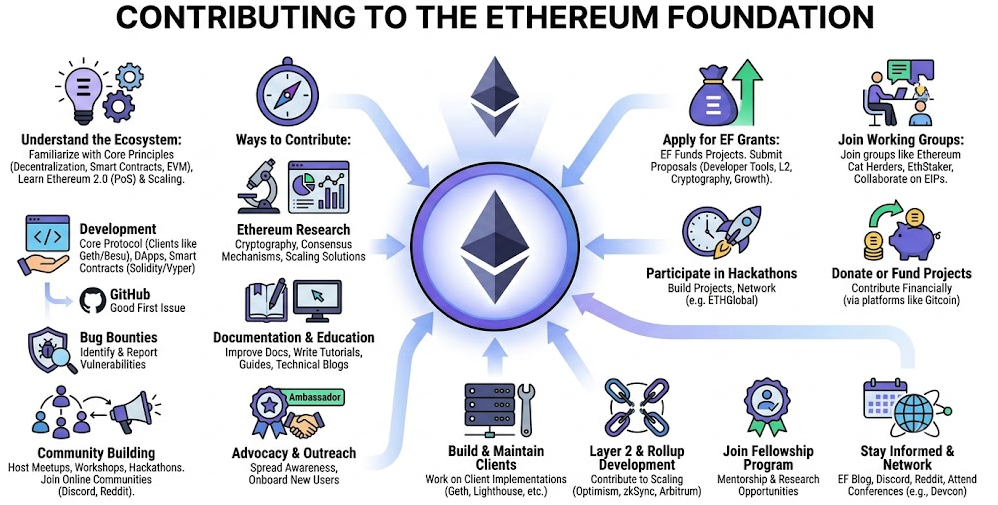
|