Apache Kafka - a distributed, fault-tolerant, high-throughput streaming platform

CK CK 3788 
Created at
Updated at  
616 0 0

Apache Kafka is a distributed, fault-tolerant, high-throughput streaming platform.

Apache Kafka - a distributed, fault-tolerant, high-throughput streaming platform

Think of it as a central nervous system for your data, reliably handling real-time data feeds. 
Apache Kafka - a distributed, fault-tolerant, high-throughput streaming platform


Core Concepts:

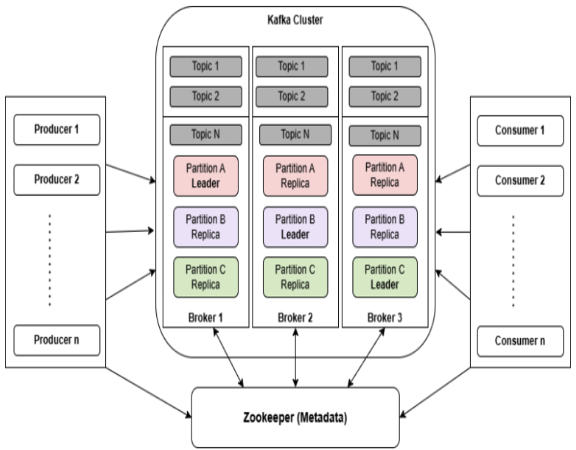
  • Producers: Applications that write (publish) data to Kafka topics.
  • Consumers: Applications that read (subscribe to) data from Kafka topics.
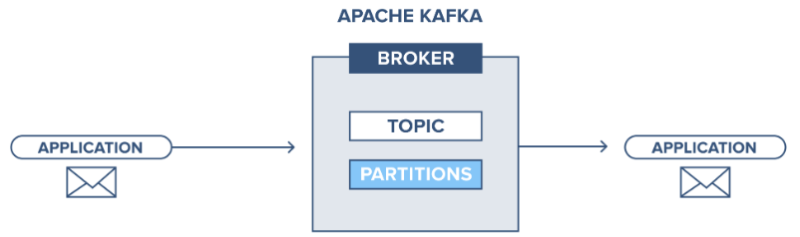
  • Topics: Categories or feeds to which records are published. You can think of them as named channels. Data is organized into topics.
  • Partitions: Each topic is divided into partitions. Partitions allow for parallelism in both writing and reading data. A topic can have one or more partitions.
  • Brokers: Kafka servers. A Kafka cluster consists of one or more brokers.
  • ZooKeeper: Kafka uses ZooKeeper for managing cluster metadata, leader election, and configuration management. (Newer versions are moving away from Zookeeper.)
Apache Kafka - a distributed, fault-tolerant, high-throughput streaming platform


Key Features and Benefits:

  • High Throughput: Kafka can handle massive volumes of data, making it suitable for real-time data streams. It achieves this through distributed processing and parallelization.
  • Scalability: Kafka is horizontally scalable. You can add more brokers to the cluster to increase its capacity.
  • Fault Tolerance: Data is replicated across multiple brokers, ensuring data durability and availability even if some brokers fail.
  • Durability: Data is persisted on disk and replicated, providing a reliable store for your data.
  • Real-time Processing: Kafka enables real-time processing of data streams, allowing for immediate insights and actions.
  • Decoupling: Producers and consumers are decoupled, meaning they don't need to know about each other. This allows for flexible and independent development and deployment.
  • Versatility: Kafka can be used for a wide range of use cases, including:
    • Real-time data pipelines: Building pipelines to move data between systems.
    • Stream processing: Processing data in real-time for analytics, alerting, and decision-making.
    • Website activity tracking: Capturing and analyzing user behavior on websites.
    • Log aggregation: Collecting and centralizing logs from various systems.
    • Metrics collection and monitoring: Gathering and analyzing system metrics for performance monitoring.
    • Event sourcing: Using a Kafka topic as a durable, ordered record of all events in an application.
  • Guaranteed Ordering: Within a partition, messages are guaranteed to be delivered to consumers in the order they were produced.
  • Multiple Consumers: Multiple consumer groups can independently subscribe to the same topic without affecting each other. This allows for different applications to process the same data stream in different ways.


How it Works (Simplified):

1. A producer sends a message to a Kafka topic.
2. The message is appended to one of the partitions within the topic. The partition is often chosen based on a key included in the message (e.g., a user ID).
3. Kafka stores the message on disk in the chosen partition.
4. Consumers subscribe to the topic and read messages from the partitions.
5. Kafka tracks the offset (position) of each consumer within the partition, so consumers can resume reading from where they left off.
Example Use Case:
Imagine an e-commerce website. Every time a user clicks on a product, adds an item to their cart, or makes a purchase, an event is generated. These events can be published to a Kafka topic.

  • One consumer group might process these events in real-time to display personalized recommendations to the user.
  • Another consumer group might aggregate the events to generate daily sales reports.
  • A third consumer group might use the data for fraud detection.


In Summary:

Apache Kafka is a powerful and versatile platform for building real-time data pipelines and streaming applications. Its scalability, fault tolerance, and high throughput make it a popular choice for modern data architectures.


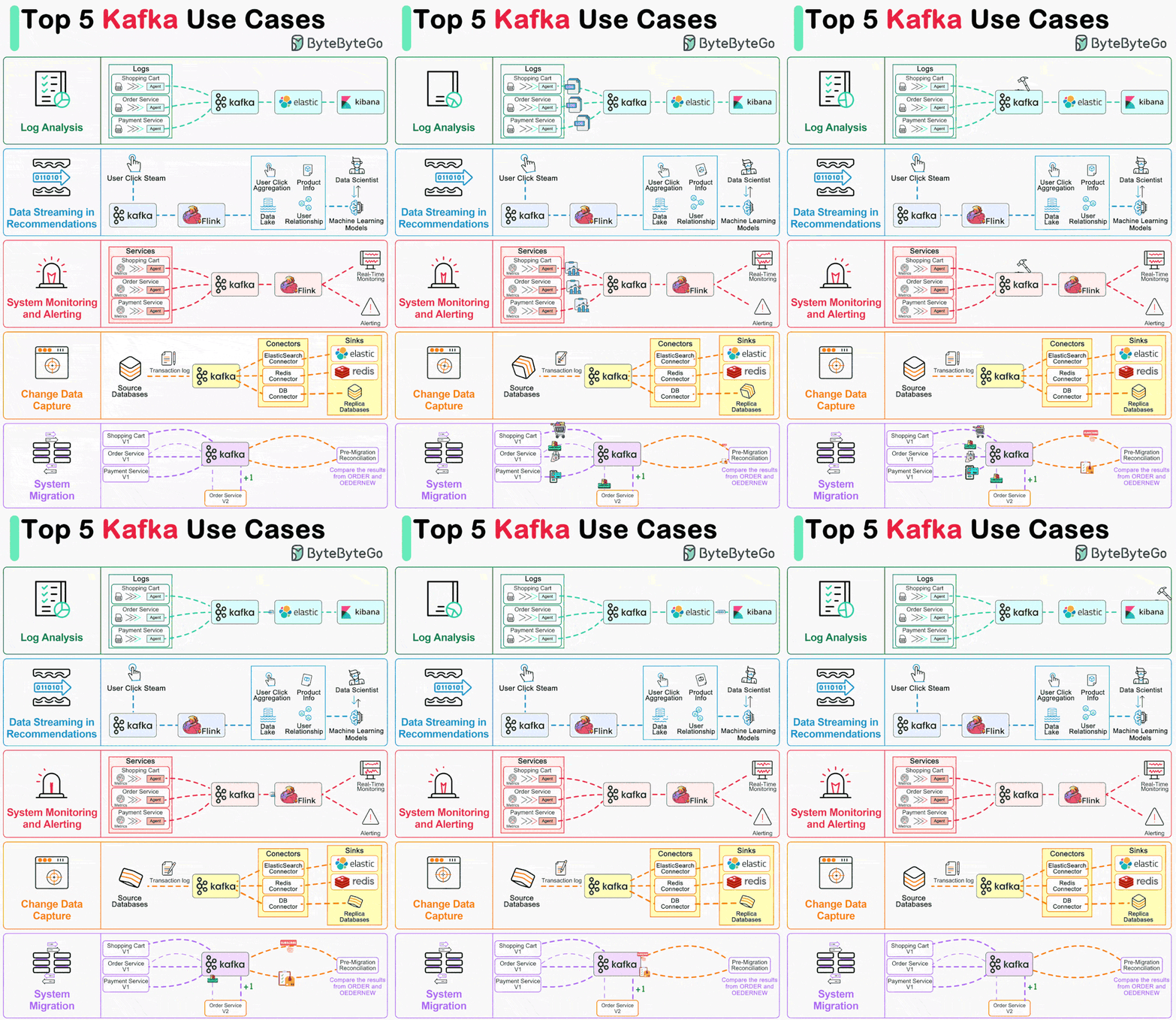
(added 4/10/2025) Top 5 Kafka Use Cases from Alex Xu at ByteByteGo
 Apache Kafka - a distributed, fault-tolerant, high-throughput streaming platform

Tags Alex Xu Apache Kafka Brokers Cluster Metadata Consumers Partitions Producers Topics ZooKeeper Facebook X
Comments 0
Similar posts
  1. Creating a serverless Apache Kafka publisher using AWS Lambda
    564
  2. Nine Types of Testing while we develop APIs
    515
  3. The Ultimate Data Engineering Roadmap
    1,073
  4. Improving nested_fields data access experience with a persistent user-defined function (aka UDF) in Google Big Query
    1,500
  5. Real-time Data Streaming Solutions - Kafka vs. Kinesis Comparison
    853
  6. Architectural Diagram Gallery for Amazon MSK
    503
  7. System Requirements and Architecture: Intelligent Priority-Based Scheduler
    167
  8. Java Kafka on CentOS 7: Install, Configure, & Run with Examples
    425
  9. CentOS 7 PHP Apache Kafka: Installation, Examples, and System Diagram
    307
  10. Apache Kafka Explained: Powering Netflix, Building with PHP
    493
  11. Multi-AZ Kafka Architecture
    149
  12. Designing Resilient Infrastructure to Prevent Order Data Loss During Kafka Failures
    157
  13. Enterprise-Scale 100k+ TPS Order Processing System Architecture
    179
  1. Viewing Git Graph in ASCII
    591
  2. Vibe Coding: Harmonizing Intent with AI Productivity
    501
  3. How do I change the theme for code block in Confluence Cloud?
    1,370
  4. FIPS - Federal Information Processing Standards
    1,394
  5. Simplify Your Workflow: Switching Git Profiles Automatically by Folder
    754
  6. How to Control External Monitor Brightness, Sound Volume on a Mac with MonitorControl (Even Over HDMI)
    2,399
  7. Building Multilingual Applications with i18n
    1,200
  8. Kiro versus Cursor AI - Spec-Driven? or Chat-Driven?
    403
  9. How to use multiple RSA (SSH) keys for GitHub
    330
  10. Key Metrics Track to Ensure the Health and Performance of a Distributed System
    176
  11. REST API Vs. GraphQL
    411
  12. Project Libre similar to MS Project
    529
  13. Learning about Firestore: Architecture, Pros, Cons, and Real-World Deployments
    168
  14. Building Privacy-First Infrastructure: Network Isolation + Zero Trust for GDPR Compliance
    294
  15. Why supabase is not safe for the Fintech project?
    857
  16. Comprehensive Software Development Flow : How Companies Ship Code To Production
    2,314
  17. DeepSeek v3 offers of ChatGPT's performance at 1/10 the price!
    634
  18. Difference between CPU and GPU - Why GPU is faster than CPU?
    805
  19. gRPC - Open-source Universal RPC Framework developed by Google
    768
  20. Exploring the Depths of Data Transfer: sendfile vs. kTLS
    1,320
  21. How Netflix Ensures Smooth Streaming with Open Connect CDN
    2,130
  22. Public DNS (Domain Name Service) based on IPv4, IPv6 widely used
    1,244
  23. All Engineering Software Development How can you prioritize software design trade-offs when developing a new product?
    1,341
  24. MR(Mixed Reality) Game Programming based on Unity 3D
    1,360
  25. Temporal Programming Model - Robust, Long-Running, Fault-Tolerant Applications as WorkFlows
    358
  26. Cadence Programming Model - A Distributed, Fault-Tolerant, Stateful Workflow Orchestration Framework
    294
  27. Large-Scale Concurrency Control: Solving the DB Bottleneck from a Flood of “Likes”
    271
  28. Hybrid Methods for Recommendation Service
    219
  29. Model-Based CF: Matrix Factorization for Recommendation Service
    183
  30. Memory-Based Collaborative Filtering for Recommendation Service
    195
Recently updated
  1. Why 100% SEO Guarantees Better User Engagement and How to Achieve It in Your Service
    42
  2. Why SPF and DKIM Are Essential for Linux Email Servers?
    36
  3. How do I create animated background for Google Meet?
    21,044
  4. MaxMind GeoLite2 vs. DB-IP Lite vs. ip-api.com: Choosing the Right Free IP Geolocation Solution
    252
  5. Meet Valkey: Why Redis Changed Its License, Why Valkey is Better, and How to Use It as a Drop-in Replacement
    94
  6. How Rogue Web Scrapers Are Stealing My Content and Destroying My Server
    158
  7. Array of arguments passed to script in PHP
    90
  8. Invalid Auction Storms in Ad Tech
    98
  9. Building MRC-Compliant Instrumentation in Ad Tech: Implementation Steps and Key Challenges
    202
  10. The Two Clocks of Ad Server Architecture
    71
  11. Frequency Cap Architecture Overview
    515
  12. Collecting Proof-of-Play from 100,000 Screens
    146
  13. Vector Search in Relational Databases (RDBs): Trends & Usage Environments
    288
  14. What is RedisVL?
    109
  15. Designing a Skill Registry Architecture: Minimize Token Usage and Maximize AI Performance
    232
  16. TPU & GPU Cluster Management Tools
    245
  17. The Concept of Scaffolding in AI Agents
    234
  18. Beyond Static Pipelines: Architecting LLM Multi-Agent Systems for Autonomous Workflow Orchestration
    583
  19. AI-DLC vs. AI-SDLC: Model-Centric vs. System-Centric AI Development
    259
  20. Fine-Tuning Open-Weight LLMs: Training, Licensing, and Deploying Custom Models with Ollama
    339
  21. Inside the Next-Generation Streaming Architecture: Ultra-Low Latency, SGAI, and AI Codecs
    202
  22. Machine Learning: Training vs. Ranking
    222
  23. The Continuous Learning Machine: Designing a Loop That Actually Turns
    222
  24. The Next-Gen Low-Latency Standards: LL-HLS & MoQ
    195
  25. Designing a Data Curation System Around a Vector Database
    221
  26. Extracting Context from Live Video: The Architecture Got Simpler When We Stopped Building Features
    257
  27. The New Ad Stack Behind Live Sports Streaming: Inside SGAI, EABN, and the Standards Race to Fix Live Monetization
    656
  28. Designing MLOps Architectures to Handle Seasonal Data Drift in EV Fleet Models
    196
  29. From 15 to 40+ FPS: Accelerating PyTorch Object Detection on Automotive ECUs
    219
  30. Understanding Data Lineage
    263