| Implementing APIs can present a variety of challenges across different phases of the development lifecycle. Here's a breakdown of common test challenges:
1. Design and Planning Phase: - Defining Clear Requirements: Ambiguous or poorly defined requirements lead to unclear expectations, making it difficult to test if the API truly meets its intended purpose. This includes not clearly specifying data formats, error handling, security protocols, and performance goals. *Example:* Not specifying the expected behavior when a required parameter is missing.
- API Contract Design: If the API's contract (e.g., OpenAPI/Swagger definition, WSDL) is incomplete, incorrect, or doesn't accurately reflect the implementation, testing becomes unreliable and can lead to integration issues. *Example:* The contract incorrectly describes the data type of a field.
- Security Considerations: Failing to identify and address potential security vulnerabilities early in the design phase can lead to significant security risks. *Example:* Not considering how authentication and authorization will be handled for different API endpoints.
- Version Control and Compatibility: Planning for future API versions and ensuring backward compatibility (if needed) is crucial to avoid breaking existing clients. Testing needs to incorporate scenarios for version migration. *Example:* How clients using an older API version will be handled when a new version introduces breaking changes.
- Rate Limiting and Throttling: Defining and implementing proper rate limiting and throttling mechanisms to prevent abuse is essential. Testing must ensure these mechanisms are effective and don't negatively impact legitimate users. *Example:* Not specifying or testing the maximum number of requests allowed per user per minute.
2. Development Phase: - Code Quality and Implementation Errors: Bugs in the API implementation can lead to incorrect data, unexpected behavior, and security vulnerabilities. *Example:* A calculation error in a financial API.
- Data Validation: Insufficient or incorrect data validation can allow invalid data to be processed, leading to errors and potential security risks. *Example:* Allowing a user to enter a string in a field that requires an integer.
- Error Handling: Poor error handling can make it difficult to diagnose and resolve issues. Error messages should be clear, informative, and consistent. *Example:* Returning a generic "Error" message without any details about the cause.
- Performance Bottlenecks: Inefficient code, database queries, or network communication can lead to performance issues and slow response times. *Example:* A database query that takes too long to execute, causing API requests to time out.
- Concurrency Issues: If the API handles multiple requests concurrently, potential issues like race conditions or deadlocks can arise. *Example:* Two users simultaneously trying to update the same resource, leading to data corruption.
- Third-Party Integrations: Issues can arise when integrating with external APIs or services, such as network connectivity problems, data format mismatches, or API downtime. *Example:* An issue with a payment gateway that the API relies on.
3. Testing Phase: - Test Data Creation and Management: Creating and managing realistic and comprehensive test data can be challenging, especially for complex APIs. *Example:* Generating a large dataset of customer information for load testing.
- Automated Testing: Writing and maintaining automated tests for APIs can be time-consuming and complex, especially for APIs with many endpoints and complex logic. *Example:* Setting up automated tests to verify the correctness of data transformations.
- Test Environment Setup: Setting up and maintaining test environments that accurately simulate the production environment can be challenging. *Example:* Configuring a test database with the same data and performance characteristics as the production database.
- Security Testing: Thoroughly testing the API for security vulnerabilities requires specialized knowledge and tools. *Example:* Performing penetration testing to identify SQL injection vulnerabilities.
- Performance Testing: Measuring the API's performance under different load conditions requires specialized tools and techniques. *Example:* Using load testing tools to simulate a large number of concurrent users accessing the API.
- Contract Testing (Consumer-Driven Contracts): Ensuring the API still meets the expectations of its consumers (client applications) even after changes requires a robust contract testing strategy.
- State Management and Idempotency: Testing to ensure that repeated requests produce the same result (idempotency) and that the API correctly manages state across multiple requests. This is crucial for reliable transactions.
4. Deployment and Monitoring Phase: - Configuration Management: Managing configuration settings across different environments (development, testing, production) can be challenging. *Example:* Ensuring that the API is configured to use the correct database connection strings in each environment.
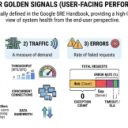
- Monitoring and Logging: Setting up effective monitoring and logging is essential for detecting and resolving issues in production. *Example:* Monitoring the API's response times and error rates to identify performance bottlenecks.
- Alerting and Incident Response: Defining clear alerts and incident response procedures is crucial for quickly addressing issues that arise in production. *Example:* Automatically notifying the on-call engineer when the API's error rate exceeds a certain threshold.
- Scalability and Performance under Load: Testing to ensure the API can handle expected and unexpected increases in traffic without performance degradation.
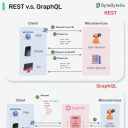
Specific Test Challenge Examples by API Type: - REST APIs: Testing REST APIs often involves verifying the correct use of HTTP methods (GET, POST, PUT, DELETE), status codes, and data formats (JSON, XML).
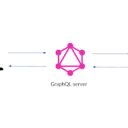
- GraphQL APIs: Testing GraphQL APIs involves validating the structure and correctness of queries and mutations, as well as ensuring that the API returns the expected data.
- SOAP APIs: Testing SOAP APIs involves verifying the structure and validity of XML messages, as well as ensuring that the API adheres to the WS-* standards.
Key Considerations for Overcoming API Testing Challenges: - Shift-Left Testing: Start testing early in the development lifecycle to identify and resolve issues before they become more difficult and costly to fix.
- Automation: Automate as much of the testing process as possible to improve efficiency and reduce the risk of human error.
- Collaboration: Encourage collaboration between developers, testers, and operations teams to ensure that the API meets all requirements and is properly tested and deployed.
- Tools and Frameworks: Utilize appropriate testing tools and frameworks to simplify the testing process and improve the quality of testing. Examples include Postman, Swagger UI, JMeter, Gatling, and dedicated API testing platforms.
- Continuous Integration/Continuous Delivery (CI/CD): Integrate API testing into the CI/CD pipeline to ensure that changes are thoroughly tested before being deployed to production.
- Monitoring and Logging: Implement comprehensive monitoring and logging to proactively identify and address issues in production.
By understanding these challenges and adopting best practices for API testing, you can ensure that your APIs are reliable, secure, and performant. Below is from Alex Xu at bytebytego.com 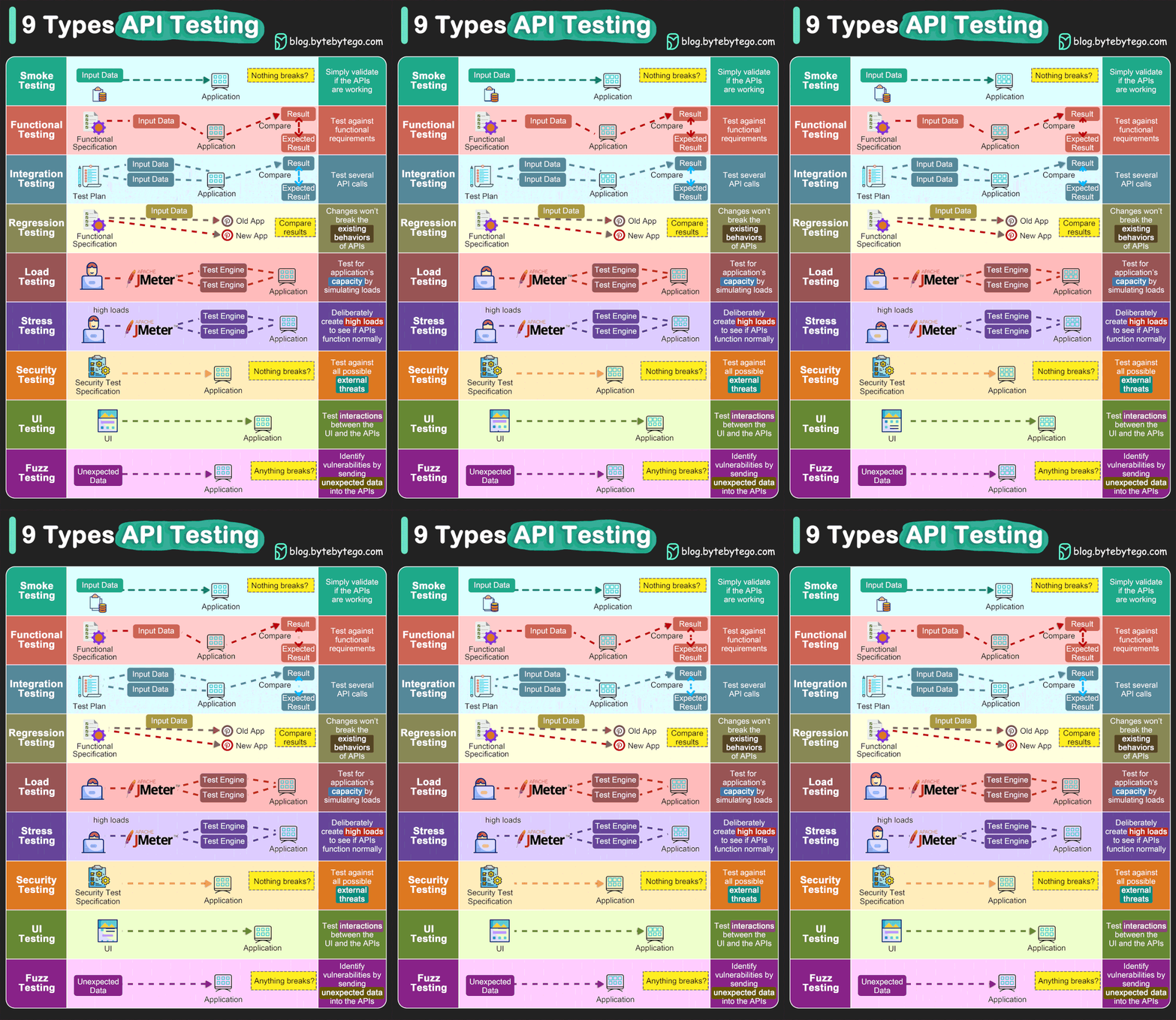
|