Cloud-Native Capital Markets: Architecture, Compliance, and Innovation | ||
| ||
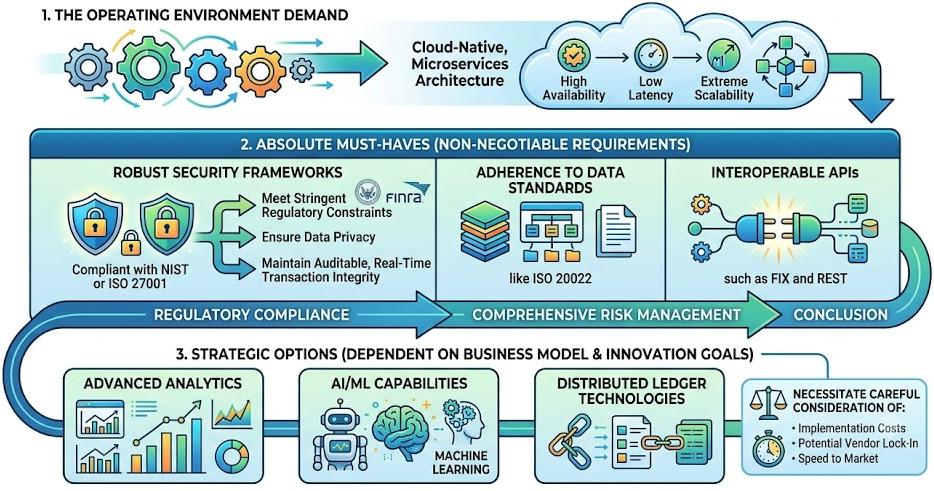
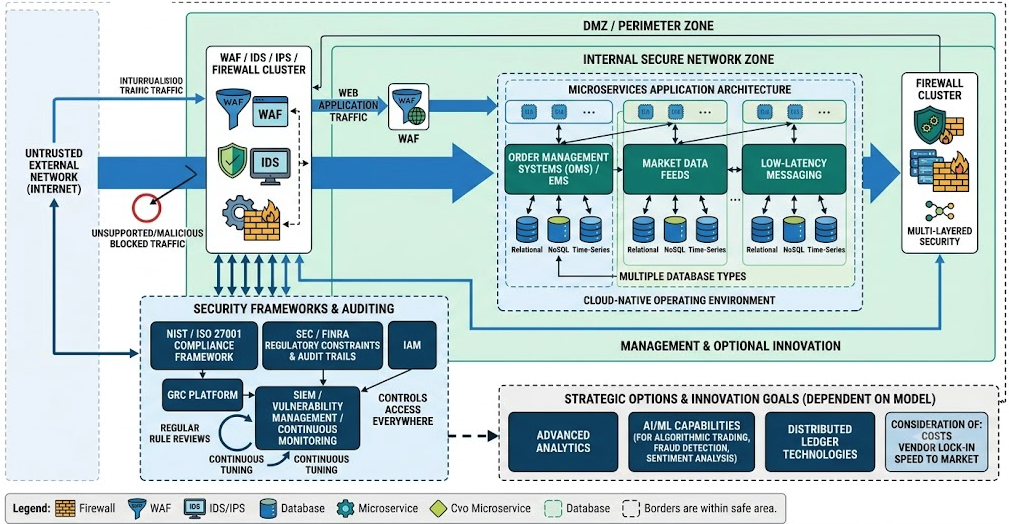
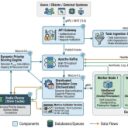
| To build a capital business service environment in the US, key technology and standards considerations demand a cloud-native, microservices architecture designed for high availability, low latency, and extreme scalability within its operating environment. Absolute must-haves include robust security frameworks compliant with NIST or ISO 27001, adherence to data standards like ISO 20022, and interoperable APIs such as FIX and REST, all critical to meet stringent regulatory constraints from bodies like SEC and FINRA, ensure data privacy, and maintain auditable, real-time transaction integrity. While such foundational infrastructure, comprehensive risk management, and regulatory compliance are non-negotiable requirements, the integration of advanced analytics, AI/ML capabilities, or distributed ledger technologies can be strategic options, dependent on the specific business model and innovation goals, necessitating careful consideration of implementation costs, potential vendor lock-in, and speed to market.
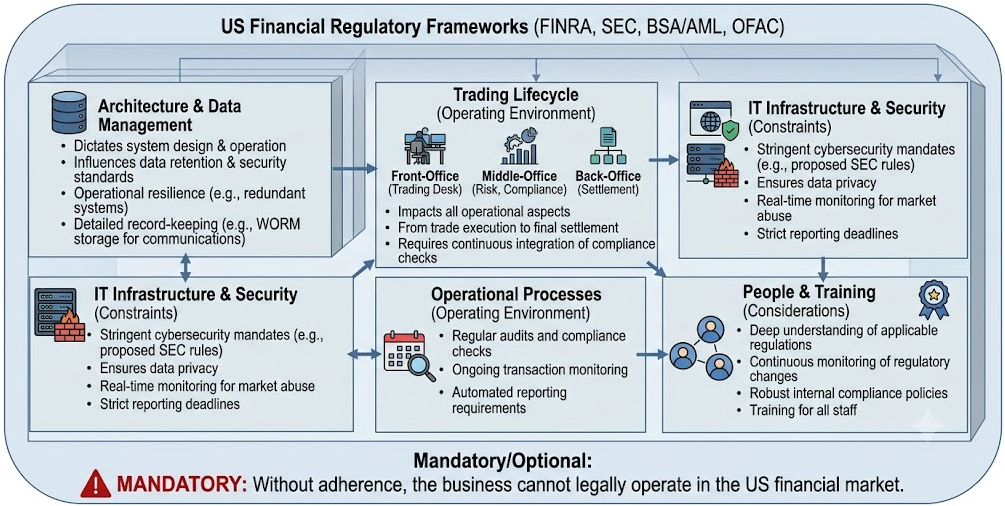
1. US Financial Regulatory Frameworks (FINRA, SEC, BSA/AML, OFAC)Operating a capital business in the US financial market mandates an overarching legal and operational architecture dictating how all systems must be designed and operated, influencing data retention, transaction monitoring, reporting, security, and operational resilience. This mandatory framework directly impacts all operational aspects, from front-to-back office to IT infrastructure, embedding regular audits and compliance checks against strict constraints such as reporting deadlines, WORM record-keeping, real-time market abuse monitoring, and stringent cybersecurity mandates. Adherence is critical for legal operation, requiring deep regulatory understanding, continuous monitoring of changes, robust internal compliance policies, and comprehensive staff training.
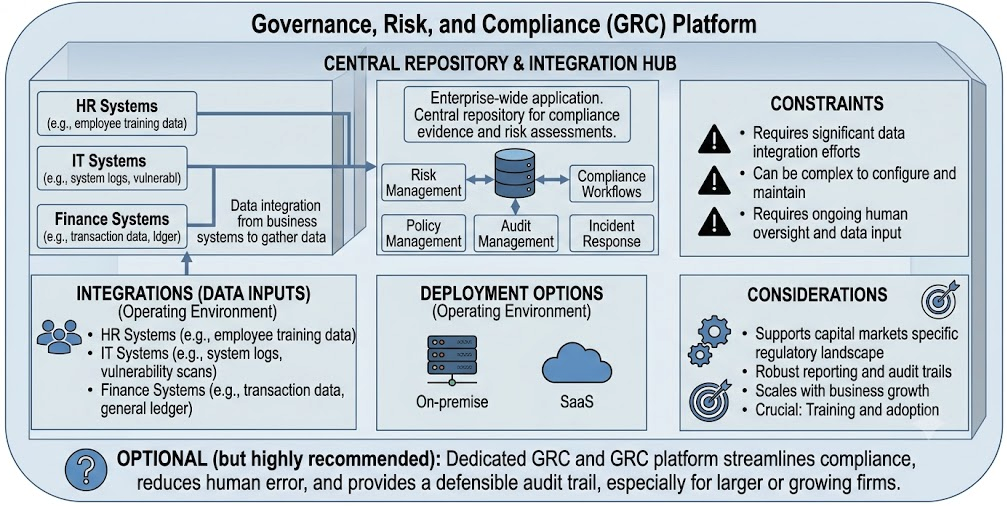
2. Governance, Risk, and Compliance (GRC) PlatformsAn enterprise GRC platform integrates risk management, compliance workflows, policy, audit, and incident response, serving as a central repository to streamline processes, reduce human error, and provide a defensible audit trail. Typically deployed on-premise or SaaS, it connects diverse business systems despite requiring significant data integration, complex configuration, and ongoing human input. For capital markets, selecting a scalable solution that supports specific regulations, robust reporting, and prioritizes user adoption is crucial, making this optional yet highly recommended investment essential for larger or growing firms to manage complexity effectively.
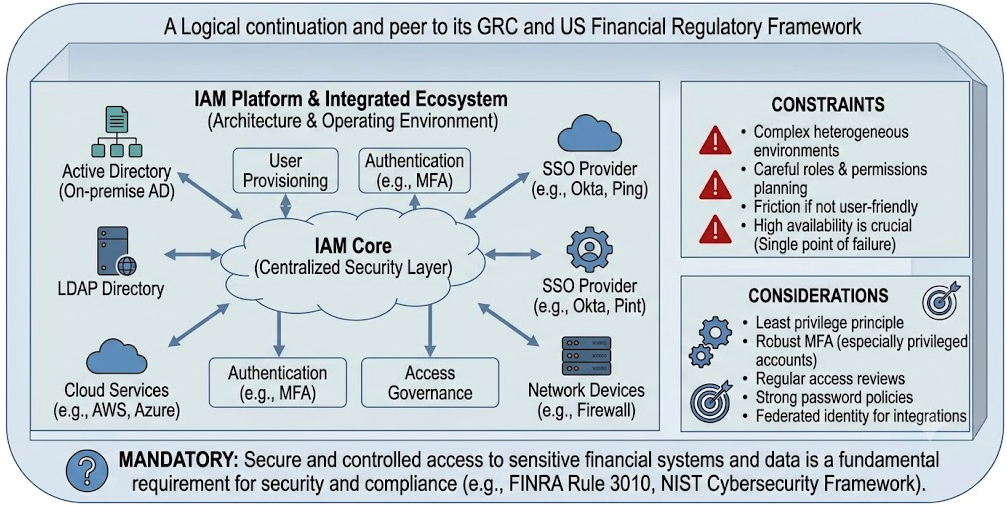
3. Identity and Access Management (IAM)Identity and Access Management (IAM) is a mandatory, critical security layer managing digital identities and controlling access (provisioning, authentication, authorization, governance) across all systems—from operating systems and applications to cloud services and network devices, often leveraging tools like Active Directory, SSO, and MFA. Though fundamental for security and compliance (e.g., FINRA, NIST), it presents challenges including complex role planning in heterogeneous environments, potential user friction, and the need for high availability as a single point of failure. Best practices demand least privilege, robust MFA for all users (especially privileged accounts), regular access reviews, and strong password policies, often integrating federated identity for broader ecosystems.
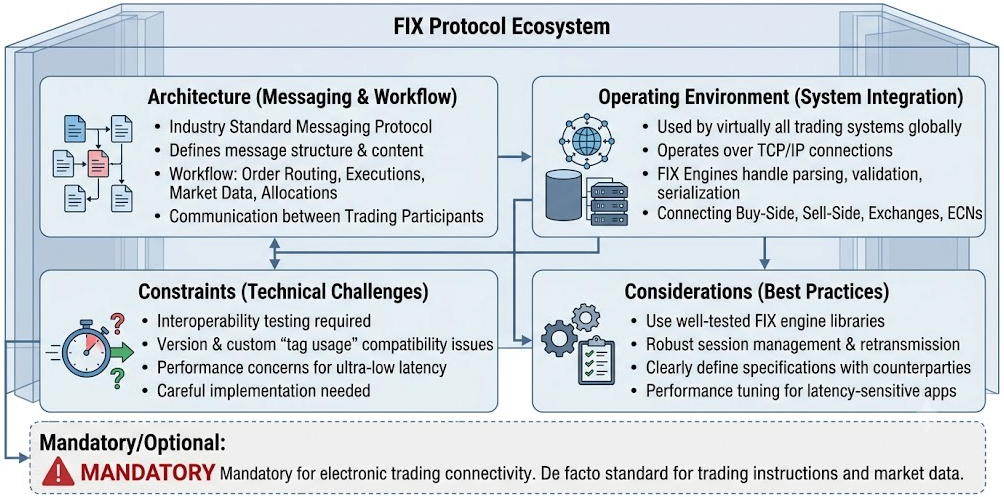
Core Financial Technology Infrastructure1. Financial Information Exchange (FIX) ProtocolFIX is the mandatory, de facto industry standard messaging protocol essential for electronic financial transaction communication globally, defining message structure for the entire trading lifecycle—from order routing and market data to executions and allocations. While handled by FIX engines over TCP/IP for universal connectivity, its successful implementation requires careful attention to interoperability challenges posed by varying versions and custom tag usage, robust session management, clear counterparty specifications, and performance optimization, especially for ultra-low latency environments.
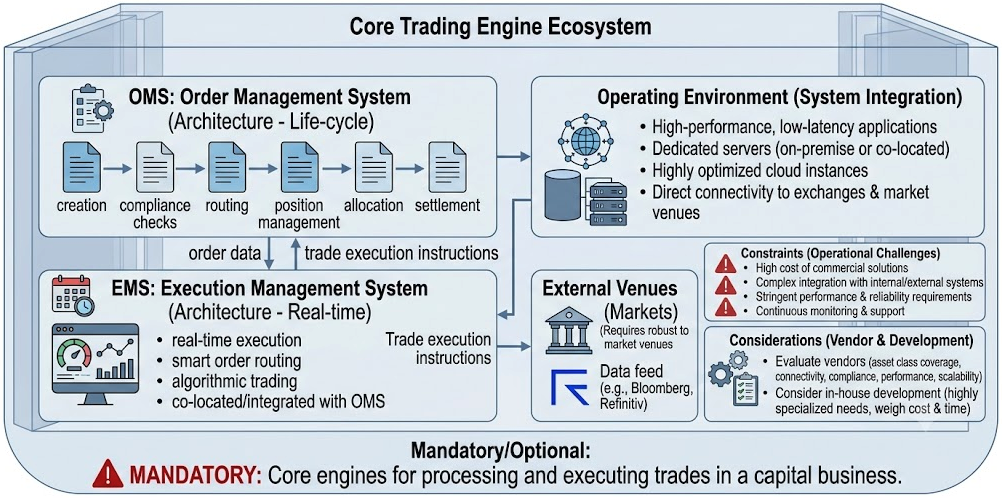
2. Order Management Systems (OMS) & Execution Management Systems (EMS)Mandatory for capital businesses, Order Management Systems (OMS) oversee the entire order lifecycle—from creation and compliance to allocation and settlement—while Execution Management Systems (EMS) handle real-time execution, leveraging direct exchange connectivity, smart routing, and algorithms, often integrated with the OMS. These high-performance, low-latency applications demand dedicated infrastructure and robust network links, contending with high costs, complex integration, and stringent reliability requirements, making thorough vendor evaluation (covering asset classes, connectivity, compliance, and scalability) crucial.
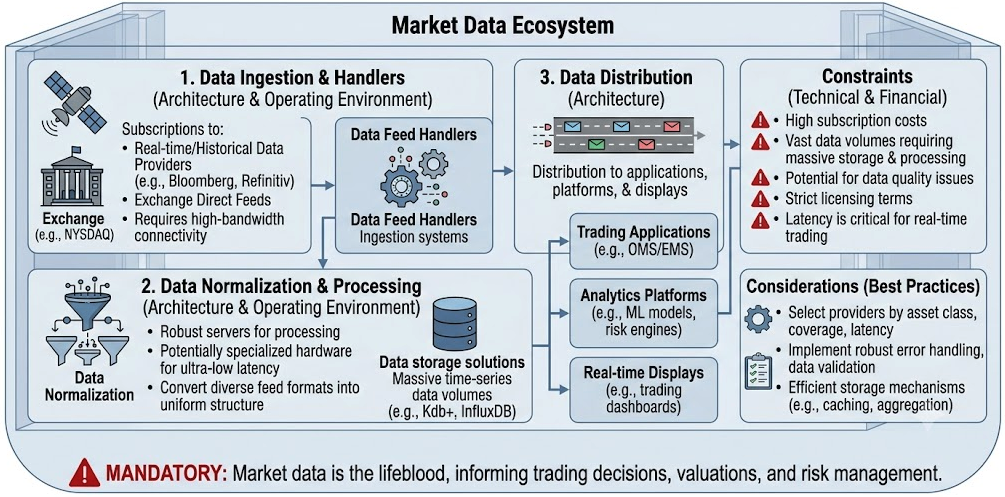
3. Market Data Feeds & ProcessingMarket data is indispensable for capital businesses, driving trading, valuation, and risk management. Its architecture demands subscribing to real-time and historical feeds, ingested, normalized, and efficiently distributed via high-bandwidth networks, robust servers, and specialized hardware to ensure ultra-low latency for critical trading applications. Managing this involves navigating high subscription costs, vast time-series data volumes, potential quality issues, and strict licensing, necessitating careful provider selection, robust error handling, efficient storage solutions like time-series databases, and strategic caching and aggregation.
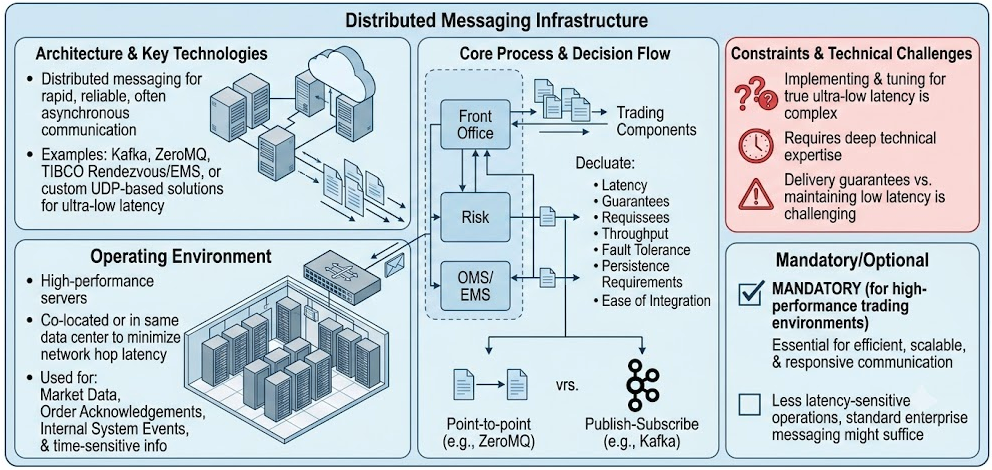
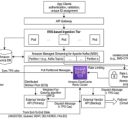
4. Low-Latency Messaging SystemsFor high-performance trading, distributed messaging infrastructure (e.g., Kafka, ZeroMQ) is mandatory, providing rapid, reliable, and often asynchronous communication for market data, order acknowledgements, and system events. Deployed on co-located, high-performance servers to minimize latency, achieving and maintaining true ultra-low latency is complex, demanding deep expertise to balance stringent delivery guarantees with speed. Evaluation focuses on latency, throughput, fault tolerance, message persistence, and integration ease, considering both point-to-point and publish-subscribe models.
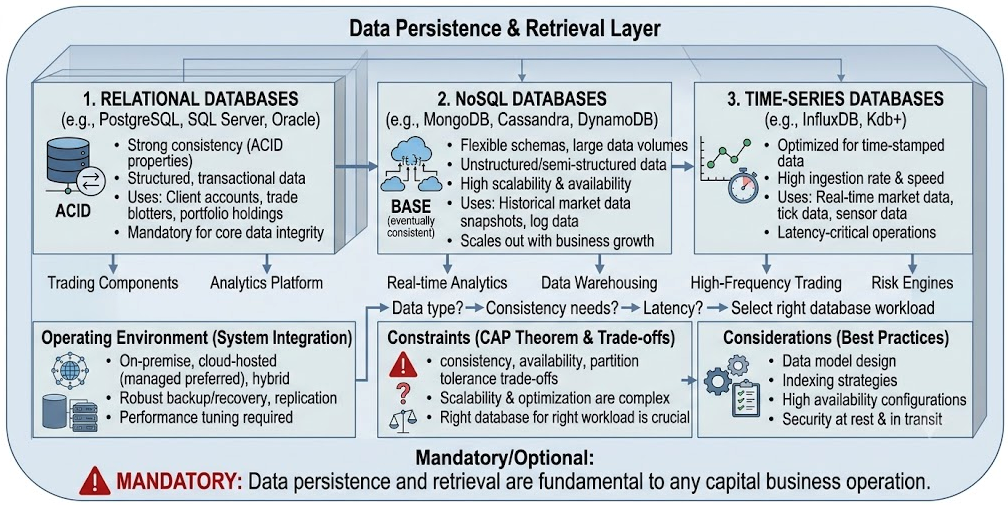
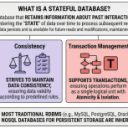
Data Management & Analytics1. Database Technologies (Relational, NoSQL, Time-Series)Data persistence is fundamental for capital business operations, mandating a nuanced database architecture that leverages specialized systems for diverse workloads. Relational databases (e.g., PostgreSQL) secure transactional, structured data with strong ACID consistency, while NoSQL (e.g., MongoDB) offers schema flexibility and high scalability for unstructured/semi-structured data, and Time-Series databases (e.g., InfluxDB) optimize for temporal data like market ticks. These systems, whether on-premise or cloud-hosted, must address inherent CAP theorem trade-offs by prioritizing specific consistency, availability, or partition tolerance needs. Robust data model design, indexing, backup, disaster recovery, high availability, and security are crucial considerations for these complex, scalable, and often hybrid persistence solutions.
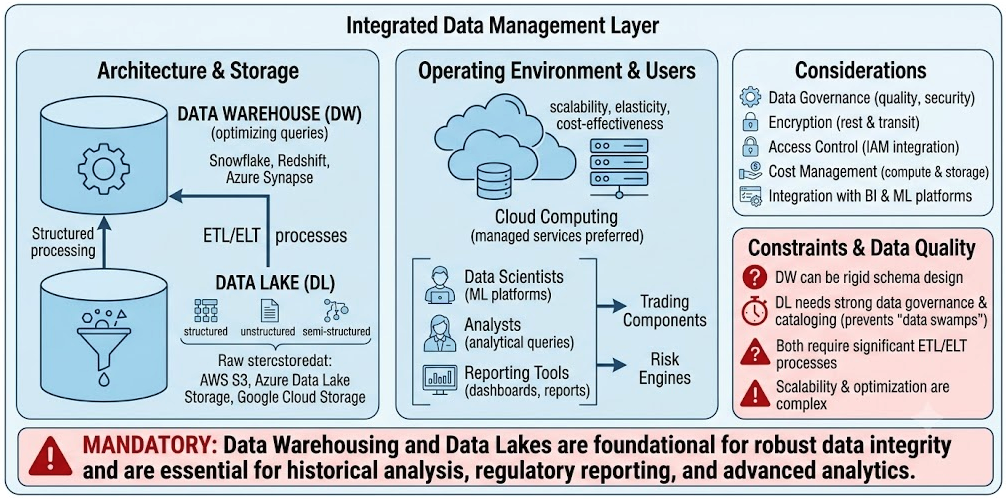
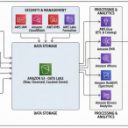
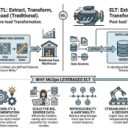
2. Data Warehousing & Data LakesCloud-based Data Warehouses (optimized for structured, BI-driven insights) and Data Lakes (for raw, multi-structured data enabling advanced analytics and ML) are scalable repositories crucial for modern data-driven firms. While Warehouses face schema rigidity and Lakes demand robust governance to avoid becoming "swamps," both necessitate significant ETL/ELT, rigorous data quality, security, and cost management. Ultimately, they are indispensable for historical analysis, regulatory reporting, risk management, and extracting deep insights beyond transactional data, making them highly recommended for competitive advantage.
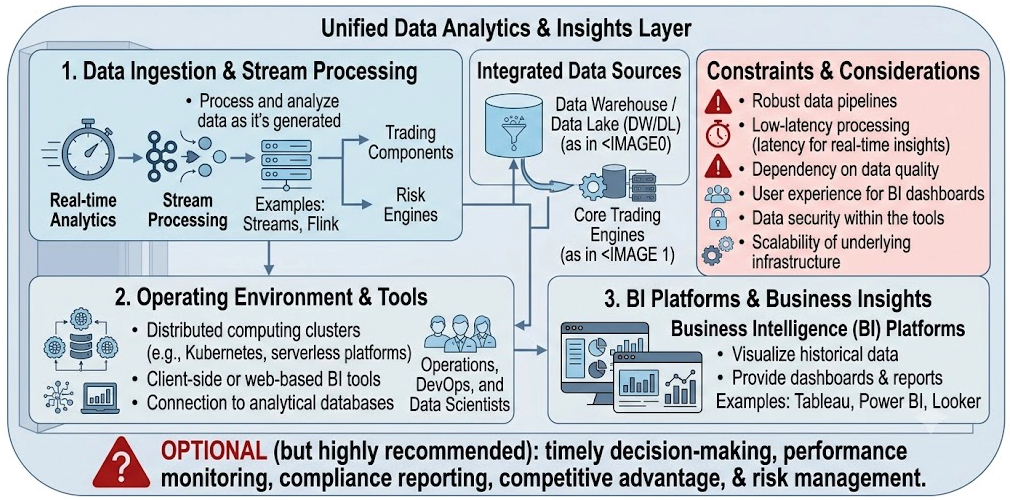
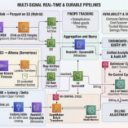
3. Real-time Analytics & Business Intelligence (BI)Real-time analytics leverages stream processing (e.g., Kafka, Flink) on distributed clusters (e.g., Kubernetes) for low-latency insights, enabling immediate decision-making and monitoring but requiring robust data pipelines. Conversely, BI platforms (e.g., Tableau, Power BI) visualize historical data from warehouses/lakes through client/web tools, providing strategic reports contingent on data quality and underlying infrastructure. Both systems demand scalable, secure environments, and while optional, are crucial for competitive advantage and risk management via comprehensive, data-driven intelligence.
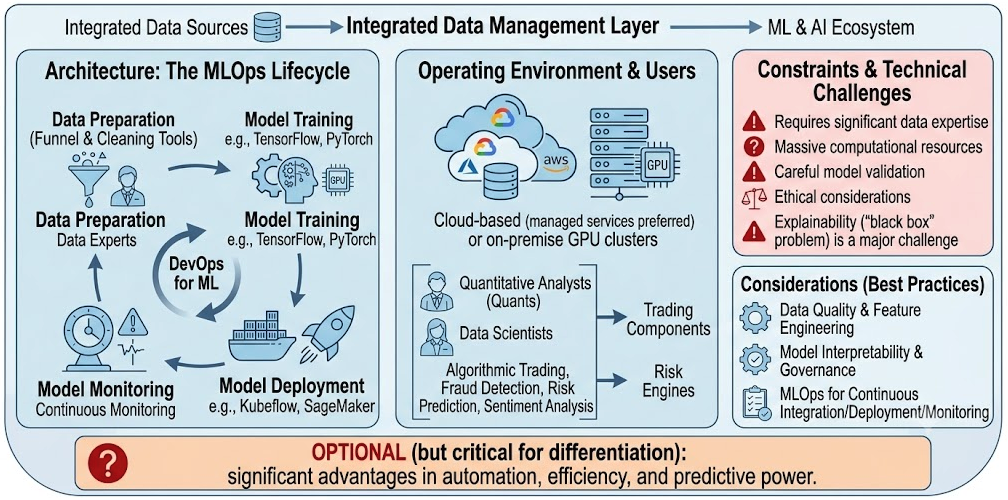
4. Machine Learning & AI PlatformsML/AI, increasingly critical for competitive differentiation despite not being strictly mandatory, offers significant advantages in automation and predictive power. Its architecture leverages cloud-based platforms (AWS ML, Google AI) or on-premise GPU clusters, utilizing tools like TensorFlow, PyTorch, and Kubeflow for the entire model lifecycle—from data preparation and training to deployment and monitoring. Quantitative analysts and data scientists apply ML/AI for tasks such as algorithmic trading, fraud detection, and risk prediction; however, implementation demands substantial data expertise, computational resources, and rigorous validation. Major challenges, particularly in finance, include the "black box" problem, ethical considerations, and the need for high data quality, robust feature engineering, model interpretability, strong governance, and MLOps for continuous integration, deployment, and monitoring.
Security & Resilience1. Network Security (Firewalls, IDS/IPS, WAF)Firewalls, IDS/IPS, and WAFs are mandatory, multi-layered security components fundamental to protecting sensitive financial data and systems by establishing a robust defense perimeter. Firewalls act as network barriers controlling traffic flow, while IDS/IPS monitor for malicious activity, alerting or blocking threats, and WAFs specifically defend web applications against common attacks like SQL injection. Deployed across network perimeters, cloud boundaries, and internal segments, these critical systems require continuous configuration, tuning, and regular rule reviews to adapt to evolving threats, minimize false positives, and prevent latency, with SIEM integration and vulnerability management being crucial for comprehensive effectiveness.
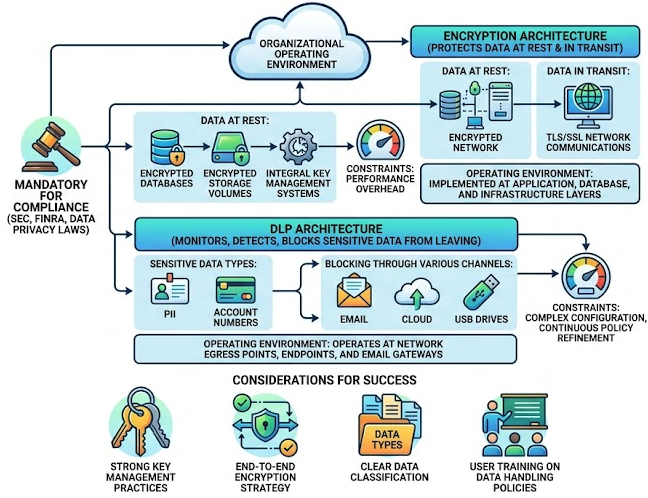
2. Data Encryption & Data Loss Prevention (DLP)Mandatory for compliance with regulations like SEC, FINRA, and data privacy laws, Data Encryption and DLP are crucial for protecting sensitive organizational data. Encryption secures data at rest and in transit across application, database, and infrastructure layers, relying on robust key management despite potential performance overhead. Concurrently, Data Loss Prevention (DLP) monitors and blocks sensitive data exfiltration via network egress, endpoints, and email gateways, though its complex configuration demands continuous policy refinement, clear data classification, and user training to avoid legitimate business disruption.
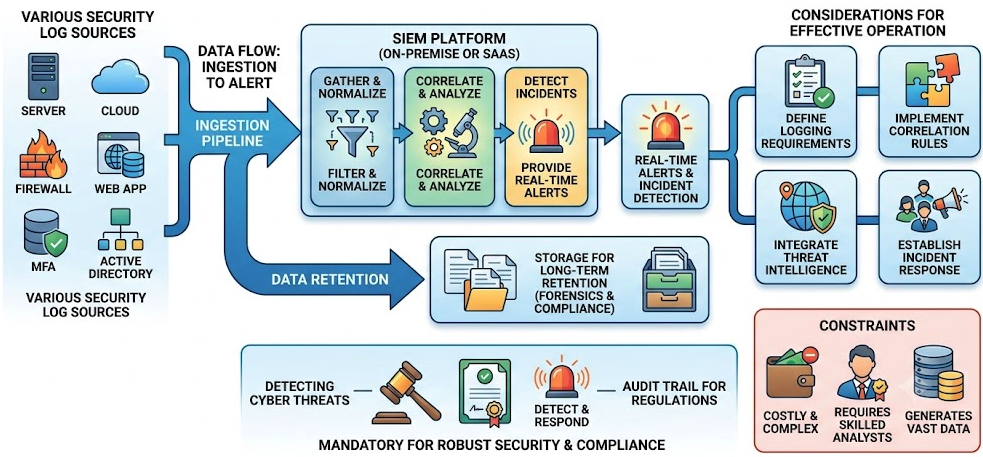
3. Security Information and Event Management (SIEM)An enterprise-level platform is essential for robust security and compliance, consolidating, normalizing, and analyzing diverse security logs from across the IT estate to detect incidents and provide real-time alerts. While typically complex, costly, and demanding skilled analysts to manage vast data volumes, its mandatory effectiveness hinges on robust ingestion, long-term storage, powerful analytics, clear logging requirements, intelligent correlation rules, threat intelligence integration, and well-defined incident response procedures.
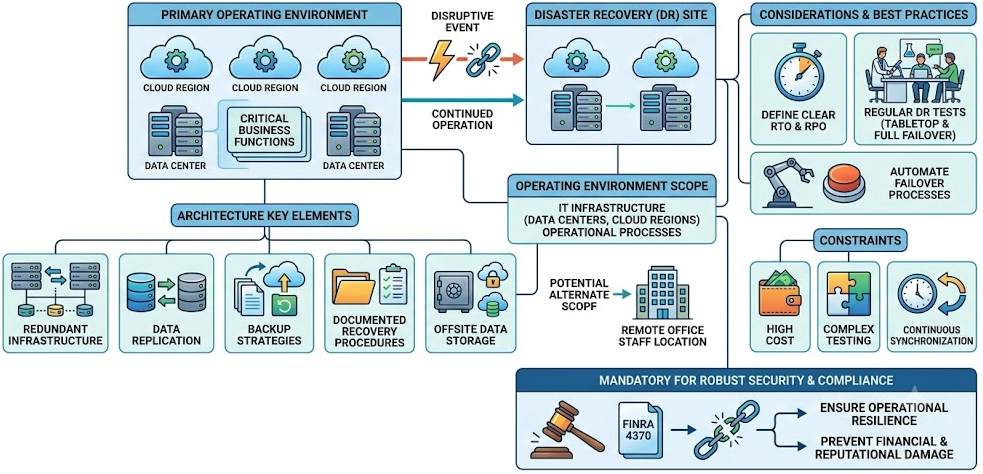
4. Disaster Recovery & Business Continuity Planning (DR/BCP)Disaster Recovery (DR) architecture provides a comprehensive plan and technologies, including redundant infrastructure, data replication, and backup strategies across all IT environments, to ensure critical business continuity post-disruption. While constrained by high costs, complex testing, and continuous synchronization, defining clear RTO/RPO objectives, regular testing (tabletop and full failover), and process automation are paramount. DR is a mandatory, often regulatory-driven, imperative to avert significant financial and reputational damage from system or data loss.
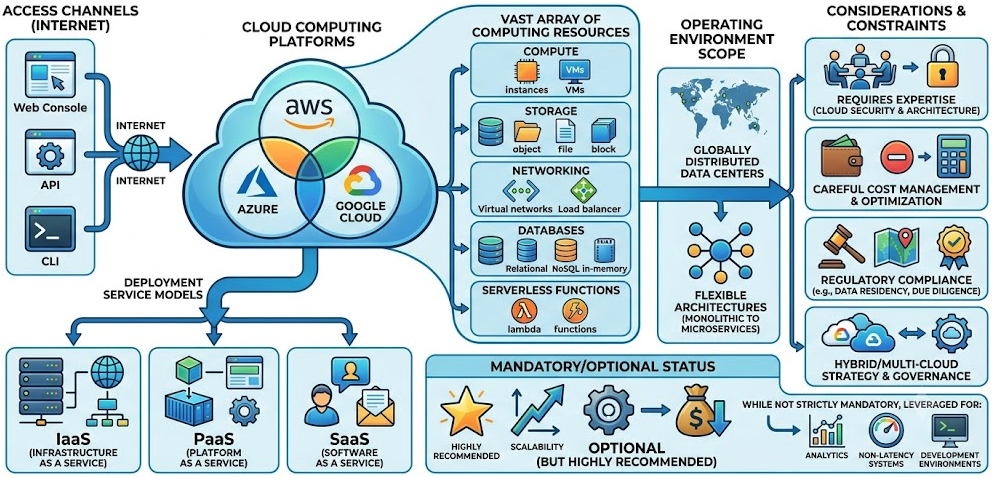
Cloud & Operational Excellence1. Cloud Computing Platforms (AWS, Azure, Google Cloud)Cloud computing provides on-demand internet access to diverse IaaS, PaaS, and SaaS resources from globally distributed data centers, supporting flexible architectures accessed via web, API, or CLI. It requires expertise in security, architecture, cost management, and regulatory adherence (e.g., data residency). Key considerations involve hybrid/multi-cloud strategies, robust governance, and optimizing services for performance and compliance. While optional, it is highly recommended for scalability, agility, and cost-effectiveness, proving indispensable for modern businesses, particularly for analytics and development environments.
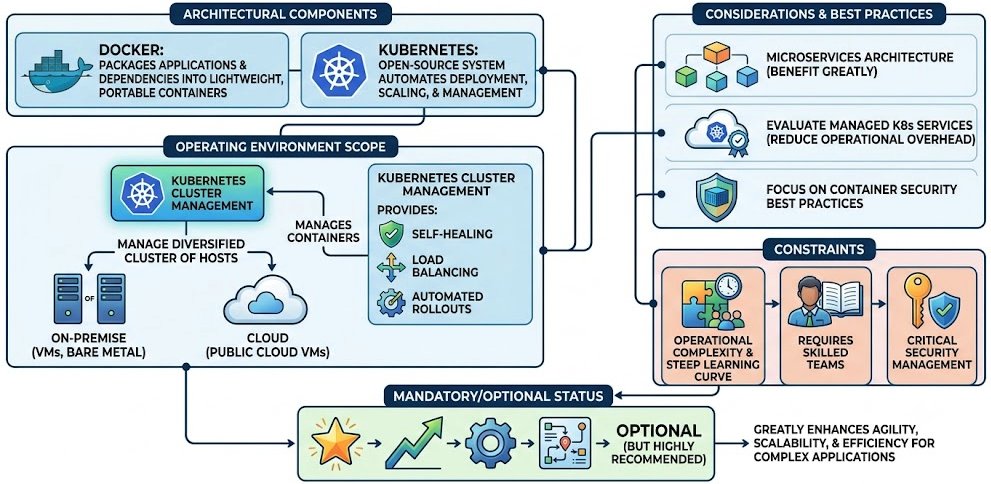
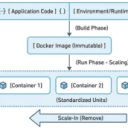
2. Containerization & Orchestration (Docker, Kubernetes)Docker packages applications into lightweight, portable containers, while Kubernetes automates their deployment, scaling, and management across clustered hosts in any operating environment (on-premise or cloud, VMs or bare metal), providing essential features like self-healing and load balancing. This powerful combination significantly enhances agility, scalability, and efficiency, proving especially beneficial for microservices architectures and is highly recommended for modern application development. However, adopting this system introduces operational complexity, a steep learning curve, and critical security management challenges that mandate best practices and often benefit from leveraging managed Kubernetes services to reduce overhead.
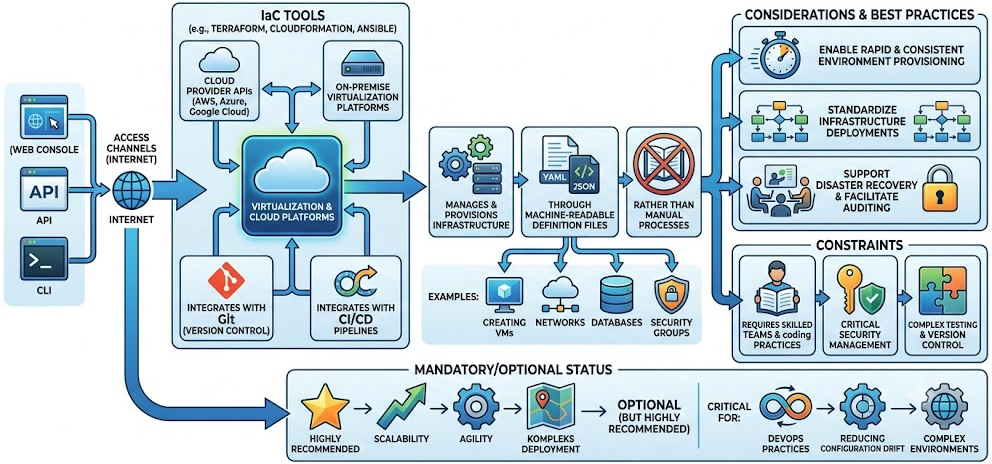
3. Infrastructure as Code (IaC) (Terraform, CloudFormation, Ansible)Infrastructure as Code (IaC) provisions and manages infrastructure (VMs, networks, databases) using machine-readable definition files (YAML/JSON) instead of manual processes. Tools execute this code against cloud or on-prem APIs, integrating with Git and CI/CD. While demanding disciplined coding, IaC is highly recommended for standardizing deployments, enabling rapid, consistent provisioning, supporting disaster recovery, auditing changes, reducing configuration drift, and is critical for complex cloud/hybrid environments and DevOps.
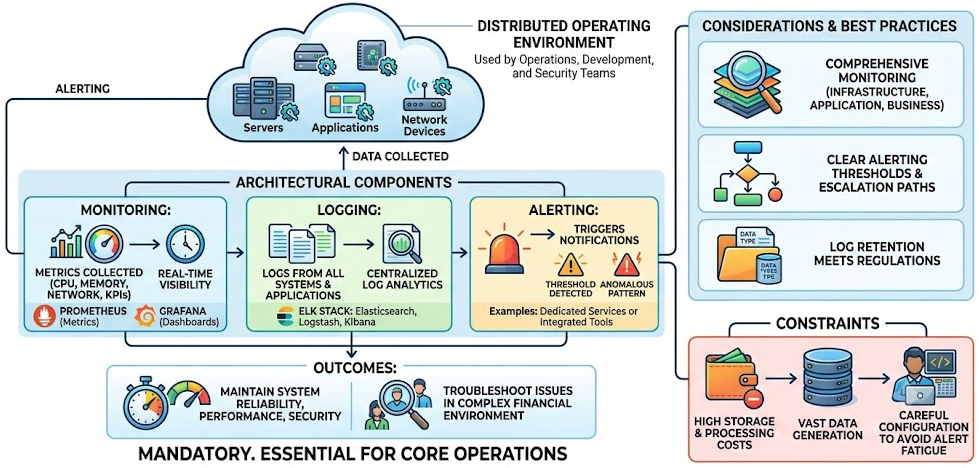
4. Monitoring, Logging, & Alerting (Prometheus, Grafana, ELK Stack, Datadog)Monitoring, Logging, and Alerting (MLA) forms a mandatory, comprehensive architecture critical for maintaining system reliability, performance, and security, especially in complex financial environments. Distributed agents collect real-time metrics (for system health and KPIs) and centralized logs (for in-depth analysis and troubleshooting) from across all layers—infrastructure to application. This data feeds into centralized platforms that provide visibility, and where alerting triggers notifications when predefined thresholds or anomalous patterns are detected. While indispensable for operations, development, and security teams, MLA generates vast amounts of data, leading to significant storage and processing costs, thus requiring careful configuration to prevent alert fatigue and ensure meaningful insights, all while meeting regulatory log retention requirements.
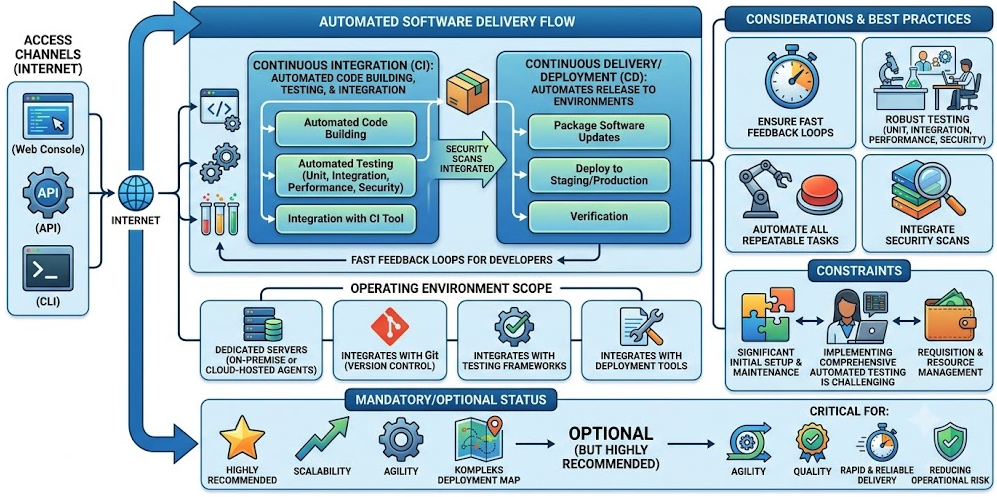
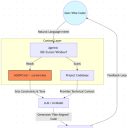
5. CI/CD Pipelines (Jenkins, GitLab CI, Azure DevOps)CI/CD automates the entire software delivery pipeline, with Continuous Integration (CI) handling automated code building, testing, and integration, and Continuous Delivery/Deployment (CD) managing automated releases to various environments. This architecture typically operates on dedicated servers (on-premise or cloud) and integrates with version control, testing frameworks, and deployment tools. Though it demands significant initial setup, ongoing maintenance, and robust automated testing, best practices dictate automating all repeatable tasks, implementing comprehensive testing (unit, integration, performance, security), ensuring fast developer feedback, and integrating security scans. While technically optional, CI/CD is highly recommended, as it is crucial for rapid, reliable, and secure software updates, offering a significant competitive advantage and reducing operational risk over manual processes.
| ||
| | ||
| |