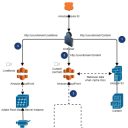
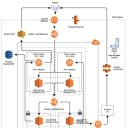
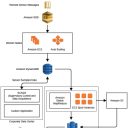
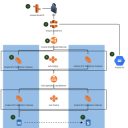
| Amazon Web Services offers several key components designed to guarantee high availability through built-in redundancy, automatic scaling, and multi-Availability Zone replication, foremost among them being AWS API Gateway, which manages API traffic across multiple zones seamlessly. Other core components with inherent high availability include Amazon Route 53 for global DNS routing, Amazon CloudFront for edge content delivery, and Elastic Load Balancing (ALB and NLB) to distribute traffic across redundant instances. For data storage and management, Amazon Simple Storage Service (S3), Amazon DynamoDB, and Amazon Aurora provide automatic, multi-zone data replication, while AWS Lambda ensures serverless compute resiliency by running code on a highly available infrastructure. Finally, messaging queue and notification services like Amazon Simple Queue Service (SQS) and Amazon Simple Notification Service (SNS) guarantee durability and continuous access by storing messages redundantly across multiple locations. 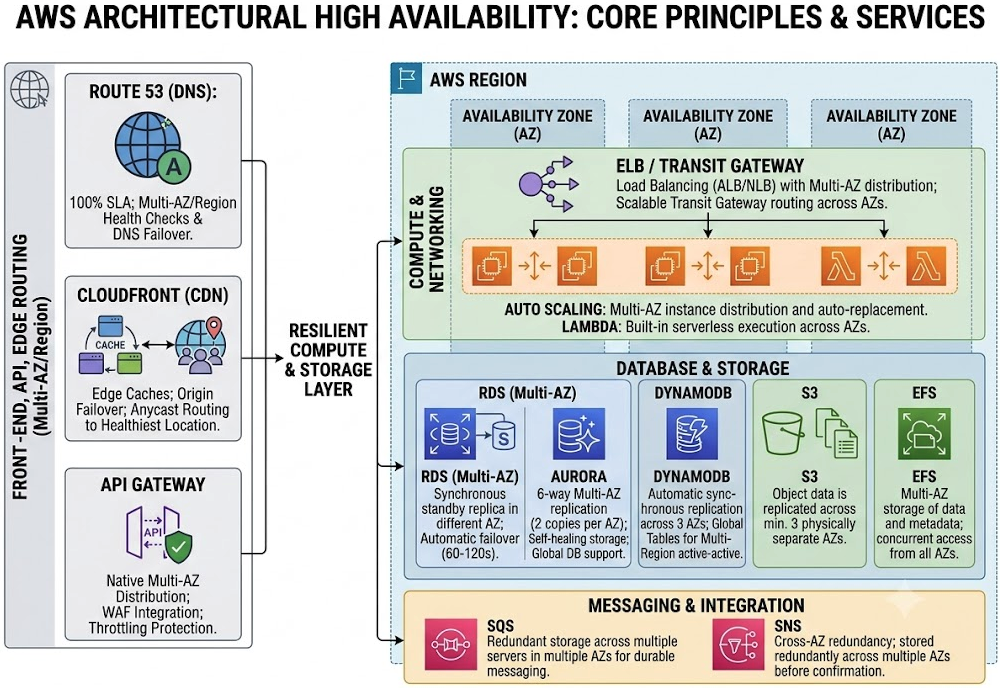
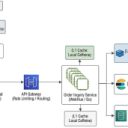
1. Front-End, API & Edge Routing ServicesAWS API Gateway- How it Guarantees HA: AWS API Gateway is a fully managed service that is inherently highly available. It is distributed across multiple Availability Zones (AZs) within a region by default.
- Key HA Features:
- Edge-Optimized Endpoints: Routes traffic through the Amazon CloudFront global network, reducing latency and avoiding single points of failure.
- Throttling and Rate Limiting: Protects backend services from being overwhelmed by traffic spikes (DDoS or organic surge), maintaining overall system availability.
- Integration with AWS WAF: Filters out malicious traffic before it reaches your backend, preventing service disruptions.
Amazon CloudFront- How it Guarantees HA: A global Content Delivery Network (CDN) service that uses a massive network of Edge Locations and Regional Edge Caches.
- Key HA Features:
- Anycast Routing: Automatically routes user requests to the geographically nearest and healthiest edge location.
- Origin Failover: Can be configured with primary and backup origins. If the primary origin returns specific HTTP error codes, CloudFront automatically switches to the backup origin.
Amazon Route 53- How it Guarantees HA: AWS guarantees a 100% SLA for Route 53, making it one of the most reliable components in the AWS ecosystem.
- Key HA Features:
- Anycast DNS Network: Distributes DNS queries across a global network of redundant DNS servers.
- Health Checks & DNS Failover: Monitors the health of your application endpoints. If an endpoint fails, Route 53 automatically redirects traffic to healthy resources (Multi-AZ or Multi-Region).
2. Compute & Serverless ServicesAWS Lambda- How it Guarantees HA: As a serverless compute service, Lambda runs your code on a high-availability compute infrastructure.
- Key HA Features:
- Built-in Multi-AZ Execution: Lambda automatically runs instances of your function across multiple AZs in a region.
- Auto-Scaling: Automatically scales horizontally in response to incoming request volume without requiring any configuration.
Amazon EC2 Auto Scaling- How it Guarantees HA: While individual EC2 instances are not highly available, the Auto Scaling service ensures fleet-level HA.
- Key HA Features:
- Multi-AZ Deployment: Distributes EC2 instances evenly across configured AZs.
- Health Checks and Auto-Replacement: Continuously monitors instance health. If an instance becomes unhealthy, Auto Scaling terminates it and launches a new one automatically.
AWS Fargate (ECS/EKS)- How it Guarantees HA: A serverless container execution engine that abstracts the underlying VM management.
- Key HA Features:
- Multi-AZ Scheduling: When integrated with ECS or EKS, Fargate automatically provisions container tasks across multiple AZs to ensure application resilience.
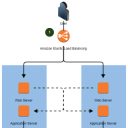
3. Networking & Load BalancingElastic Load Balancing (ELB)- How it Guarantees HA: Automatically distributes incoming application traffic across multiple targets (such as EC2 instances, containers, and IP addresses) in multiple AZs.
- Key HA Features:
- Cross-Zone Load Balancing: Ensures even traffic distribution across all registered targets in all enabled AZs.
- Automatic Scaling: ELB itself scales automatically to handle massive increases in traffic without pre-warming.
- Integration with Route 53: Seamlessly integrates with DNS-level failover.
AWS Transit Gateway- How it Guarantees HA: Connects VPCs and on-premises networks through a central hub.
- Key HA Features:
- Redundant Architecture: Built on the AWS Hyperplane, offering a highly available, horizontally scalable routing service across multiple AZs by default.
4. Database ServicesAmazon RDS (Multi-AZ Deployments)- How it Guarantees HA: Provides enhanced availability and durability for relational databases.
- Key HA Features:
- Synchronous Replication: Automatically provisions and maintains a synchronous "standby" replica in a different AZ.
- Automatic Failover: In the event of planned maintenance, database instance failure, or an AZ outage, RDS automatically fails over to the standby instance (usually within 60-120 seconds) by updating the DNS record.
Amazon Aurora- How it Guarantees HA: A cloud-native relational database engine designed for high availability.
- Key HA Features:
- 6-Way Replication: Replicates data 6-ways across 3 AZs (2 copies in each AZ). It can tolerate the loss of an entire AZ plus one additional node without losing write capabilities.
- Self-Healing Storage: Continuously scans disk volumes for bad sectors and repairs them automatically.
- Aurora Global Database: Allows read replicas across regions with sub-second replication latency for Multi-Region HA.
Amazon DynamoDB- How it Guarantees HA: A fully managed NoSQL database designed for single-digit millisecond latency at any scale.
- Key HA Features:
- Automatic Multi-AZ Partitioning: Data is automatically replicated synchronously across three AZs within a single AWS Region.
- DynamoDB Global Tables: Provides a fully managed, multi-region, active-active database that replicates data automatically across your choice of AWS regions.
5. Storage ServicesAmazon S3 (Simple Storage Service)- How it Guarantees HA: S3 Standard storage class is designed for 99.999999999% (11 9s) of durability and 99.99% availability.
- Key HA Features:
- Redundant Storage: Automatically replicates data across a minimum of three physically separated AZs within an AWS Region.
- Multi-Region Replication (CRR/SRR): Allows automatic, asynchronous copying of objects across buckets in different AWS Regions.
Amazon EFS (Elastic File System)- How it Guarantees HA: A serverless, set-and-forget elastic file system.
- Key HA Features:
- Standard Storage Class HA: Replicates data and metadata across multiple AZs within a region.
- Concurrent Access: Thousands of EC2 instances can access the file system simultaneously from multiple AZs.
6. Integration & Messaging ServicesAmazon SQS (Simple Queue Service)- How it Guarantees HA: A highly reliable distributed queueing service.
- Key HA Features:
- Redundant Storage: Messages are stored redundantly on multiple servers across multiple AZs within an AWS region, ensuring no single point of failure can cause message loss.
Amazon SNS (Simple Notification Service)- How it Guarantees HA: A fully managed pub/sub messaging service.
- Key HA Features:
- Cross-AZ Redundancy: All messages published to SNS are stored redundantly across multiple AZs before a confirmation is sent back to the publisher.
|