Harnessing the Power of Random Forest Algorithm in Python | ||
| ||
| In the vast landscape of machine learning algorithms, there exists a powerful ensemble method known as Random Forest. It's highly regarded for its robustness and versatility, making it a popular choice for both classification and regression tasks. In this blog post, we'll delve into the fundamentals of the Random Forest algorithm, its implementation in Python using scikit-learn, and provide an illustrative example to showcase its capabilities.
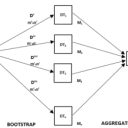
Random Forest is an ensemble learning technique that combines the predictions of multiple decision trees to improve the overall accuracy and robustness of the model. It operates by constructing a multitude of decision trees during the training phase and outputs the mode (classification) or mean prediction (regression) of the individual trees. We'll leverage Python's scikit-learn library to implement the Random Forest algorithm. Let's proceed with a demonstration: In the provided example, we utilized the Random Forest classifier with a sample dataset consisting of three input variables. After training the model, we employed it to predict the labels for new data points (X_test). The predicted labels for the given test samples were then successfully displayed.
Random Forest algorithm stands as a stalwart in the realm of machine learning, offering exceptional performance across various tasks due to its ensemble nature and robustness to overfitting. By grasping the fundamentals and implementing Random Forest in Python, data scientists and enthusiasts can unlock its potential to address real-world challenges with confidence and efficiency. | ||
| | ||
| |