Getting Started with PyTorch: A Beginner's Guide to Building Your First Neural Network | ||
| ||
| Welcome to the exciting world of PyTorch! Whether you're a seasoned machine learning practitioner or just starting out, PyTorch is a powerful tool that can help bring your deep learning projects to life. In this blog post, we'll dive into what makes PyTorch a go-to library for researchers and developers, followed by a simple example where we'll build and train a basic neural network right from scratch.
Why PyTorch?Before we get our hands dirty with code, let's quickly revisit why PyTorch has become such a beloved tool in the machine learning community:
Building Your First Neural Network with PyTorchNow, let's get to the fun part — coding a simple neural network with PyTorch. We'll build a basic network to perform a simple regression task.
Setting UpFirst, ensure you have PyTorch installed in your environment. If not, you can install it via pip:
Importing Libraries
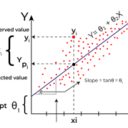
Creating Synthetic DataLet's create some in-line data for our regression task:
Defining the ModelWe'll define a simple linear model with one input and one output layer:
Initializing the Model, Loss Function, and Optimizer
Training the ModelLet's train our model with the synthetic data:
Congratulations! You've just built and trained a basic neural network using PyTorch. This example demonstrates the simplicity and power of PyTorch for machine learning tasks. The beauty of PyTorch lies in its scalability, from such simple examples to complex, multi-layered deep learning models.
Wrapping UpWe hope this post has sparked your interest in PyTorch and shown you how straightforward it can be to start building your own neural networks. The example provided is a foundation upon which you can build more complex models and dive deeper into the world of deep learning. PyTorch's intuitive design, coupled with its extensive documentation and supportive community, makes it an excellent choice for both beginners and experienced developers in the AI field. So, what are you waiting for? Dive in and start experimenting! Happy Learning! | ||
| | ||
| |