Python ML Technologies used for the target Segmentation
CK 3788 Created at Updated at
38100
Target Segmentation with Python ML Technologies
Target segmentation is a crucial process in various domains, from marketing and customer analytics to medical imaging and autonomous driving. It involves dividing a larger target into smaller, more homogeneous groups or regions based on shared characteristics or specific criteria. Python, with its rich ecosystem of machine learning libraries and frameworks, offers powerful tools to achieve this with efficiency and flexibility.
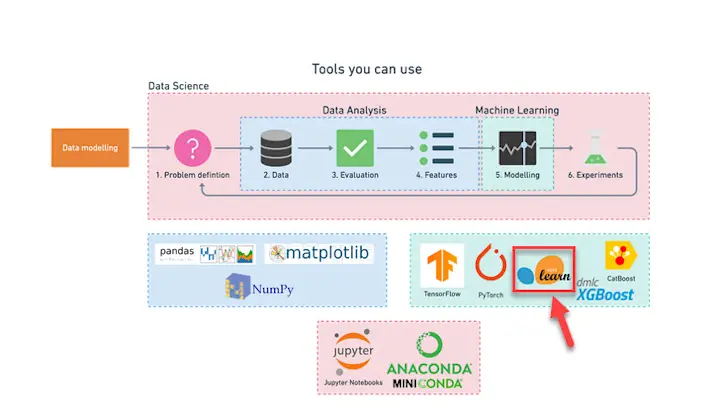
Key Python ML Technologies for Segmentation: Scikit-learn
Scikit-learn is a comprehensive, open-source machine learning library for Python, built on NumPy, SciPy, and Matplotlib. It provides a wide range of algorithms for classification, regression, clustering, dimensionality reduction, model selection, and preprocessing.
Segmentation Use Cases:
Customer Segmentation: Identifying distinct groups of customers based on their demographics, purchasing behavior, interactions, etc. (unsupervised learning).
Market Segmentation: Grouping markets or regions by various features for targeted strategies.
Feature-based Image Segmentation: Segmenting image regions based on extracted features (e.g., texture, color histograms) using classical classification or clustering.
Core Algorithms:
Clustering: K-Means, DBSCAN, Agglomerative Clustering, Gaussian Mixture Models (GMM). These are ideal for discovering inherent groupings in data without prior labels.
Classification: Random Forest, Support Vector Machines (SVM), Logistic Regression. Used when segments are predefined and the goal is to classify new data points into these known segments.
Examples:
K-Means Clustering: Grouping an e-commerce platform's customers into segments like "high-value," "frequent buyers," or "at-risk" based on features like total spend, purchase frequency, and last purchase date.
Random Forest Classifier: Segmenting satellite imagery into land cover types (e.g., forest, urban, water) after extracting features like spectral reflectance values and texture from pixels, using a small set of labeled training data.
Deep Learning Frameworks (TensorFlow, Keras, PyTorch)
TensorFlow (with its high-level API Keras) and PyTorch are the leading open-source deep learning frameworks. They are highly optimized for building and training neural networks, especially useful for complex tasks involving unstructured data like images, video, and raw text.
Segmentation Use Cases:
Image Segmentation: Pixel-level classification (semantic segmentation), identifying and delineating individual object instances (instance segmentation), or combining both (panoptic segmentation). This is crucial in medical imaging, autonomous driving, and computer vision.
Video Segmentation: Applying image segmentation techniques frame-by-frame or using recurrent networks for temporal consistency.
Sequence Segmentation: Identifying meaningful segments in time-series data or natural language processing (e.g., speech segmentation, topic segmentation in text).
Core Models/Architectures:
U-Net: Widely used for biomedical image segmentation due to its encoder-decoder architecture that captures context and fine details.
Mask R-CNN: Extends Faster R-CNN by adding a branch for predicting an object mask in parallel with the existing box regression and classification branches, enabling instance segmentation.
DeepLab (v3, v3+): Utilizes atrous convolutions to explicitly control the resolution at which feature responses are computed, making it effective for semantic segmentation at different scales.
Transformers: Emerging for image segmentation (e.g., Vision Transformers for semantic segmentation) and already prominent in sequence segmentation for NLP.
Examples:
U-Net (Keras/TensorFlow): Automating the segmentation of tumors or organs in medical MRI or CT scans to assist diagnosis and treatment planning.
Mask R-CNN (PyTorch): Real-time segmentation of pedestrians, vehicles, and lane lines in autonomous driving systems, providing precise object boundaries for navigation and safety.
DeepLabv3+ (TensorFlow): Segmenting different land cover classes (e.g., buildings, roads, vegetation) in high-resolution satellite imagery for urban planning or environmental monitoring.
XGBoost and LightGBM
XGBoost (eXtreme Gradient Boosting) and LightGBM (Light Gradient Boosting Machine) are highly optimized, distributed gradient boosting libraries. They are known for their speed, accuracy, and efficiency, especially with tabular data. While primarily classification/regression tools, they are excellent for predictive segmentation.
Segmentation Use Cases:
Predictive Segmentation: After initial segments are identified (e.g., via clustering or business rules), these models can be trained to predict which segment a new data point belongs to.
Feature Importance for Segmentation: Identifying the most influential features that differentiate segments.
Personalization: Predicting a user's preferred content segment based on browsing history.
Core Algorithms:
Gradient Boosting Decision Trees (GBDT), often with regularization.
Examples:
XGBoost: Predicting which of a company's predefined customer segments (e.g., "loyalty program member," "new customer," "churn risk") a new sign-up will belong to, based on their initial demographic and behavioral data.
LightGBM: Classifying website visitors into "high-intent buyer" or "browser" segments based on real-time clickstream data, enabling immediate personalized offers or content.
OpenCV (Open Source Computer Vision Library)
OpenCV is not a direct ML framework but a crucial library for computer vision tasks, providing tools for image processing, analysis, and feature extraction. It often serves as a preprocessing step or for implementing classical segmentation techniques.
Segmentation Use Cases:
Image Preprocessing: Preparing images for deep learning models (resizing, normalization, data augmentation, noise reduction).
Classical Image Segmentation: Rule-based or algorithm-driven segmentation where deep learning might be overkill or data is scarce (e.g., thresholding, contour detection, watershed, GrabCut).
Feature Extraction: Generating handcrafted features (e.g., SIFT, HOG) that can then be used by scikit-learn models for segmentation.
Thresholding and Contours: Isolating specific objects in an industrial inspection image (e.g., finding defective parts based on color or shape deviations).
Watershed Transform: Separating touching cells in a microscopic image for individual cell counting and analysis.
GrabCut: Interactively segmenting a foreground object from a background in an image with minimal user input.
NLTK and SpaCy
NLTK (Natural Language Toolkit) and SpaCy are powerful libraries for Natural Language Processing (NLP) in Python. They provide tools for processing and analyzing human language data, which can include various forms of text segmentation.
Segmentation Use Cases:
Text Tokenization: Breaking down text into words, sentences, or subword units.
Sentence Boundary Detection (SBD): Identifying the beginning and end of sentences.
Named Entity Recognition (NER): Identifying and categorizing named entities (e.g., persons, organizations, locations) within text. This can be viewed as "entity segmentation."
Topic Segmentation: Dividing a document or conversation into distinct thematic sections.
SpaCy: Highly optimized for production use, offers pre-trained models for various languages, including tokenization, sentence segmentation, dependency parsing, and NER.
Examples:
SpaCy (Sentence Segmentation & NER): Automatically segmenting a legal document into individual sentences and then extracting all proper nouns (e.g., names of parties, dates, locations) to create a structured summary.
NLTK (Word Tokenization): Preparing a large corpus of customer reviews by breaking them into individual words for sentiment analysis or keyword extraction.
SpaCy (Custom Text Segmentation): Training a custom model to segment customer support chat transcripts into distinct "problem identification," "solution suggestion," and "resolution confirmation" phases.
Comparative Analysis
Technology/Library
Primary Application Area
Segmentation Type
Key Strengths
Key Weaknesses/Considerations
Typical Complexity Level
Scikit-learn
Tabular data, Classical ML
Unsupervised (Clustering), Supervised (Class.)
Easy to use, wide range of algorithms, good for small-medium datasets.
Less suitable for unstructured data (images, text) directly, limited deep learning.
Low-Medium
TensorFlow/Keras/PyTorch
Unstructured data (Images, Text, Video)
Semantic, Instance, Panoptic, Sequence
State-of-the-art for deep learning, highly scalable, handles complex patterns.
Requires significant data, computational resources, and expertise.
High
XGBoost/LightGBM
Tabular data, Predictive Analytics
Supervised (Classification)
High performance, speed, accuracy, robust to noisy data, handles missing values.
Primarily for tabular data; not for pixel-level or direct unstructured.
Medium-High
OpenCV
Image & Video Processing
Rule-based, Classical Image
Fast, efficient, powerful for image preprocessing, classical CV algorithms.
Not a direct ML library; requires manual feature engineering for classical segmentation.
Medium
NLTK/SpaCy
Natural Language Processing
Text Tokenization, SBD, NER, Topic Seg.
Specialized for text data, provides robust NLP tools, pre-trained models (SpaCy).
Limited to text; not for numerical or image segmentation.