| To implement a heap in Rust, you can use a binary heap for an efficient priority queue. Rust provides a standard library implementation with the BinaryHeap type, but you can also create a custom heap structure if you need more control. 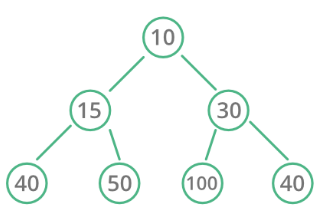
Using std::collections::BinaryHeapThe simplest way is to use the BinaryHeap from the standard library: use std::collections::BinaryHeap;
fn main() {
// Create a new BinaryHeap
let mut heap = BinaryHeap::new();
// Push elements onto the heap
heap.push(4);
heap.push(1);
heap.push(7);
heap.push(3);
// Pop elements off the heap in descending order
while let Some(value) = heap.pop() {
println!("{}", value);
}
}
Key Points:- The
BinaryHeap stores elements in a max-heap order (largest element at the top). - For a min-heap, you can store elements as negative values or use a custom type with
Ord implementation.
Custom Heap ImplementationIf you want to implement your own heap for learning or specific requirements, here's an example: Min-Heap Implementationpub struct Heap<T> {
elements: Vec<T>,
}
impl<T: Ord> Heap<T> {
// Create a new empty heap
pub fn new() -> Self {
Heap {
elements: Vec::new(),
}
}
// Insert an element into the heap
pub fn push(&mut self, value: T) {
self.elements.push(value);
self.bubble_up(self.elements.len() - 1);
}
// Remove and return the smallest element
pub fn pop(&mut self) -> Option<T> {
if self.elements.is_empty() {
return None;
}
let result = self.elements.swap_remove(0);
if !self.elements.is_empty() {
self.bubble_down(0);
}
Some(result)
}
// Peek at the smallest element without removing it
pub fn peek(&self) -> Option<&T> {
self.elements.get(0)
}
fn bubble_up(&mut self, mut index: usize) {
while index > 0 {
let parent = (index - 1) / 2;
if self.elements[index] >= self.elements[parent] {
break;
}
self.elements.swap(index, parent);
index = parent;
}
}
fn bubble_down(&mut self, mut index: usize) {
let len = self.elements.len();
loop {
let left = 2 * index + 1;
let right = 2 * index + 2;
let mut smallest = index;
if left < len && self.elements[left] < self.elements[smallest] {
smallest = left;
}
if right < len && self.elements[right] < self.elements[smallest] {
smallest = right;
}
if smallest == index {
break;
}
self.elements.swap(index, smallest);
index = smallest;
}
}
}
fn main() {
let mut heap = Heap::new();
// Insert elements
heap.push(4);
heap.push(1);
heap.push(7);
heap.push(3);
// Peek at the smallest element
println!("Smallest: {:?}", heap.peek());
// Pop elements in ascending order
while let Some(value) = heap.pop() {
println!("{}", value);
}
}
Explanation:- Structure: The
Heap struct uses a Vec to store elements. - Operations:
push: Adds an element and reorders the heap by "bubbling up."pop: Removes the smallest element and reorders by "bubbling down."peek: Returns the smallest element without removing it.
- Bubble Up: Ensures the heap property is maintained after adding an element.
- Bubble Down: Ensures the heap property after removing the root element.
This implementation creates a min-heap. You can adjust it to create a max-heap by reversing the comparison logic (< to >). This custom heap is more educational and flexible for specific scenarios. |