AI.zip

Vector Databases: From Embeddings to Application

Vector Databases: From Embeddings to Application

309

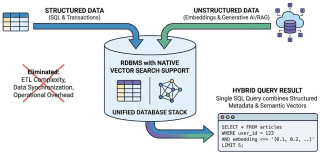
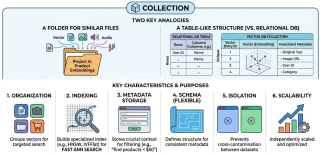
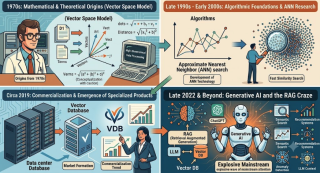
Many people ask me what a vector database means.Vector databases,a concept researched for far longer than often realized,trace their mathematical and theoretical origins to the 1970s with early work on vector space models and high-dimensional data processi...

Mastering AI: A Beginner's Guide to Python Programming and Beyond

Mastering AI: A Beginner's Guide to Python Programming and Beyond

1,031

AI stands for Artificial Intelligence.It refers to the simulation of human intelligence processes by machines,especially computer systems.These processes include learning (the acquisition of information and rules for using the information),reasoning (using...

Learn SLM if you have interent in the next after LLM

Learn SLM if you have interent in the next after LLM

4751

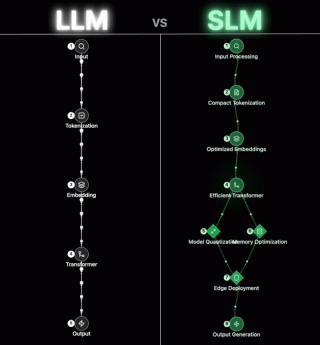
Both SLMs (Small Language Models) and LLMs (Large Language Models) are types of language models,but they differ primarily in size (number of parameters) and consequently,in their capabilities and scope.LLMs,with their massive parameter counts,possess a wid...

What is RedisVL?

What is RedisVL?

102

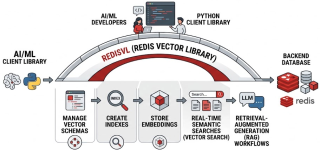
RedisVL (Redis Vector Library) is an official Python client library designed to simplify using Redis as a vector database.It provides an intuitive,high-level interface for AI / ML developers to manage vector schemas,create indexes,store embeddings,and perf...

Autonomous Vehicle Machine Learning (AV ML): An Architectural Review

Autonomous Vehicle Machine Learning (AV ML): An Architectural Review

386

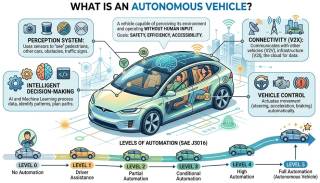
What is AV ML?Autonomous Vehicle (AV): Refers to self-driving cars or vehicles capable of perceiving their environment and operating without human input.The ultimate goal of AVs is to enhance safety,efficiency,and accessibility in transportation.Machine Le...

Arm Kernel DNNs: Powering Efficient AI at the Edge

Arm Kernel DNNs: Powering Efficient AI at the Edge

218

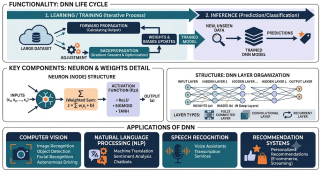
The core mission is to develop kernel-level implementations for a variety of Deep Neural Network (DNN) models,specifically targeting Arm architectures.The primary goals are to optimize these implementations for maximum power efficiency and performance,cruc...

The Core of Vector Databases: Embeddings and LLM Dependency

The Core of Vector Databases: Embeddings and LLM Dependency

251

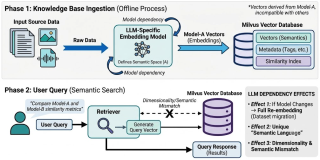
The fundamental principle of a vector database revolves around embeddings.An embedding is a numerical representation (a vector) of text,images,audio,or other data,capturing its semantic meaning in a high-dimensional space.LLMs (Large Language Models) are o...

Building a Video Content Recommendation System with Amazon SageMaker

Building a Video Content Recommendation System with Amazon SageMaker

518

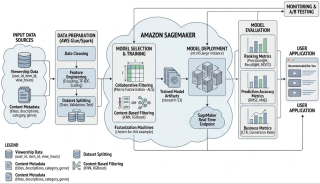
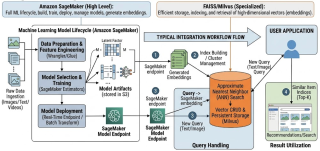
This article outlines a practical approach to building a video recommendation system using Amazon SageMaker,leveraging video viewership data and content metadata.We'll cover data preparation,model selection,training,deployment,and inference. What is the ma...

Why Reranking is Crucial for RAG and Agentic AI Systems?

Why Reranking is Crucial for RAG and Agentic AI Systems?

256

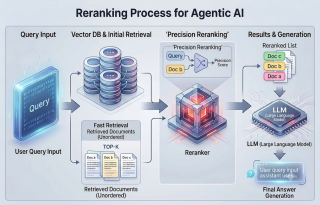
1.Initial Retrieval Prioritizes Speed Over PrecisionIn standard RAG systems,the first-stage retrieval (using dense embeddings or sparse keyword matching) is designed to scan vast databases rapidly.It focuses on speed and breadth,fetching a broad list of th...

Predicting Buyer Preferences with PyTorch: A Deep Learning Approach

Predicting Buyer Preferences with PyTorch: A Deep Learning Approach

1,228

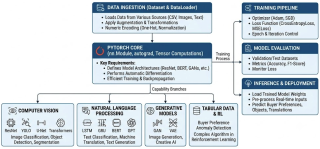
PyTorch is an open-source machine learning library predominantly used for building and training deep learning models.It provides a flexible,Python-based framework that enables researchers and developers to easily construct neural networks,perform tensor co...

PyTorch example to Forcast Stock Price based on 10 days Dataset

651

This code starts by creating synthetic stock price data, then it proceeds to define a simple linear neural network model. The model is trained on the synthetic data, and finally, it attempts to predict the stock price for the next day based on the last 10 ...

TikTok's Recommendation System - Monolith

TikTok's Recommendation System - Monolith

284

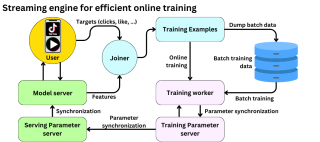
Monolith is ByteDance’s deep-learning recommendation system (described in a 2022 paper) that powers TikTok’s “For You” feed.It is a large-scale,two-stage (retrieval → ranking) deep-learning engine,purpose-built for the dynamic,sparse,and constantly sh...

Image Embeddings for Vector Databases

Image Embeddings for Vector Databases

239

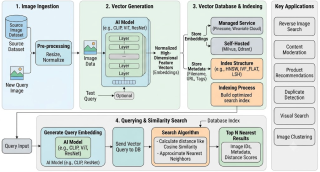
Image embeddings are numerical representations (vectors) of images that capture their semantic meaning and visual characteristics.Instead of storing raw pixel data,an embedding transforms an image into a high-dimensional vector where images with similar co...

YouTube's Recommendation System

YouTube's Recommendation System

257

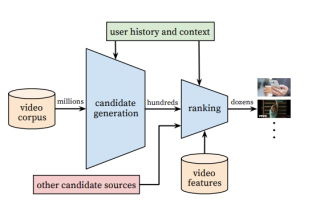
YouTube’s recommendation system is the archetypal two-stage deep-learning recommender.The influential 2016 paper (“Deep Neural Networks for YouTube Recommendations”) split the problem into Candidate Generation (narrow millions of videos down to hundreds...

Harnessing the Power of Random Forest Algorithm in Python

656

In the vast landscape of machine learning algorithms,there exists a powerful ensemble method known as Random Forest.It's highly regarded for its robustness and versatility,making it a popular choice for both classification and regression tasks.In this blog...

Wide & Deep / DeepFM for Recommendation Service (aka Ranking Service)

Wide & Deep / DeepFM for Recommendation Service (aka Ranking Service)

245

Wide & Deep and DeepFM are ranking models built to do two things at once: memorize frequent,specific feature combinations and generalize to combinations never (or rarely) seen in training.They are the canonical “deep ranking” architectures that score a s...

Two-Tower Model for Recommendation Service having a Very Large Catalog

Two-Tower Model for Recommendation Service having a Very Large Catalog

253

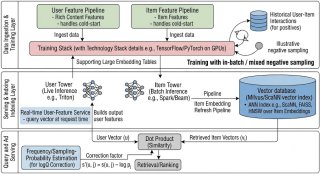
The Two-Tower model (also called a dual-encoder) is the workhorse of large-scale candidate generation (retrieval).It encodes users and items into the same embedding space using two separate neural networks — a user tower and an item tower — and measures ...