Data Architecture.zip

Collecting Proof-of-Play from 100,000 Screens

Collecting Proof-of-Play from 100,000 Screens

139

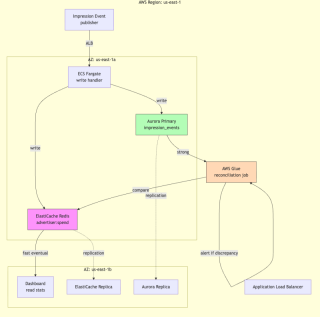
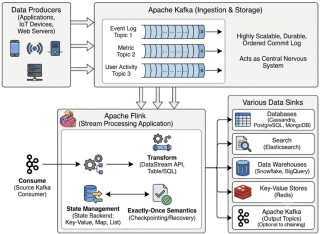
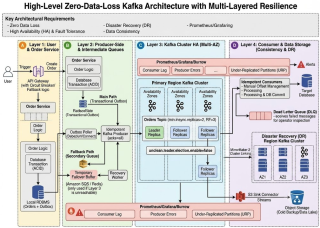
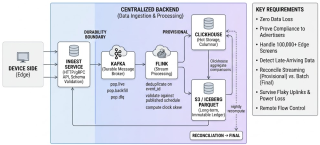
The problem nobody warns you aboutMost metrics pipelines are allowed to lose data.If you drop 0.1% of your CPU samples,nobody notices.If your log shipper falls over for ten minutes during a deploy,you shrug and move on.The whole discipline of observability...
Architecture Design - Database Partitioning vs. Sharding

Architecture Design - Database Partitioning vs. Sharding

147

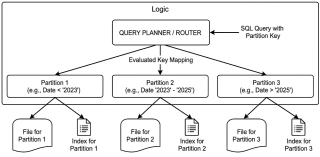
Before drawing,you must establish the distinction between the two.When presenting to stakeholders or interviewers,define them as::Database Partitioning (Horizontal / Vertical): Splitting a large table into smaller,more manageable pieces within a single dat...

ETL vs ELT what makes the differeence? Why MLOps leverage ELT?

ETL vs ELT what makes the differeence? Why MLOps leverage ELT?

191

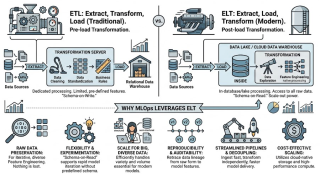
ETL (Extract,Transform,Load) transforms data before loading it into a destination,while ELT (Extract,Load,Transform) first loads raw data into the target system and performs transformations within it,leveraging the destination's computational power.MLOps a...

MLOps Explained: Spark, Flink, and Reference Architecture Deep Dive

MLOps Explained: Spark, Flink, and Reference Architecture Deep Dive

236

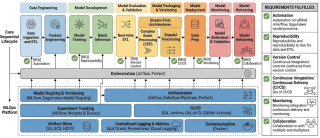
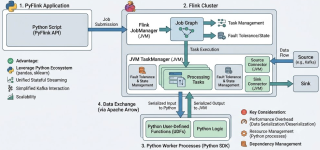
MLOps (Machine Learning Operations)MLOps is a set of practices that aims to deploy and maintain machine learning models in production reliably and efficiently.It bridges the gap between machine learning development (ML Dev) and operations (Ops),similar to ...

Ad Tech Idempotency: Engineering for Reliability and Scale

Ad Tech Idempotency: Engineering for Reliability and Scale

356

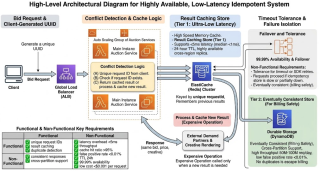
Idempotency is the property that applying the same operation multiple times produces the same result as applying it once.In ad tech,this is critical for handling duplicate bid requests,billing signals,and API calls without side effects.A network timeout or...

Predictable Ad Spend: Architecting Pacing at Hyperscale

Predictable Ad Spend: Architecting Pacing at Hyperscale

419

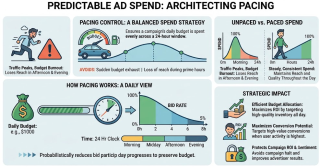
Pacing control ensures that a campaign's daily budget is spent evenly across a 24-hour window rather than burning out in the first few hours when user traffic peaks.In real-time bidding,milliseconds matter — yet a campaign manager wants predictable,steady...

Ad Indexing at Hyperscale: 100,000 Campaigns in Under 5ms

Ad Indexing at Hyperscale: 100,000 Campaigns in Under 5ms

289

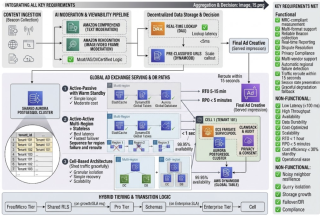
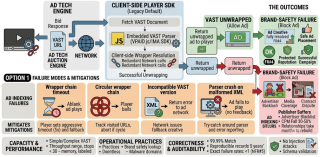
Ad indexing is the process of selecting which campaigns to bid for given a user's profile and context.Given 100,000+ active campaigns,each with targeting predicates (e.g."show only to users aged 18–35 in the US,on Chrome,interested in travel"),a bidder mu...

Real-Time Inventory & WMS System Design

Real-Time Inventory & WMS System Design

238

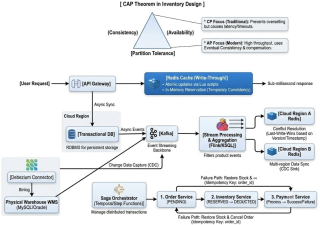
1.Architectural Foundation & CAP Theorem Trade-offsIn a high-traffic e-commerce environment,a traditional monolithic database configuration faces severe bottlenecks.When designing a distributed inventory and Warehouse Management System (WMS),we must naviga...

Enterprise-Scale 100k+ TPS Order Tracking System Architecture

Enterprise-Scale 100k+ TPS Order Tracking System Architecture

196

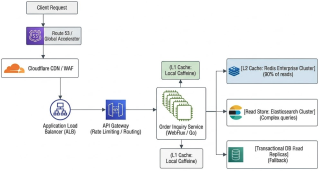
System Architecture OverviewTo handle 100,000+ Transactions Per Second (TPS) for order inquiries,the system must decouple write operations from read operations.A traditional relational database (RDBMS) cannot handle this scale of read traffic directly.This...

Architecting Dynamic Scale-Out and Scale-In with Docker Containers

Architecting Dynamic Scale-Out and Scale-In with Docker Containers

129

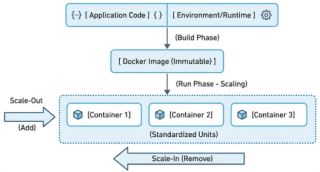
1.Conceptual Framework: Code-to-Container ScalingTo represent container scaling architecturally,you must treat the Docker container as an immutable,self-contained unit of execution.The application code,runtime environment,libraries,and configurations are p...

How to Design Redis Caching in Infrastructure Architecture

How to Design Redis Caching in Infrastructure Architecture

154

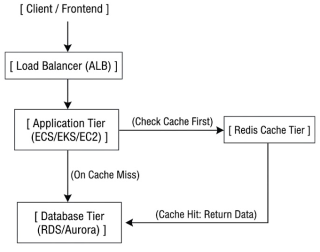
Core Architectural PlacementWhen drawing a Redis caching infrastructure,you must place Redis strategically between your application tier and your persistent database tier.The architecture is typically represented in a three-tier model::Application Tier: Ac...