Recommendation Architecture.zip

Neural Collaborative Filtering (NCF) for Recommendation Service

Neural Collaborative Filtering (NCF) for Recommendation Service

234

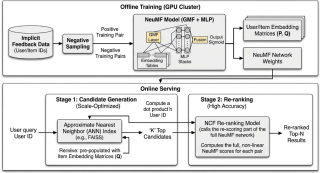
Neural Collaborative Filtering (NCF) generalizes matrix factorization by replacing the fixed dot product with a learned neural interaction function.Where MF assumes that a user’s affinity for an item is a simple inner product of two latent vectors,NCF let...
Two-Tower Model for Recommendation Service having a Very Large Catalog

Two-Tower Model for Recommendation Service having a Very Large Catalog

253

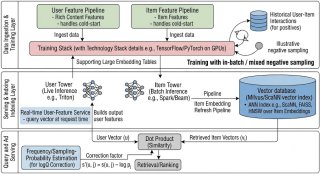
The Two-Tower model (also called a dual-encoder) is the workhorse of large-scale candidate generation (retrieval).It encodes users and items into the same embedding space using two separate neural networks — a user tower and an item tower — and measures ...

Common Recommendation Service Architecture

Common Recommendation Service Architecture

523

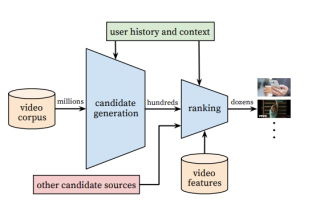
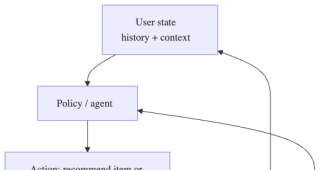
Almost every large-scale recommendation service — TikTok,YouTube,Amazon,Netflix,Spotify — is built on the same architectural skeleton,regardless of which specific model it uses.Understanding this skeleton is more valuable than memorizing any single algor...

Memory-Based Collaborative Filtering for Recommendation Service

Memory-Based Collaborative Filtering for Recommendation Service

185

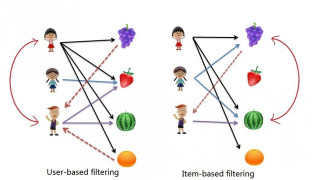
Memory-Based Collaborative Filtering (CF) makes recommendations from patterns of agreement across many users,without using any item content features.It is “memory-based” because it operates directly on the stored user–item interaction matrix at predicti...

Netflix's Recommendation System

Netflix's Recommendation System

406

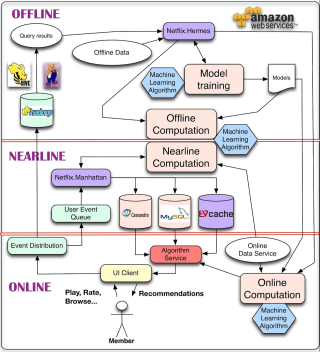
Netflix is the company that arguably made “recommendation system” a household engineering term — first through the Netflix Prize (2006–2009),which popularized matrix factorization,and later through one of the most influential production architectures i...

TikTok's Recommendation System - Monolith

TikTok's Recommendation System - Monolith

284

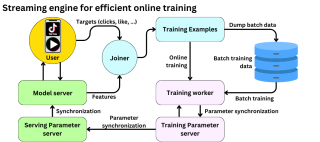
Monolith is ByteDance’s deep-learning recommendation system (described in a 2022 paper) that powers TikTok’s “For You” feed.It is a large-scale,two-stage (retrieval → ranking) deep-learning engine,purpose-built for the dynamic,sparse,and constantly sh...

YouTube's Recommendation System

YouTube's Recommendation System

257

YouTube’s recommendation system is the archetypal two-stage deep-learning recommender.The influential 2016 paper (“Deep Neural Networks for YouTube Recommendations”) split the problem into Candidate Generation (narrow millions of videos down to hundreds...

Wide & Deep / DeepFM for Recommendation Service (aka Ranking Service)

Wide & Deep / DeepFM for Recommendation Service (aka Ranking Service)

245

Wide & Deep and DeepFM are ranking models built to do two things at once: memorize frequent,specific feature combinations and generalize to combinations never (or rarely) seen in training.They are the canonical “deep ranking” architectures that score a s...

Hybrid Methods for Recommendation Service

Hybrid Methods for Recommendation Service

211

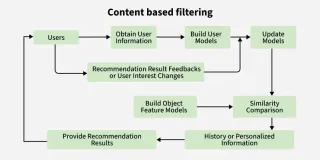
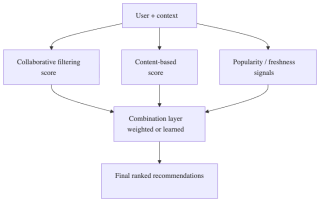
Hybrid recommendation systems combine two or more techniques — most commonly content-based and collaborative filtering — so that each method’s strengths offset the others’ weaknesses.The motivating observation: collaborative filtering is powerful but s...

Model-Based CF: Matrix Factorization for Recommendation Service

Model-Based CF: Matrix Factorization for Recommendation Service

176

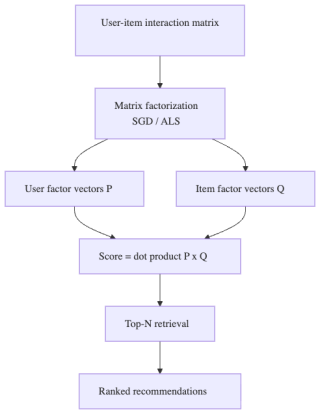
Model-Based Collaborative Filtering replaces the on-demand similarity lookups of memory-based CF with a compact learned model.The dominant family is Matrix Factorization (MF): the large,sparse user–item interaction matrix R (dimensions m × n) is decompos...

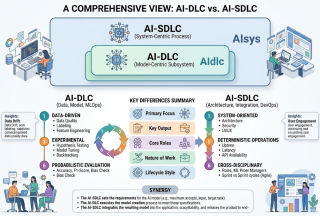
AI-DLC vs. AI-SDLC: Model-Centric vs. System-Centric AI Development

AI-DLC vs. AI-SDLC: Model-Centric vs. System-Centric AI Development

246

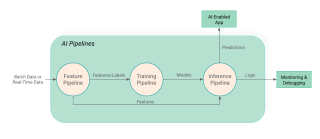
While AI-DLC (AI Development Life Cycle) and AI-SDLC (AI Software Development Life Cycle) sound similar,they represent different scopes in the development of intelligent software solutions::AI-DLC (AI Development Life Cycle): Focuses specifically on the mo...

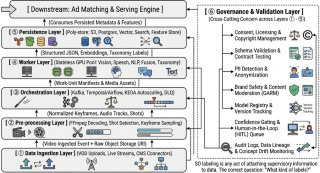
End-to-End Contextual Video Processing Architecture for AdTech

End-to-End Contextual Video Processing Architecture for AdTech

202

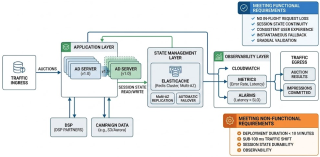
A six-layer production architecture designed to ingest raw video streams and files,extract multimodal semantic insights,enforce brand safety and regulatory compliance,and output structured,ad-targetable metadata in sub-hundred-millisecond response windows....

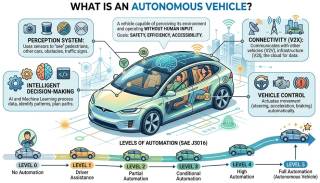
Autonomous Vehicle Machine Learning (AV ML): An Architectural Review

Autonomous Vehicle Machine Learning (AV ML): An Architectural Review

386

What is AV ML?Autonomous Vehicle (AV): Refers to self-driving cars or vehicles capable of perceiving their environment and operating without human input.The ultimate goal of AVs is to enhance safety,efficiency,and accessibility in transportation.Machine Le...

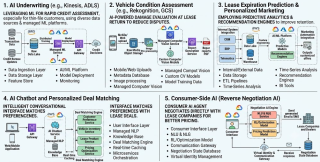
Cloud-Based AI Architecture Proposals for US Auto Finance Industry

Cloud-Based AI Architecture Proposals for US Auto Finance Industry

546

Five cloud-based AI architectures are proposed to transform the US Auto Finance Industry,focusing on enhancing operational efficiency and customer engagement.These include an AI Underwriting system leveraging machine learning for rapid credit assessment,es...

Your Blueprint for an LLM & Vector DB Insurance Product Q&A

Your Blueprint for an LLM & Vector DB Insurance Product Q&A

250

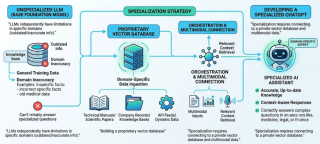
To develop a ChatGPT-like service targeting specific insurance product categories using FAISS / Milvus as the vector database,the foundational components include a robust data ingestion pipeline for processing diverse insurance documents into manageable te...

Building a Video Content Recommendation System with Amazon SageMaker

Building a Video Content Recommendation System with Amazon SageMaker

518

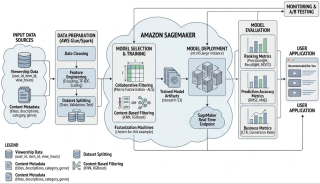
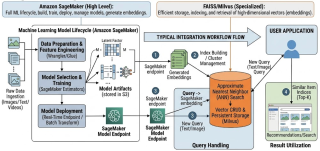
This article outlines a practical approach to building a video recommendation system using Amazon SageMaker,leveraging video viewership data and content metadata.We'll cover data preparation,model selection,training,deployment,and inference. What is the ma...

JavaScript Code to Get Meta Description from HTML

391

A meta description is an HTML tag used to provide a brief summary or description of a webpage's content.It is typically included in the section of a webpage and appears in the following format:Purpose of Meta Descriptions:Search Engine Optimization (SEO): ...

Predicting Buyer Preferences with PyTorch: A Deep Learning Approach

Predicting Buyer Preferences with PyTorch: A Deep Learning Approach

1,228

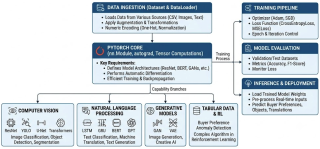
PyTorch is an open-source machine learning library predominantly used for building and training deep learning models.It provides a flexible,Python-based framework that enables researchers and developers to easily construct neural networks,perform tensor co...

PyTorch example to Forcast Stock Price based on 10 days Dataset

651

This code starts by creating synthetic stock price data, then it proceeds to define a simple linear neural network model. The model is trained on the synthetic data, and finally, it attempts to predict the stock price for the next day based on the last 10 ...

Image Embeddings for Vector Databases

Image Embeddings for Vector Databases

239

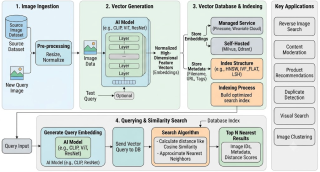
Image embeddings are numerical representations (vectors) of images that capture their semantic meaning and visual characteristics.Instead of storing raw pixel data,an embedding transforms an image into a high-dimensional vector where images with similar co...

Mastering AI: A Beginner's Guide to Python Programming and Beyond

Mastering AI: A Beginner's Guide to Python Programming and Beyond

1,031

AI stands for Artificial Intelligence.It refers to the simulation of human intelligence processes by machines,especially computer systems.These processes include learning (the acquisition of information and rules for using the information),reasoning (using...