VAST.zip

IAS IP Blocklist: Causes, Resolution, and Detection Strategies

IAS IP Blocklist: Causes, Resolution, and Detection Strategies

183

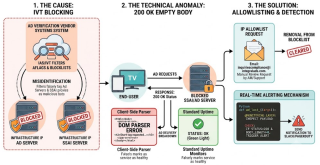
In Ad Server and Server-Side Ad Insertion (SSAI) operations,a sudden drop in ad request fulfillment often stems from IP blocklisting by Ad Verification vendors.Global verification platforms like Integral Ad Science (IAS) run automated filters to block Inva...
What is VAST? What is VMAP? How VAST/VMAP works?

What is VAST? What is VMAP? How VAST/VMAP works?

893

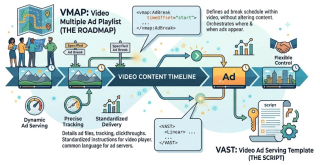
VAST (Video Ad Serving Template) is an XML schema providing standardized instructions to video players on how to play specific video ads,detailing aspects like ad file location,type,tracking URLs,and clickthrough links,essentially acting as the common lang...

OpenRTB vs. VAST: Your Essential Guide to Video Ad Tech

OpenRTB vs. VAST: Your Essential Guide to Video Ad Tech

271

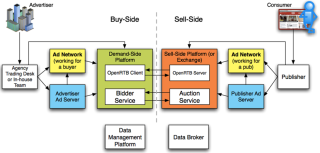
OpenRTB and VAST RelationshipOpenRTB (Open Real-Time Bidding) and VAST (Video Ad Serving Template) are two critical,yet distinct,standards in the digital advertising ecosystem.They work together synergistically,particularly in programmatic video advertisin...

CSAI vs SSAI

CSAI vs SSAI

574

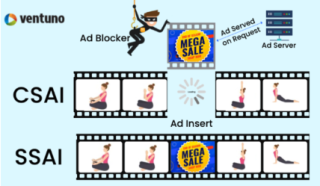
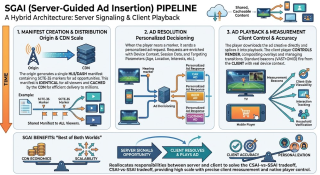
.What is CSAI (Client-Side Ad Insertion) ?In a CSAI flow,advertisements are managed and added to the end-user’s device.From a delivery point-of-view,content and ads are separated; the player plays content and advertisements independently of each other.The...

Invalid Auction Storms in Ad Tech

Invalid Auction Storms in Ad Tech

91

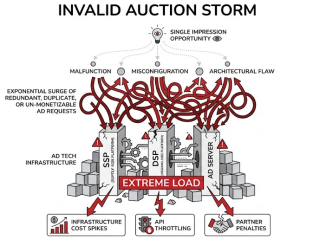
An Invalid Auction Storm occurs when a malfunction,misconfiguration,or architectural flaw causes an exponential surge of redundant,duplicate,or un-monetizable ad requests for a single impression opportunity.This places extreme load on Supply-Side Platforms...

The Two Clocks of Ad Server Architecture

The Two Clocks of Ad Server Architecture

61

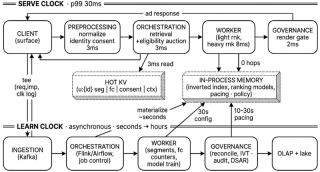
Every ad platform I have seen starts life as the same diagram.Someone opens a whiteboard and writes seven boxes in a row:Client → Preprocessing → Data Ingestion → Orchestration → Worker → Governance & Validation → Persistence.It is a good diagram.The...

UCP for AVOD: Standardizing Ad Monetization

UCP for AVOD: Standardizing Ad Monetization

337

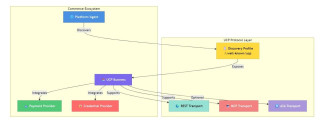
Universal Commerce Protocol (UCP) OverviewThe Universal Commerce Protocol (UCP) is a standardized way for digital properties,like websites or streaming services,to declare their commerce-related capabilities and endpoints.It uses the .well-known URI prefix...

SafeFrame is a web standard developed by IAB

SafeFrame is a web standard developed by IAB

505

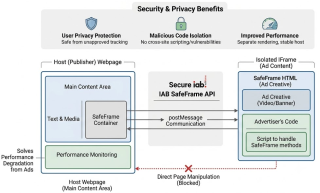
The Interactive Advertising Bureau (IAB) created the web standard SafeFrame to improve web users' security and privacy while enabling more secure and controlled interactions with embedded ads.SafeFrame allows advertisers to display their content within a p...

Ad Marker: SCTE-35 Message Encoder based in Python

794

SCTE-35 is a message specifying ad insertion points within a video stream.An encoder *inserts* SCTE-35 messages.So the question should be about the need for *SCTE-35 insertion* in an HLS workflow,not an "encoder.".STE-35 is essential for professional-grade...

Ad marker: SCTE-35 enhanced

570

SCTE-35 enhanced refers to improvements and additions to the original SCTE-35 standard for signaling commercial breaks in digital cable and IP video streams.These enhancements primarily focus on providing more precise and detailed information about ad inse...

FFmpeg compile option to support SCTE-35

837

SCTE-35 is a standard,developed by the Society of Cable Telecommunications Engineers (SCTE),that specifies a message signaling protocol used in digital cable television and IPTV systems to precisely insert and remove commercial advertisements and other con...

Attribution's New Blueprint: Balancing Performance and Privacy

Attribution's New Blueprint: Balancing Performance and Privacy

498

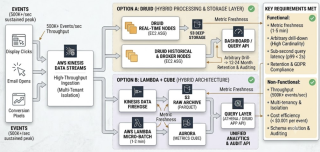
Attribution answers a fundamental question: which marketing touchpoint deserves credit for a conversion? A user might click a display ad on Monday,click again on Friday,and finally purchase after an email on Saturday.How much credit goes to each channel? A...

Ad Auction Architectures: A Publisher's Guide to Optimal Monetization

Ad Auction Architectures: A Publisher's Guide to Optimal Monetization

678

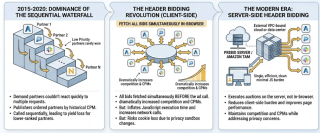
Publisher monetization hinges on filling inventory at the highest possible CPM.Unsold inventory (direct campaigns,remnant) must be routed through programmatic partners—ad networks,SSPs,demand-side platforms—to generate revenue.The core challenge is choos...

AI-Powered Ad Fraud Detection: Architectural Strategies

AI-Powered Ad Fraud Detection: Architectural Strategies

331

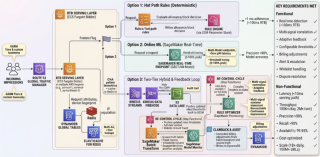
Ad fraud—invalid clicks,bot traffic,viewability spoofing,and impression laundering—consumes 5–15% of programmatic ad spend annually,costing the industry billions in wasted budget.Real-time detection is critical because fraud signals compound: a single b...

Ad Tech Idempotency: Engineering for Reliability and Scale

Ad Tech Idempotency: Engineering for Reliability and Scale

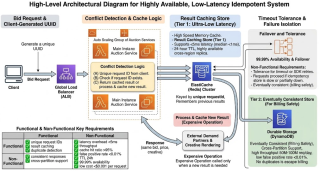
356

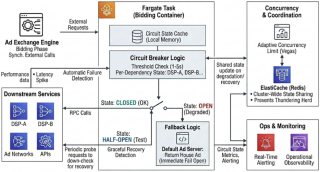
Idempotency is the property that applying the same operation multiple times produces the same result as applying it once.In ad tech,this is critical for handling duplicate bid requests,billing signals,and API calls without side effects.A network timeout or...

Real-Time Geo-Targeting: Balancing Precision, Latency, and Cost

Real-Time Geo-Targeting: Balancing Precision, Latency, and Cost

283

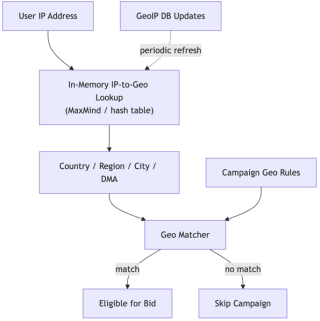
Geo-targeting enables advertisers to show ads only to users in specific geographic regions.A pizza chain wants ads shown only to users within 5 miles of its locations; a luxury car brand targets major metropolitan areas; a regional bank limits ad spend to ...

Frequency Cap Architecture Overview

Frequency Cap Architecture Overview

505

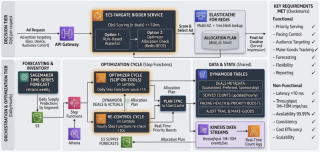
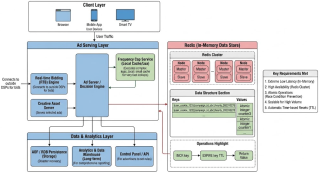
Frequency capping is a critical setting in advertising that restricts the number of times a specific advertisement,creative,or campaign is displayed to an individual user within a defined period.Its primary goal is to optimize advertising effectiveness by ...

IAB Categories (a.k.a. OpenRTB Code)

1,012

The IAB categories are an industry standard and are heavily used in services like advertising and Internet security and filtering appliances.There are 26 tier-1 (top level) categories,366 tier-2 (sub level) categories,and an additional 12 tier-3 categories...