| Scene detection is a crucial aspect of video processing, enabling us to segment a video into meaningful parts. This segmentation helps in video understanding, indexing, summarization, and various other applications. Here are the common approaches:
1. Shot Boundary Detection:
- Based on abrupt changes: This method detects scene changes based on sudden changes in visual content like camera cuts, fades, or wipes.
- Frame Difference: Compares consecutive frames for pixel-wise differences. High differences indicate a potential scene change.
- Edge Histogram Difference: Analyzes the histogram of edge features in consecutive frames, detecting changes in edge patterns.
- Color Histogram Difference: Compares the distribution of colors in consecutive frames for significant variations.
- Based on camera motion: Detects scene changes by analyzing camera motion patterns like pan, zoom, or tilt.
- Optical Flow: Calculates the motion of pixels in the video, identifying significant motion indicating a scene change.
- Motion Vector Analysis: Analyzes motion vectors generated by video compression algorithms, indicating camera movement and potential scene changes.
2. Semantic Scene Analysis: - Visual Content Analysis: Analyzes visual content like objects, faces, and their spatial relationships to identify scene changes.
- Object Detection and Tracking: Uses machine learning models to detect and track objects, identifying significant changes in their presence and positions.
- Scene Recognition: Utilizes deep learning models to classify scenes based on their overall visual features, like 'indoor', 'outdoor', or 'city'.
- Audio Content Analysis: Analyzes audio content to detect scene changes based on sound variations, like speech, music, or environmental noise.
- Speech Detection: Detects voice segments and uses silence or speaker changes to indicate scene changes.
- Music Genre Analysis: Identifies different music genres and uses genre changes to determine scene transitions.
3. Hybrid Approaches: - Combining multiple features: Combines visual, audio, and other features to improve scene detection accuracy.
- Multimodal Scene Analysis: Uses features from both visual and audio streams to identify scene changes.
- Hybrid Feature Fusion: Integrates different features like frame difference, color histogram, and object detection results for more robust scene segmentation.
Challenges and Considerations: - Complex Scene Transitions: Transitions like slow fades, dissolves, or gradual camera movements can be difficult to detect.
- Contextual Information: Identifying scene changes requires understanding the context and semantic meaning of the video.
- Computational Complexity: Some scene detection algorithms can be computationally expensive, requiring efficient implementation.
Choosing the Best Approach:
The best approach for scene detection depends on the specific application and video content. For example, fast camera cuts might be effectively identified using frame difference, while semantic scene analysis is more suitable for understanding complex scenes with nuanced transitions.
Recent Advancements: - Deep Learning Models: Advanced deep learning models like recurrent neural networks (RNNs) and transformers are being used to analyze complex video sequences and identify scene changes.
- Multi-scale Analysis: Integrating information from different video scales, like frame-level and shot-level analysis, improves scene detection accuracy.
- Cross-modal Integration: Utilizing information from multiple modalities, including text, audio, and visual data, enables a deeper understanding of video content and more accurate scene detection.
Scene detection is a continuously evolving field, with new techniques and algorithms being developed regularly. By leveraging these approaches and integrating advanced techniques, we can achieve more accurate and reliable scene segmentation for various video applications.
If you want to have scence detection libraries, there are various scene detection libraries available, each with its own strengths and weaknesses. Here's a breakdown of some popular choices categorized by programming language:
Python
- OpenCV: A powerful computer vision library that provides various scene detection algorithms, including:
- Keyframe detection: Identifying visually significant frames based on motion, color changes, or other criteria.
- Shot boundary detection: Identifying transitions between shots (cuts, fades, dissolves) in a video.
- Scene change detection: Identifying larger scene breaks based on more complex analysis of the video content.
- Scikit-video: Built on top of SciPy, Scikit-video offers a wide range of video processing tools, including scene detection methods.
- MoviePy: A simple and intuitive video editing library that provides basic scene detection functionality.
- SceneDetect: A dedicated library specifically for scene detection, offering various algorithms and customization options.
- PySceneDetect: A Python library for scene detection that uses a variety of algorithms, including thresholding, edge detection, and optical flow.
- DeepScene: A library for scene detection that uses deep learning techniques.
C++ - OpenCV: The C++ counterpart to its Python version, providing the same scene detection functionality.
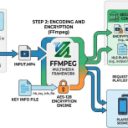
- FFmpeg: A powerful multimedia framework often used for video processing, including scene detection.
- Libav: A fork of FFmpeg, offering similar capabilities.
Other Languages - Java: Several Java libraries are available, such as JCodec and jffmpeg, which can be used for scene detection.
- R: The statistical programming language R also offers packages like opencv and videotools for scene detection.
Choosing the Right Library
The best library for you depends on your specific needs: - Simplicity: For basic scene detection, MoviePy or Scikit-video offer straightforward solutions.
- Flexibility: OpenCV and SceneDetect provide more control and customization options.
- Performance: FFmpeg and Libav are known for their speed and efficiency.
- Deep Learning: If you need advanced scene detection capabilities, consider libraries like DeepScene.
Remember to research the documentation and available examples for each library to make an informed decision based on your specific project requirements.
|