From SDI to MXL: Inside the Cloud-Native Infrastructure Powering Next-Gen Live Broadcast

CK CK 3788 
Created at
Updated at  
569 0 0

Prologue: The Question 15.5 Million Concurrent Viewers Are Asking

On February 9, 2025, FOX-owned free streaming service Tubi carried the live stream of Super Bowl LIX. Peak concurrent viewers reached 15.5 million, while unique viewers touched 24 million. The feed was delivered in 4K HDR at sub-second glass-to-glass latency across millions of consumer endpoints.


For systems architects, network engineers, and broadcast infrastructure executives, those figures present a singular engineering question:

What underlying infrastructure architecture makes real-time delivery at this scale, quality, and latency physically possible?
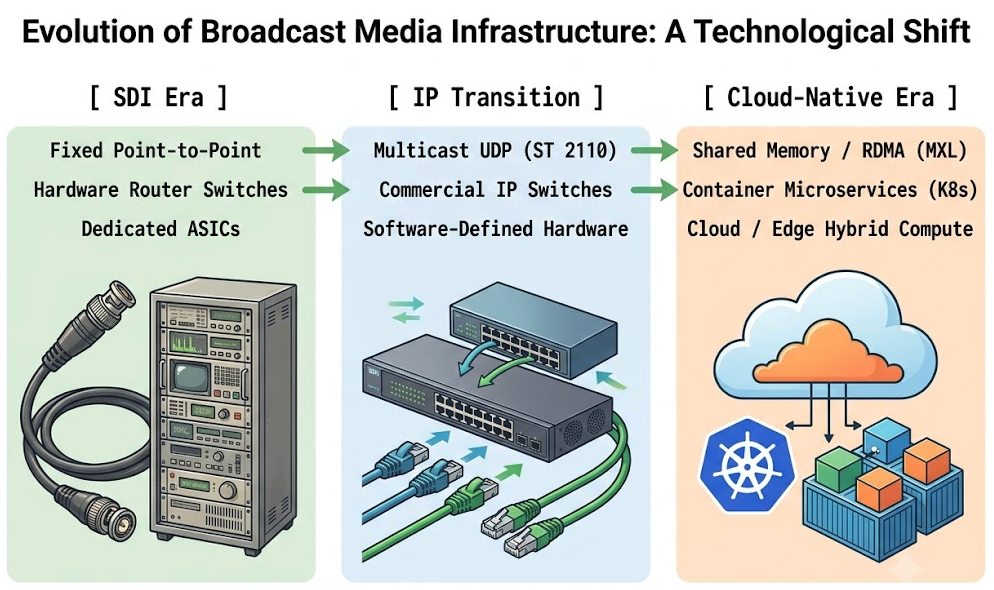
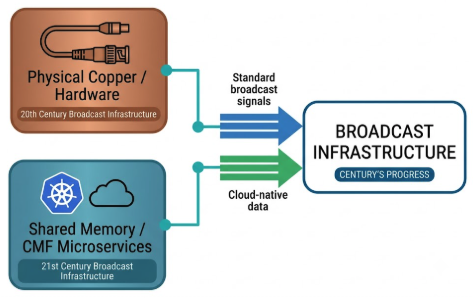
The answer has been quietly shifting for over a decade. The broadcast control room—once dominated by baseband SDI cabling and custom application-specific integrated circuits (ASICs)—first migrated to local IP networks via the SMPTE ST 2110 suite of standards. Now, those same IP networks are undergoing a second, fundamental transformation: a shift toward cloud-native, containerized microservices architectures.

At the center of this transition sits the European Broadcasting Union's (EBU) Dynamic Media Facility (DMF) initiative and its real-time data plane, the Media eXchange Layer (MXL).

This deep dive explores how the broadcast engineering landscape is being rewritten. It examines the operational friction points that broadcasters face, the technical divergence between open standards bodies and cloud hyperscalers, and the real-world deployment patterns of FOX Corporation as a enterprise case study.


1. The Trajectory: SDI → ST 2110 → Cloud-Native

From SDI to MXL: Inside the Cloud-Native Infrastructure Powering Next-Gen Live Broadcast


The Hardware-Bound World (SDI)

Through the mid-2010s, broadcast facilities were designed around spatial and physical determinism. Serial Digital Interface (SDI) coaxial cables carried uncompressed digital video sequentially from point A to point B. Every component—vision switchers, frame synchronizers, character generators, and graphics engines—was housed in a dedicated unit built around specialized video-processing silicon.


While this paradigm guaranteed microsecond-level timing determinism and visual fault tracing (if a monitor went dark, an engineer tested the physical BNC connection), it created severe agility bottlenecks:

  • Fixed Infrastructure: Provisioning a temporary pop-up channel required unboxing, rack-mounting, and recabling physical hardware.
  • Capacity Caps: Major events required shipping multi-million-dollar Outside Broadcast (OB) trucks to physical venues, limiting dynamic scalability.
  • Vendor Silos: Hardware ecosystems were locked inside proprietary control protocols, making cross-vendor integration costly and fragile.


The First IP Wave: SMPTE ST 2110 & NMOS

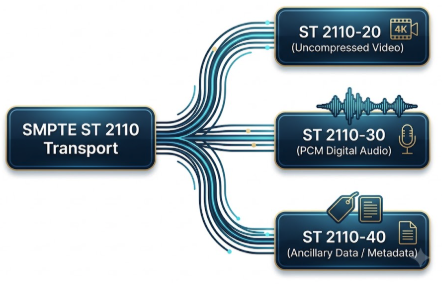
Standardized in 2017, the SMPTE ST 2110 suite decoupled raw video, audio, and metadata into separate, uncompressed elemental streams transported via Real-time Transport Protocol (RTP) over standard IP networks.

From SDI to MXL: Inside the Cloud-Native Infrastructure Powering Next-Gen Live Broadcast

To support this abstraction, the industry introduced two critical standards:

  1. PTP (Precision Time Protocol / IEEE 1588v2 / ST 2059-2): Replaced legacy analog black-burst genlock, delivering sub-microsecond time synchronization across standard Ethernet topologies.
  2. AMWA NMOS (Networked Media Open Specifications): Provided a software control plane layer (IS-04 for discovery/registration, IS-05 for connection management).

Major global entities—including NBC, BBC, Fox Sports, France TV, CBC, and NHK—invested billions in modernizing greenfield and brownfield plants around high-capacity COTS (Commercial Off-The-Shelf) network switches from Arista, Cisco, and Mellanox.


The Limits of ST 2110 and the "IP After IP" Requirement

Despite its success, ST 2110 was designed to replicate physical SDI routing paradigms over IP networks. As consumer consumption shifted toward high-concurrency streaming, ST 2110 exposed structural limitations:

Architectural ChallengeTechnical MechanismImpact on Modern Operations
Network OverheadHeavy reliance on IGMP join/leave requests and static PTP boundary clocks.Complex multicast routing designs that do not scale natively inside cloud environments.
Compute InefficiencySending UDP multicast between software instances requires traversing kernel network stacks.Massive CPU overhead for socket handling, context switches, and packet inspection.
Control Plane FragmentationHigh-level orchestration, dynamic schema translation, and event triggers remain locked behind vendor-specific APIs.Interoperability stops at media transport; workflows remain siloed across vendors.

Modern streaming media platforms require infrastructure that behaves as software: microservices that instantiate in seconds, process high-bitrate video, scale horizontally based on demand, and terminate automatically post-event. Meeting these requirements demands an "IP after IP" shift—rearchitecting the data plane for virtualized compute while keeping timing precise.


2. EBU Dynamic Media Facility: Reference Architecture

From SDI to MXL: Inside the Cloud-Native Infrastructure Powering Next-Gen Live Broadcast


Conceptual Foundations

Published in updated form in 2024, the EBU Dynamic Media Facility (DMF v2.0) reference model provides an architectural blueprint for transitioning facilities from static IP-routed setups to dynamic, software-defined environments.


The core thesis of DMF is atomic decoupling: decompose every live video workflow into modular, stateless software functions running on general-purpose compute, orchestrated by open software APIs.


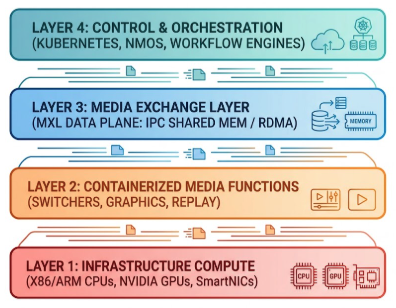
The Four-Layer DMF Stack

Layer 1: Generic Compute & Network Infrastructure

Standardized x86 or ARM servers, NVIDIA enterprise GPUs (e.g., L40S, H100), NVMe storage fabrics, and SmartNICs/DPUs (e.g., NVIDIA BlueField). Compute nodes can reside in an on-premises datacentre, an edge facility, or a public cloud (AWS, GCP, Azure).


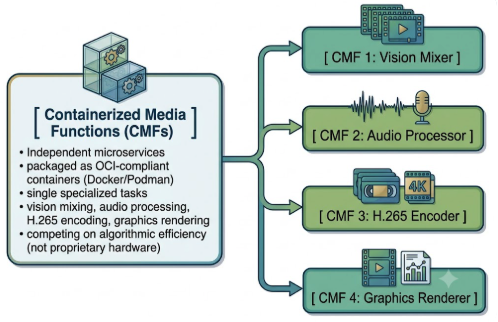
Layer 2: Containerized Media Functions (CMFs)

Independent microservices packaged as OCI-compliant containers (Docker/Podman). These functions perform single specialized tasks—vision mixing, audio processing, H.265 encoding, or graphics rendering—and compete based on algorithmic efficiency rather than proprietary hardware hardware integrations.

From SDI to MXL: Inside the Cloud-Native Infrastructure Powering Next-Gen Live Broadcast


Layer 3: Media eXchange Layer (MXL Data Plane)

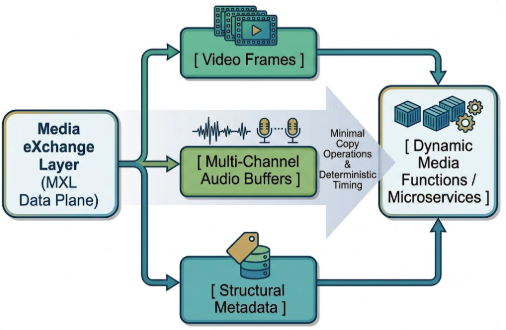
The real-time data plane mechanism responsible for moving video frames, multi-channel audio buffers, and structural metadata between microservices with minimal copy operations and deterministic timing.

From SDI to MXL: Inside the Cloud-Native Infrastructure Powering Next-Gen Live Broadcast


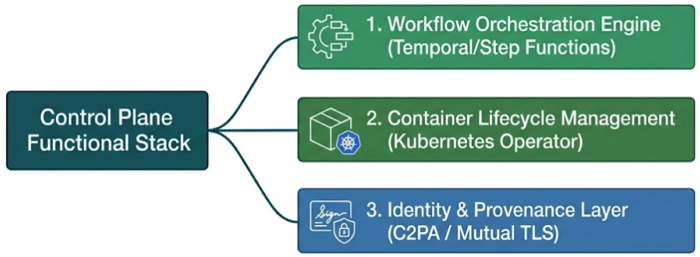
Layer 4: Control, Orchestration & Observability

The logical management framework. Built on Kubernetes for container lifecycles, combined with AMWA NMOS, OpenTelemetry for observability, and custom workflow engines for end-to-end routing and orchestration.


Primary Industry Catalysts

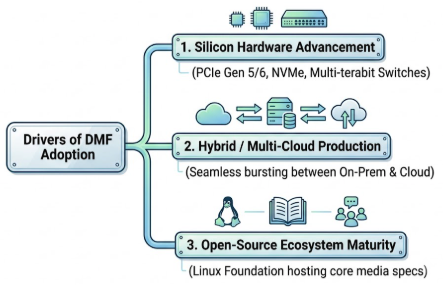
  • Density Milestones in Commercial Hardware: Modern PCIe Gen 5/6 buses, combined with multi-terabit switching fabrics, allow standard dual-socket servers to ingest, process, and output dozens of uncompressed 4K video streams without dropped packets.
  • Hybrid Cloud Operational Demands: Tier-1 networks routinely run primary production on-premises while executing regional insertion, back-up workflows, and long-tail streams in the cloud. Managing disparate, physical protocols across these domains is financially unviable.
  • Open-Source Governance: Shift away from vendor-dominated standards committees toward open-source Linux Foundation projects, accelerating code-level adoption and reducing implementation cycles.

From SDI to MXL: Inside the Cloud-Native Infrastructure Powering Next-Gen Live Broadcast


3. Media eXchange Layer: Reinventing the Data Plane

Decoupling Transport from Physical Topologies

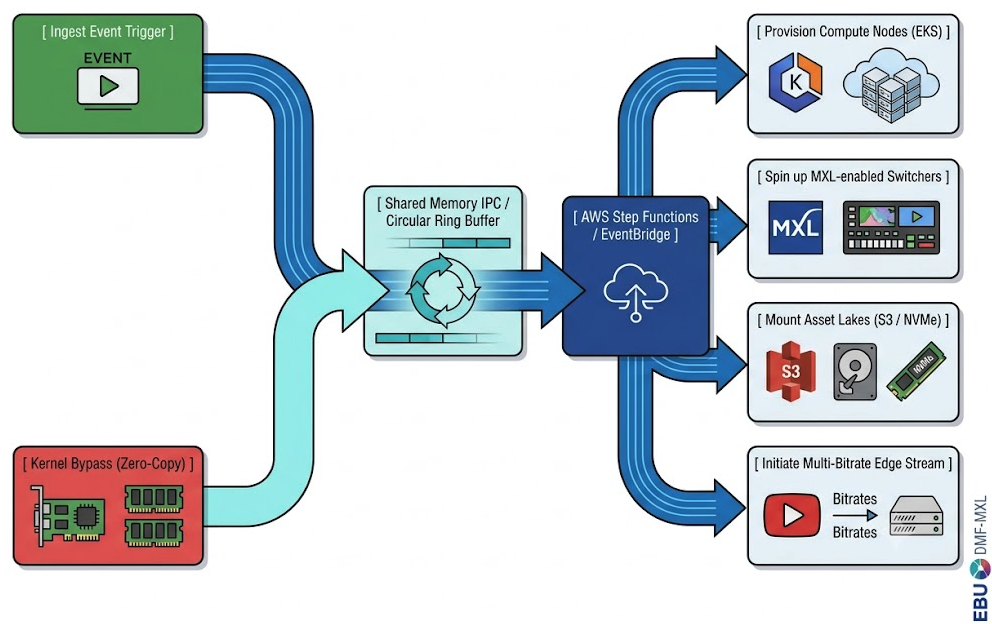
Sitting at Layer 3 of the DMF architecture, the Media eXchange Layer (MXL) replaces legacy network transport mechanisms with memory-centric data transfers:

From SDI to MXL: Inside the Cloud-Native Infrastructure Powering Next-Gen Live Broadcast

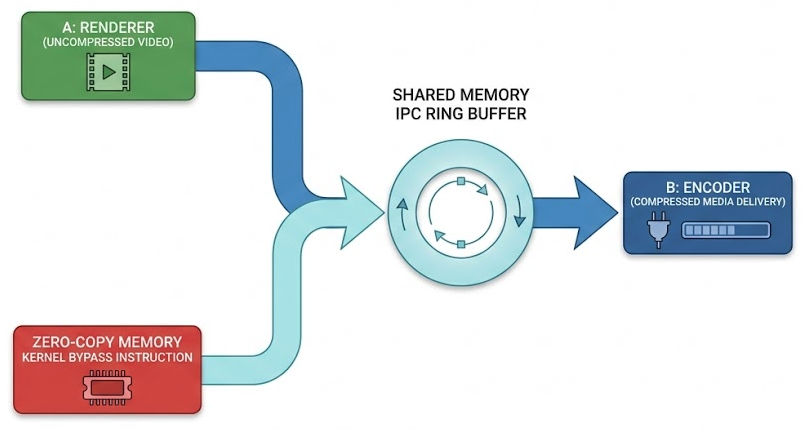
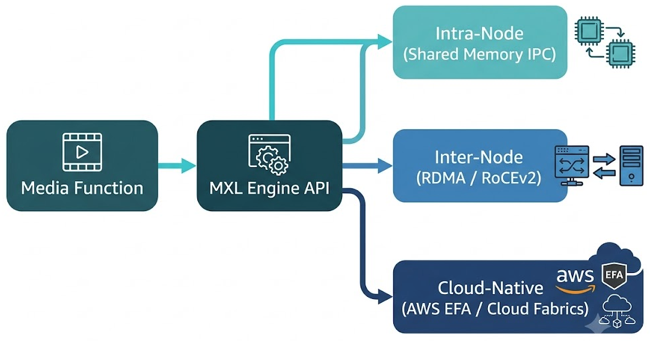
Instead of serializing video frames into UDP packets, transmitting them over standard physical Ethernet switch ports, and parsing them back up the network stack, MXL optimizes transmission based on process location:

  • Intra-Node (Same Physical Server): Inter-Process Communication (IPC) via shared memory allocation. Containers write frame buffers directly into a shared physical memory segment accessible by consumer containers, avoiding kernel memory copies entirely.
  • Inter-Node (Across Servers/Cloud Instances): Remote Direct Memory Access (RDMA) over Converged Ethernet (RoCEv2) or cloud-native high-throughput fabric adapters (e.g., AWS Elastic Fabric Adapter - EFA). Network interface cards read memory directly from the source host and deposit it into the destination host memory without CPU intervention.


Architectural Performance Comparison

Metric / DimensionTraditional ST 2110 (UDP Multicast)MXL Data Plane (Shared Memory / RDMA)
Transport MediumEthernet Layer 3 Network PacketsShared RAM / RDMA Direct Memory Access
Host ProcessingHigh CPU utilization (Kernel socket polling)Near-zero CPU impact (Kernel bypass)
Data Copy OperationsUser Space → Kernel Space → NIC → Network → NIC → Kernel Space → User SpaceZero-copy (Direct Pointer Reference)
Transfer LatencyMilliseconds to Sub-millisecondsMicroseconds (\le 10\ \mus intra-node)
Network DependencyRequires IGMP, PTP Grandmasters, PIM-SMTransport-agnostic memory pointers


The Open SDK Strategy

The MXL project, hosted under the Linux Foundation umbrella, provides a standardized, open-source C/C++ and Rust Software Development Kit (SDK).

From SDI to MXL: Inside the Cloud-Native Infrastructure Powering Next-Gen Live Broadcast

By linking against libmxl, a media function developer exposes standard read/write buffers. The underlying MXL engine automatically selects the fastest transport path—Shared Memory IPC, RDMA, or standard TCP/UDP fallbacks—without requiring application-level code modifications.


Unresolved Engineering Challenges

Despite rapid development, several core implementation hurdles remain:

  • Frame Determinism without Hardware Genlock: Translating legacy PTP hardware timestamps into software ring buffers without introducing frame jitter or buffer underruns under heavy CPU loads.
  • Variable Bitrate (VBR) & Compressed Codec Management: Pointers for uncompressed raster frames are predictable; handling dynamic frame sizes (JPEG-XS, HEVC intra-frames) in low-latency shared buffers requires complex dynamic memory pools.
  • Container Security vs. Shared Memory: Linux containers isolate memory namespaces by default. Standard IPC shared memory breaks this isolation boundary, requiring fine-grained Linux capabilities (CAP_SYS_ADMIN or specialized device plugins) that complicate Kubernetes security policies.


4. Orchestration: Redefining the Control Plane

From SDI to MXL: Inside the Cloud-Native Infrastructure Powering Next-Gen Live Broadcast


Kubernetes as the Broadcast Switching Fabric

In a cloud-native DMF architecture, the traditional SDI router control panel is replaced by a Kubernetes control plane extending Custom Resource Definitions (CRDs) tailored for broadcast workflows:

apiVersion: media.dmf.ebu.ch/v1alpha1
kind: MediaPipeline
metadata:
  name: superbowl-primary-4k
spec:
  sources:
    - id: cam-01-stadium
      format: UHD_2160p5994
      transport: mxl+rdma
  processingNodes:
    - name: vision-mixer
      image: vendor/switcher-engine:v3.2
      resources:
        limits:
          nvidia.com/gpu: "1"
          hugepages-2Mi: "8Gi"
  destinations:
    - id: tubi-edge-ingest
      format: h265_srt


Because off-the-shelf Kubernetes schedulers prioritize general-purpose web workloads, broadcast platforms rely on custom scheduler plugins:

  • Topology-Aware Resource Placement: Ensures high-bandwidth microservices processing mutual 4K streams are scheduled on the same physical NUMA node to leverage local PCIe lanes and shared memory paths.
  • Deterministic Resource Reservation: Uses Linux CPUSets and HugePages allocations to guarantee zero CPU throttling on critical real-time processing threads.

Workflow Integration & Cloud State Engines

Above container scheduling lies the business workflow execution layer:

From SDI to MXL: Inside the Cloud-Native Infrastructure Powering Next-Gen Live Broadcast

  • State Management: High-performance, distributed key-value engines (e.g., Redis, DynamoDB) maintain precise state representations of active audio/video pipelines, tally markers, and router cross-points.
  • Event Drivers: As asynchronous events fire—such as an ad-break trigger, a scoring play, or a sudden viewer surge—the control plane automatically recalculates data routing, provisions auxiliary processing nodes, and reconfigures downstream packaging layers.


5. How Hyperscalers Are Positioning

From SDI to MXL: Inside the Cloud-Native Infrastructure Powering Next-Gen Live Broadcast


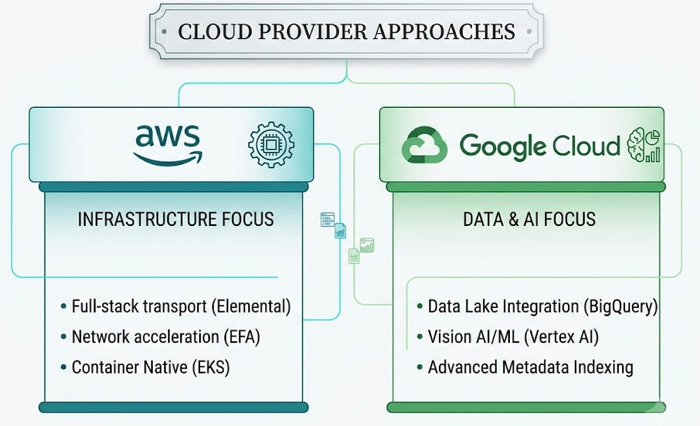
AWS: The Full-Stack Infrastructure Play

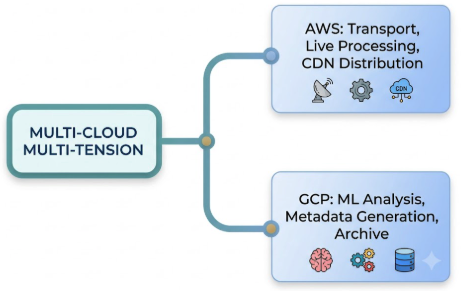
Amazon Web Services dominates live broadcast transport and linear channel delivery, building out a comprehensive ecosystem around its acquisition of Elemental:

=From SDI to MXL: Inside the Cloud-Native Infrastructure Powering Next-Gen Live Broadcast

  • Compute & Network Tuning: AWS built the Elastic Fabric Adapter (EFA)—a custom SmartNIC interface providing OS bypass capabilities for EC2 instances—enabling low-latency RDMA communication suited for high-bitrate MXL workloads.
  • Standardization Strategy: AWS actively contributes to EBU DMF/MXL working groups. By standardizing the low-level data plane, AWS lowers the migration barrier for legacy broadcasters, monetizing the downstream compute (EC2), storage (S3), and managed media pipelines (Elemental).


Google Cloud: High-Level AI/ML and Data Analytics Integration

Google Cloud Platform (GCP) targets the intelligence and data layer of the broadcast chain rather than low-level stream transport:

From SDI to MXL: Inside the Cloud-Native Infrastructure Powering Next-Gen Live Broadcast

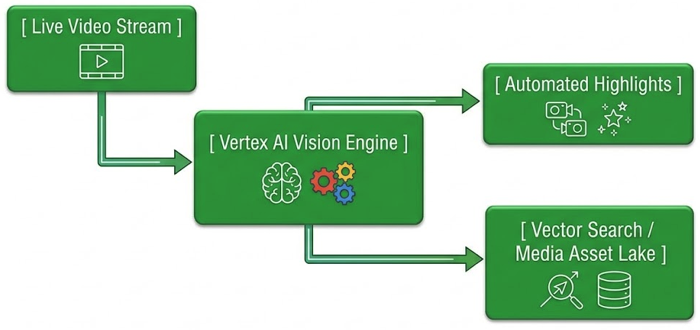
  • Multimodal Asset Processing: Using Vertex AI, GCP allows broadcasters to run real-time semantic indexing, object recognition, and sentiment analysis on incoming broadcast feeds.
  • Fox Sports Intelligent Asset Service (IAS): GCP powers FOX Sports’ real-time MAM (Media Asset Management) platform, indexing millions of historical and live media clips into a searchable, vector-based content repository available to editors within seconds.


The Dual-Cloud Reality and the Lock-In Dilemma

Major broadcast operators routinely leverage multiple public clouds simultaneously. This approach introduces structural friction points:

From SDI to MXL: Inside the Cloud-Native Infrastructure Powering Next-Gen Live Broadcast

  • Egress Cost Inflation: Moving uncompressed or high-bitrate mezzanine streams between AWS and GCP regions creates unsustainable bandwidth costs.
  • Operational Bifurcation: Operations teams must maintain separate infrastructure-as-code automation stacks (Terraform/Pulumi), security boundary configurations, and specialized engineering skill sets for each cloud provider.

Open standards like DMF and MXL provide a cloud-agnostic abstraction layer. By standardizing the interface between media functions, operators can execute identical microservice containers on AWS EKS, GCP GKE, or bare-metal on-premises clusters without re-architecting applications.


6. FOX Corporation: A Hybrid Cloud Journey in Practice

From SDI to MXL: Inside the Cloud-Native Infrastructure Powering Next-Gen Live Broadcast


The 2019 Architectural Pivot

Following the sale of 21st Century Fox assets to The Walt Disney Company in 2019, FOX Corporation operated as a leaner entity focused primarily on live sports, news, and linear broadcasting. This structural shift forced a complete re-engineering of its technology stack.

Faced with building next-generation production capabilities without decades of legacy infrastructure, FOX executed a cloud-first mandate in partnership with AWS, migrating core channel operations, media supply chains, and distribution pipelines to software-defined environments.


The "Triangle of Resilience"

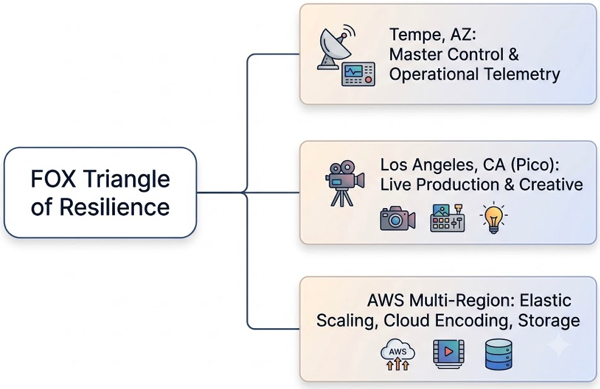
To guarantee 99.999% broadcast availability for high-profile live events, FOX implemented a distributed architecture known as the Triangle of Resilience:

  • Tempe Broadcast Operations Center (Arizona): A $200 million, 140,000-square-foot facility serving as the primary physical orchestration hub. Features multi-terabit IP network fabrics monitoring thousands of live feeds and hosting master control automation.
  • Pico Production Facility (Los Angeles, California): The primary center for live studio production, post-production, graphics generation, and creative asset creation.
  • AWS Cloud Infrastructure (Dual Region: us-east-2 & us-west-2): Cloud execution environment running live encoding, asset processing, dynamic ad insertion, and scalable OTT delivery platforms.

This topology proved its architecture during the October 2025 AWS us-east-1 outage. Because FOX’s live streams were architected with active-active redundant topologies across us-east-2 (Ohio) and us-west-2 (Oregon), complemented by physical master control bypass facilities in Tempe, its primary linear broadcasts and Tubi streaming feeds operated without disruption.


Super Bowl LIX Architecture Execution

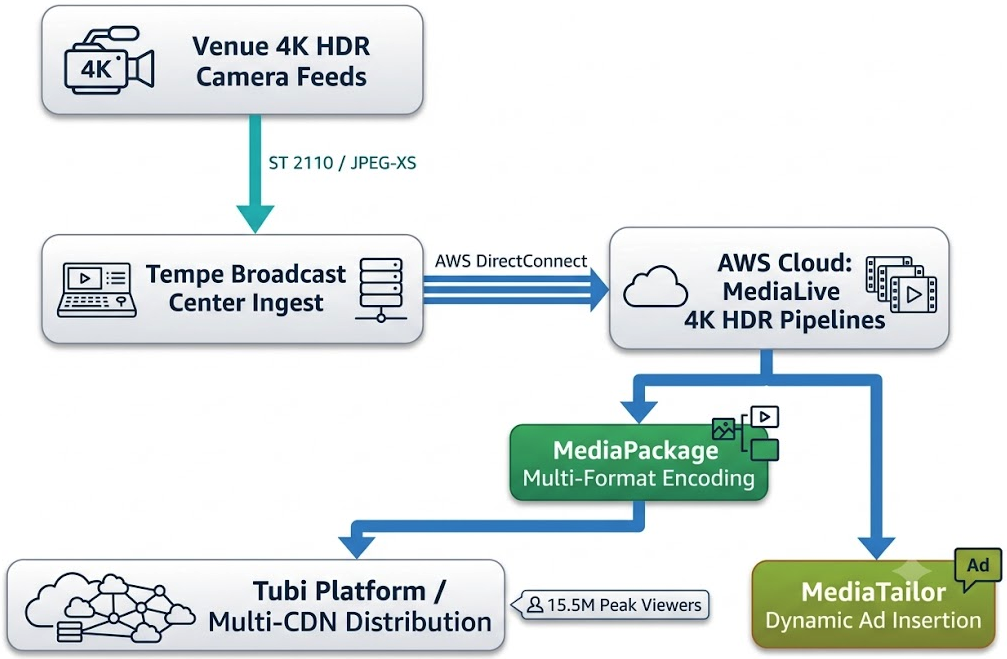
For Super Bowl LIX in February 2025, FOX delivered the uncompressed master feed from the venue to the cloud, executing dynamic packaging and distribution at massive scale:

From SDI to MXL: Inside the Cloud-Native Infrastructure Powering Next-Gen Live Broadcast

Key Performance Metrics

  • Peak Concurrent Viewers: 15.5 Million
  • Unique Viewers: 24 Million
  • Stream Parameters: 4K HDR, 60fps, 10-bit color, sub-second latency
  • Distribution Architecture: CloudFront, Fastly, and Akamai multi-CDN mesh driven by real-time edge performance telemetry


The "Buffer Bowl" Lessons

Despite overall operational success, high traffic surges exposed edge-case limitations in OTT scaling dynamics. Some end-users experienced video buffering and temporary stream degradations, highlighted in press coverage as the “Buffer Bowl.”

Post-event engineering postmortems revealed that the bottleneck was not rooted in core media processing or cloud encoding capacity, but rather in CDN cache-warming synchronization and DNS lookup resolution delays at localized Internet Service Provider (ISP) interconnect points during sudden concurrency spikes. This event underscored that software-defined broadcast systems must manage global public internet delivery health alongside internal compute performance.


Strategy Shift: The Director of Platform Engineering Signal

In late 2025, FOX Corporation issued public job listings for leadership roles—notably Director, Platform Engineering in Tempe, AZ. The explicit requirements listed in the posting offer a clear indication of where broadcast engineering is headed next:

"Requires extensive experience with software-defined broadcast concepts (EBU DMF, containerized media functions, orchestration/control layers like MXL patterns)... prior experience building internal platforms that reduce reliance on proprietary managed service agreements or vendor customizations."

This signals a mature second phase in cloud evolution: moving away from hyper-proprietary, vendor-managed SaaS/PaaS stacks toward internal, open-standards platforms built on Kubernetes, containerized microservices, and bare-metal/cloud-hybrid MXL data planes.


7. Sports Production: The Ultimate Stress Test

From SDI to MXL: Inside the Cloud-Native Infrastructure Powering Next-Gen Live Broadcast


Advanced Live Sports Workflows

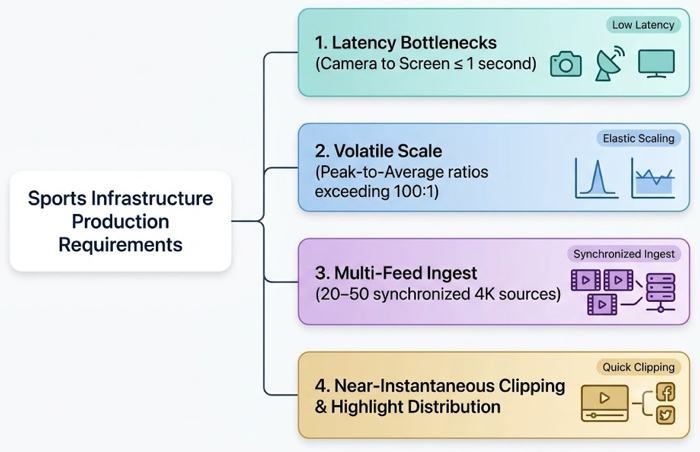
Sports production demands performance profile parameters that strain software systems:

From SDI to MXL: Inside the Cloud-Native Infrastructure Powering Next-Gen Live Broadcast

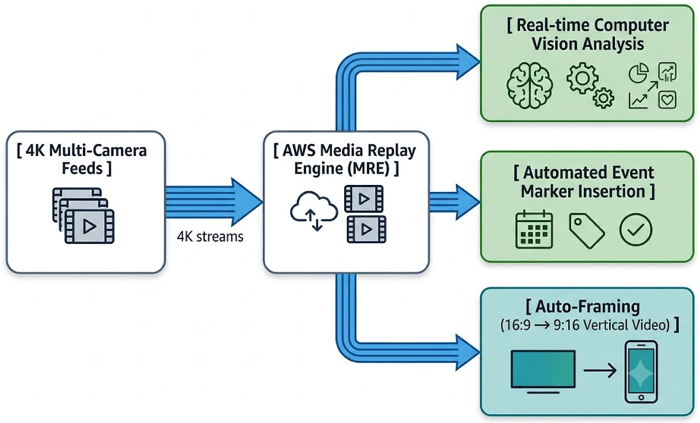
During major tournaments, such as the FIFA World Cup, FOX deployed the Amazon Media Replay Engine (MRE) alongside custom AI inference models to automate highlight workflows:

  • Ingest & Analysis: Live feed buffers are analyzed using real-time spatial and audio inference models (detecting crowd noise spikes, referee whistles, or goal-line action).
  • Automated Clip Generation: The workflow engine automatically marks dynamic in/out points, generates thumbnail assets, builds metadata packages, and routes published clips to social media channels and digital apps in real time.
  • Vertical Reformatting (16:9 to 9:16): Using AWS Elemental Inference, algorithms track the main subject (e.g., the ball or player) within traditional landscape video, generating real-time cropped vertical feeds optimized for TikTok, Instagram, and mobile apps.


8. What Remains: Unresolved Frontiers

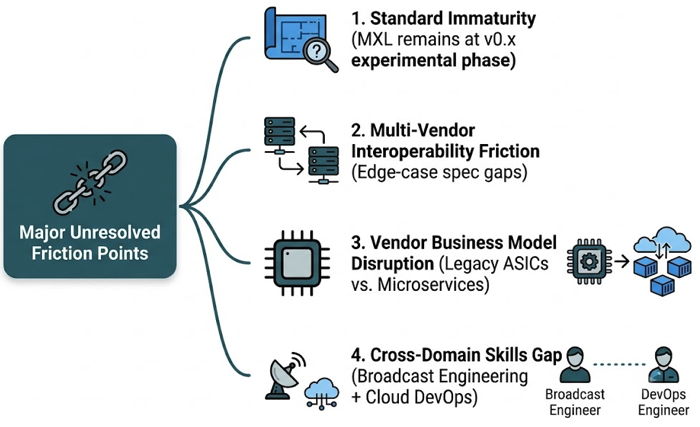
While the momentum behind containerized media functions and open data planes is clear, several technical and structural barriers remain:

From SDI to MXL: Inside the Cloud-Native Infrastructure Powering Next-Gen Live Broadcast


1) Specifications in Early Iteration

MXL remains in a early SDK implementation phase (v0.x). Early-adopter networks building active production tests are effectively co-developing the specification alongside standard bodies, accepting the operational risks of breaking API changes and unoptimized memory drivers.


2) Multi-Vendor Interoperability Realities

While open standards guarantee transport-level compatibility, high-level control compatibility often falters in practice. Slight discrepancies in how different vendors handle frame-accurate timing markers, metadata attachments, or high-density memory buffer allocations can cause system instabilities during live broadcasts.


3) Disruption of Legacy Business Models

Traditional hardware manufacturers face existential choices. Revenue models historically built on high-margin, proprietary hardware appliances are giving way to subscription-based containerized microservices. Vendors that fail to decouple their application logic from underlying hardware risk disintermediation by cloud-native software providers.


4) The Broadcast / Cloud Engineering Skills Gap

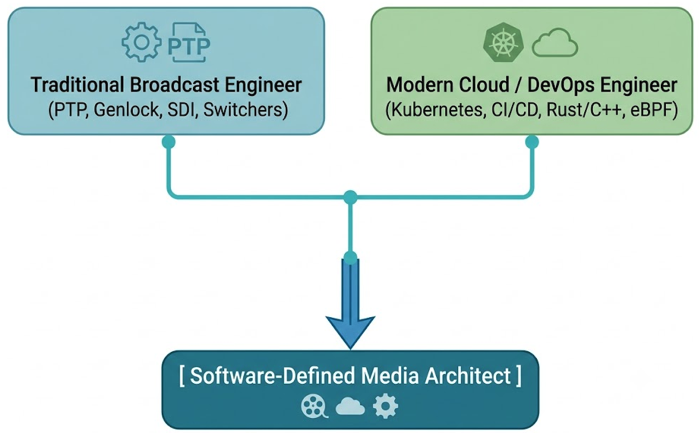
There is a industry shortage of talent fluent in both broadcast domain constraints (frame-accurate synchronization, color spaces, audio mapping) and modern cloud software engineering (Kubernetes operators, C/C++ memory management, Linux kernel tuning, RDMA networking).

From SDI to MXL: Inside the Cloud-Native Infrastructure Powering Next-Gen Live Broadcast


5) Content Authenticity and C2PA Integration

With the rise of generative AI deepfakes, live news and sports broadcasters must cryptographically verify media provenance. Integrating the Coalition for Content Provenance and Authenticity (C2PA) specification into real-time MXL memory transfers requires attaching immutable digital signatures to video frames at the camera sensor level and validating them across every processing node down to the consumer display.


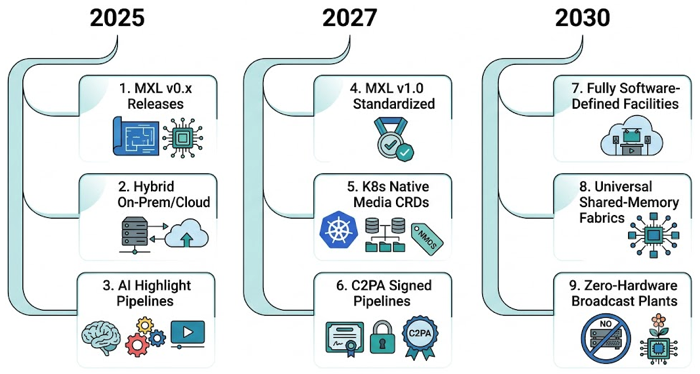
9. Five-Year Outlook

From SDI to MXL: Inside the Cloud-Native Infrastructure Powering Next-Gen Live Broadcast

  • Consolidation Around Hybrid Architectures: The industry will settle on a hybrid operational model. Low-latency live switching will execute on-premises or at local edge compute facilities running MXL on bare-metal Kubernetes clusters, while long-tail processing, archiving, and global distribution remain anchored in public cloud environments.
  • Standardization of Broadcast Kubernetes Extensions: Media-focused Custom Resource Definitions (CRDs), Custom Schedulers, and Container Network Interfaces (CNIs) will mature, becoming standard modules within the CNCF (Cloud Native Computing Foundation) ecosystem.
  • AI-Native Processing Pipelines: Machine learning models will move directly into the real-time processing loop. Up-scaling, frame-rate conversion, dynamic range mapping (SDR to HDR), dynamic ad replacement, and real-time multi-language voice cloning will run inline via containerized media functions.
  • Commoditization of the Data Plane: As MXL normalizes real-time video exchange between microservices, infrastructure underlying broadcast facilities will become commoditized. Broadcasters will compete on software orchestration intelligence, content access, AI augmentation, and user experience rather than proprietary hardware setups.


Epilogue: Back to the Super Bowl

The engineering feat demonstrated by delivering 4K HDR live streams to 15.5 million concurrent viewers during Super Bowl LIX offers a glimpse into the future of media infrastructure.

The transition from physical SDI cables to ST 2110 IP routing was an important first step. But the ultimate target state—a cloud-native, software-defined media facility where atomic microservices exchange high-bitrate data via shared memory fabrics—is now taking shape.

From SDI to MXL: Inside the Cloud-Native Infrastructure Powering Next-Gen Live Broadcast

As specifications like EBU DMF and MXL move from experimental GitHub repositories into core production control rooms, the boundaries separating broadcast facilities, web platforms, and cloud datacenters continue to dissolve. The future of live media is software—and that software is being written today.


References & Further Reading

EBU DMF & MXL Standards

  • EBU Technology & Innovation, "Dynamic Media Facility (DMF) Reference Architecture v2.0" — tech.ebu.ch/groups/dynamic-media-facility
  • Linux Foundation, "Media eXchange Layer (MXL) Open Source SDK Project" — github.com/dmf-mxl/mxl
  • The Broadcast Bridge, "Understanding the EBU-DMF and MXL Infrastructure Paradigm" (2025/2026)
  • TAG Video Systems Engineering Blog, "How Media eXchange Layer (MXL) Reshapes Cloud Microservices" (2025)

FOX Corporation Cloud Architecture & Super Bowl Case Studies

  • AWS Case Studies, "FOX Corporation Builds Enterprise MediaCloud Infrastructure on AWS"
  • AWS Media Blog, "How FOX Executed Automated AI Highlighting with the Media Replay Engine"
  • Sports Video Group (SVG), "Inside the Architecture of FOX Sports’ Intelligent Asset Service (IAS)"
  • FOX Corporation Careers, "Director, Platform Engineering — Position Requirements & Architectural Scope" (2025/2026)

Media Supply Chain & Infrastructure Analysis

  • SMPTE, "Standards Overview: SMPTE ST 2110 Professional Media Over Managed IP Networks"
  • AMWA Specifications, "NMOS IS-04 Discovery & Registration / IS-05 Connection Management" — specs.amwa.tv
  • C2PA, "Coalition for Content Provenance and Authenticity Technical Specifications" — c2pa.org
Tags Broadcast Engineering Cloud Native Broadcast Containerized Video Workflows DMF EBU EBU DMF Architecture EBU-DMF IP Video Production Live Broadcast Infrastructure Low Latency Streaming MXL Media Exchange Layer SMPTE ST 2110 Super Bowl Streaming Facebook X
Comments 0
Similar posts
  1. The Next-Gen Low-Latency Standards: LL-HLS & MoQ
    194
  2. Inside the Next-Generation Streaming Architecture: Ultra-Low Latency, SGAI, and AI Codecs
    201
  1. Inside the Next-Generation Streaming Architecture: Ultra-Low Latency, SGAI, and AI Codecs
    201
  2. The Next-Gen Low-Latency Standards: LL-HLS & MoQ
    194
  3. Smooth switching with EXT-X-DISCONTINUITY in HLS
    430
  4. Disabling Audio Tracks in HLS.js
    374
  5. A Deep Dive Into Internet Advertising Ecosystem on Video Streaming Industry
    645
  6. When to use #EXT-X-DISCONTINUITY in HLS?
    1,428
  7. A prefect Apache server settings to avoid CORS error for HLS
    604
  8. CloudFront Settings for Dynamic HLS Streaming
    650
  9. SafeFrame is a web standard developed by IAB
    507
  10. CSAI vs SSAI
    576
  11. Ad Marker: SCTE-35 Message Encoder based in Python
    797
  12. Ad marker: SCTE-35 enhanced
    574
  13. FFmpeg compile options based on configure
    1,111
  14. Script checking internet restriction with FFmpeg
    682
  15. FFmpeg compile option to support SCTE-35
    838
  16. HTTP Proxy when your URL access is blocked with FFmpeg
    1,897
  17. Limit Maximum Resolution in HLS.js
    664
Recently updated
  1. Why 100% SEO Guarantees Better User Engagement and How to Achieve It in Your Service
    39
  2. Why SPF and DKIM Are Essential for Linux Email Servers?
    34
  3. How do I create animated background for Google Meet?
    20,611
  4. MaxMind GeoLite2 vs. DB-IP Lite vs. ip-api.com: Choosing the Right Free IP Geolocation Solution
    244
  5. Meet Valkey: Why Redis Changed Its License, Why Valkey is Better, and How to Use It as a Drop-in Replacement
    93
  6. How Rogue Web Scrapers Are Stealing My Content and Destroying My Server
    156
  7. Array of arguments passed to script in PHP
    89
  8. Invalid Auction Storms in Ad Tech
    98
  9. Building MRC-Compliant Instrumentation in Ad Tech: Implementation Steps and Key Challenges
    201
  10. The Two Clocks of Ad Server Architecture
    69
  11. Frequency Cap Architecture Overview
    513
  12. Collecting Proof-of-Play from 100,000 Screens
    145
  13. Vector Search in Relational Databases (RDBs): Trends & Usage Environments
    286
  14. What is RedisVL?
    108
  15. Designing a Skill Registry Architecture: Minimize Token Usage and Maximize AI Performance
    229
  16. TPU & GPU Cluster Management Tools
    243
  17. The Concept of Scaffolding in AI Agents
    232
  18. Beyond Static Pipelines: Architecting LLM Multi-Agent Systems for Autonomous Workflow Orchestration
    582
  19. AI-DLC vs. AI-SDLC: Model-Centric vs. System-Centric AI Development
    258
  20. Fine-Tuning Open-Weight LLMs: Training, Licensing, and Deploying Custom Models with Ollama
    337
  21. Inside the Next-Generation Streaming Architecture: Ultra-Low Latency, SGAI, and AI Codecs
    201
  22. Machine Learning: Training vs. Ranking
    221
  23. The Continuous Learning Machine: Designing a Loop That Actually Turns
    222
  24. The Next-Gen Low-Latency Standards: LL-HLS & MoQ
    194
  25. Designing a Data Curation System Around a Vector Database
    220
  26. Extracting Context from Live Video: The Architecture Got Simpler When We Stopped Building Features
    256
  27. The New Ad Stack Behind Live Sports Streaming: Inside SGAI, EABN, and the Standards Race to Fix Live Monetization
    655
  28. Designing MLOps Architectures to Handle Seasonal Data Drift in EV Fleet Models
    194
  29. From 15 to 40+ FPS: Accelerating PyTorch Object Detection on Automotive ECUs
    215
  30. Understanding Data Lineage
    259