| Achieving a "100% SEO" score—whether measured via technical audits like Google Lighthouse, SEMrush, or Ahrefs—is not merely about pleasing search engine algorithms. Modern search engine optimization algorithms (such as Google’s RankBrain and Helpful Content System) prioritize human experience metrics. Consequently, fully optimized SEO inherently correlates with superior user engagement. 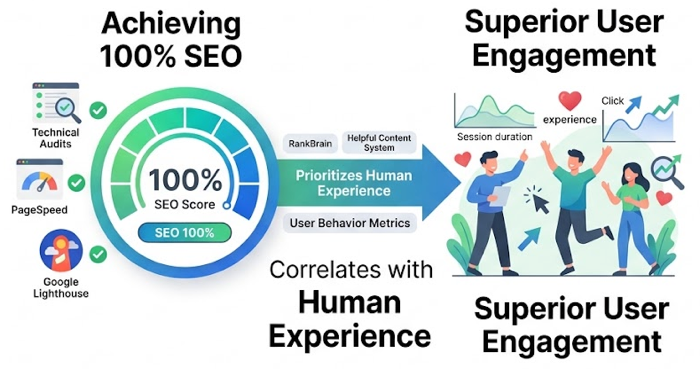
1. The Core Drivers Connecting Perfect SEO to User EngagementIntent Alignment and Content Relevance- Elimination of Mismatched Traffic: High-level keyword optimization relies heavily on understanding Search Intent (Informational, Navigational, Commercial, Transactional). Matching intent ensures visitors find exactly what they expect, reducing immediate bounce rates.
- Topic Authority and Depth: A 100% SEO strategy utilizes topical authority mapping. By answering primary and secondary user queries exhaustively on a single page, users stay longer to consume information rather than returning to search results (pogo-sticking).
Technical Performance and UX Synergy- Core Web Vitals Optimization:
- Largest Contentful Paint (LCP): Fast loading times prevent immediate page abandonment. Users interact more when content renders under 2.5 seconds.
- Interaction to Next Paint (INP): Snappy responsiveness to clicks or taps encourages users to navigate deeper into the service.
- Cumulative Layout Shift (CLS): Preventing visual layout shifts ensures users do not misclick elements, maintaining a smooth, frustration-free experience.
- Mobile-First Seamlessness: Over 55% of global web traffic is mobile. A 100% technical SEO score mandates responsive design, touch-friendly UI, and readable font sizes, ensuring high engagement across all devices.
Trust, Security, and Scannability- Security Standards (HTTPS): Valid SSL/TLS certificates and secure protocols instill instant confidence, particularly critical for SaaS platforms, e-commerce, and services requesting user data.
- Structured Content Architecture: The use of clear visual hierarchies (H1, H2, H3 tags), bullet points, bolded key terms, and schema markup allows users to scan content quickly, process value propositions faster, and engage with Calls to Action (CTAs).
Strategic Roadmap: How to Achieve 100% SEO for Your ServiceTo achieve a flawless SEO setup that maximizes conversion rates and user session duration, implement the following end-to-end framework.
Phase 1: Technical Infrastructure Optimization1. Master Core Web Vitals- Optimize Media Assets: Convert images to next-gen formats (
.webp or .avif). Implement modern lazy-loading (loading="lazy") for below-the-fold media. - Minify and Defer Assets: Minify HTML, CSS, and JavaScript. Defer non-critical JavaScript execution to free up the main thread.
- Leverage Caching & CDNs: Implement server-side caching and route traffic through Content Delivery Networks (CDNs) like Cloudflare or Fastly to minimize latency globally.
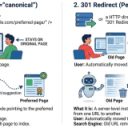
2. Crawlability and Indexation- Clean Up Canonical Tags: Ensure every page explicitly defines its canonical URL to eliminate duplicate content issues.
- Optimize
robots.txt and XML Sitemaps: Keep your sitemap updated dynamically and ensure critical rendering resources (CSS/JS) are not blocked in robots.txt. - Structured Data Implementation: Add rich snippets (JSON-LD) tailored to your service (e.g.,
Product, SoftwareApplication, FAQPage, Organization) to enhance visibility and Click-Through Rates (CTR) on SERPs.
Phase 2: High-Intent Content & On-Page Architecture1. Map Content to the User Journey- Top of Funnel (TOFU): Publish educational blog posts and guides to solve user pain points.
- Middle of Funnel (MOFU): Create comparison pages, feature breakdowns, and case studies.
- Bottom of Funnel (BOFU): Build high-converting landing pages tailored to high-intent keywords (e.g., "[Service Name] pricing", "Best [Category] software").
2. Optimize Readability and Information Hierarchy- Place the primary value proposition above the fold along with an H1 tag.
- Maintain short paragraphs (2–3 sentences max) to reduce cognitive load.
- Include custom visuals, diagrams, or interactive widgets (e.g., calculators) to increase time-on-page.
Phase 3: On-Page User Experience (UX) & Conversion Optimization1. Internal Link Architecture- Use descriptive, keyword-rich anchor text (avoid generic "click here" text).
- Follow the Topic Cluster Strategy: Link high-level pillar pages to supporting cluster articles to guide users through related topics seamlessly.
2. Clear Calls to Action (CTAs)- Position prominent, high-contrast CTAs at strategic scroll depths (e.g., top header, mid-content, and end of article).
- Offer immediate value in exchange for engagement (e.g., free tools, downloadable resources, instant demos).
Phase 4: Off-Page Authority & Brand Signals1. Digital PR and Natural Backlinks- Create original research, industry reports, or proprietary data studies that inherently attract editorial links.
- Unlink brand mentions: Claim existing unlinked online mentions of your service and request a hyperlink back to your domain.
2. Social Proof and E-E-A-T- Display Experience, Expertise, Authoritativeness, and Trustworthiness (E-E-A-T) signals:
- Include detailed author bios with links to verified social profiles.
- Embed third-party review widgets (e.g., Trustpilot, G2, Capterra) on key sales pages.
Phase 5: Continuous Auditing and Iteration Cycle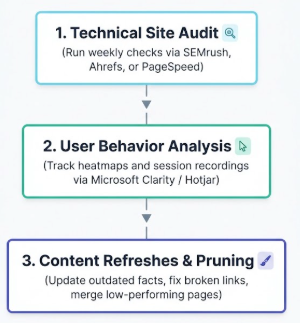
- Weekly Technical Auditing: Monitor and eliminate 4xx/5xx HTTP errors, broken redirect chains, and missing alt text using automated audit engines.
- Behavioral Heatmapping: Analyze where users drop off using heatmaps (e.g., Hotjar or Microsoft Clarity) to identify friction points in your layouts.
- Content Pruning & Refreshing: Regularly update aging content with new stats, fresher media, and revised search intent to preserve keyword rankings and keep bounce rates low.
|